RESEARCH TOUR: Anticipating Europe: Foresight and the next generation of EU reporting
Institutionalising foresight is not the same as it mattering. Political attention and budgets for this kind of work have fluctuated over the past decade – Parliament's own Global Trendometer was discontinued in 2019 – and it's often unclear from the outside whether a given scenario study fed into real legislation or quietly sat on a shelf. This could be looking into scenarios such as a delay in the ETS II timeline for 2035 or a possible US return to the Paris Agreement in 2029.
The European Commission now issues an annual Strategic Foresight Report – the 2025 edition was framed around "Resilience 2.0" and the 2026 report is asking how the EU should position itself in a rapidly changing world. The Council publishes an annual Forward Look, and the inter-institutional European Strategy and Policy Analysis System (ESPAS) process ties it all together with a Global Trends Report every five years.
For journalists covering the EU, that is precisely the gap worth reporting on: not just what these units say about 2035 or 2040, but whether anyone in power is listening, and how to tell the difference.
Day one, hosted at the Centre for Future Generations, is built around the method itself. We'll unpack what foresight actually is – scenarios, horizon scanning and stress-testing, aimed at exploring plausible futures rather than predicting one – and trace where it has gone since the EU embraced it with real ambition around 2015. We'll also look into how to write about long-horizon findings without slipping into hype or false certainty, and how to pressure-test a real EU scenario study: does it feed actual legislation, what happened to its predecessor's recommendations, and how has its budget changed since the mid-2010s peak? The goal is a shared, practical set of questions helping participants to inquire a real-life use of foresight.
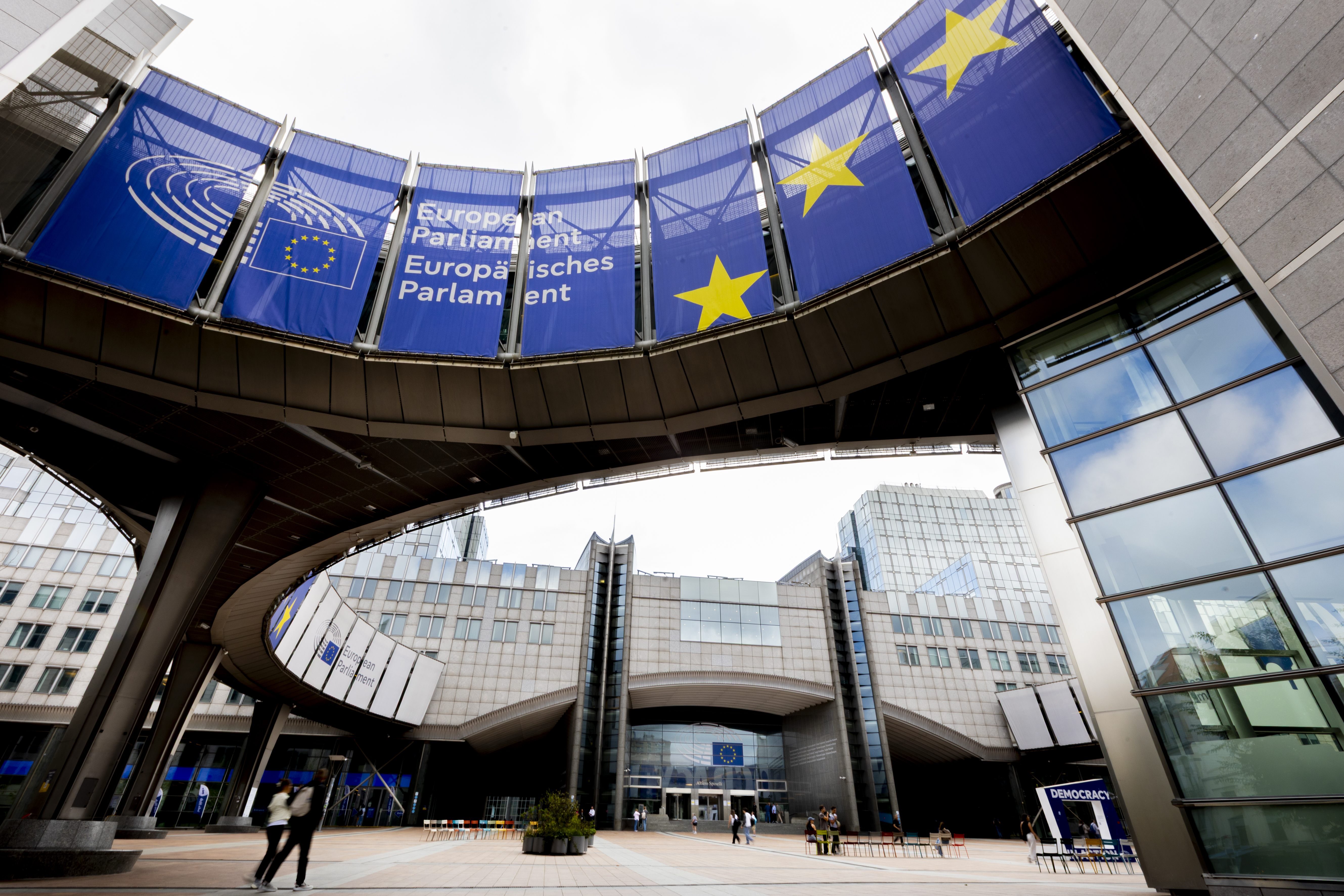
Day two moves to the European Parliament, where we'll hear experts such as members of the Panel for the Future of Science and Technology (STOA), as well as one of the responsible units on how the Parliament does foresight plus the European Science-Media Hub. We're also having meetings with senior parliamentary staff and two MEPs from the STOA Panel, and will close with an open discussion on what the group saw behind the scenes versus the method learned on day one – and how to report on EU foresight with the right mix of engagement and scepticism.
For background on how the EU currently practices foresight, see the Commission's Strategic Foresight Report and the inter-institutional ESPAS process.
Applications from journalists will be accepted until 7 September 2026, 23:59 CEST.
FAQs
Who is eligible for the research tour? And how can I apply?
The research tour is open to journalists from all over Europe (not just the countries of the EU/based on country of primary residence).
To apply, please click on the red 'sign up' button above that will take you to the web application form.
Please note that applications in any other language than English will not be accepted.
What languages will be spoken during the research tour?
All sessions will be held in English.
Are there any costs for research tour participants?
Participation in the research tour is free of charge.
Journalists or editorial staff who have made an internal commitment not to accept free services from third parties, or who do not wish to participate in the research tour free of charge for other reasons, may pay for their own travel and share of accommodation and meals. Please contact us directly at event@cleanenergywire.org
What about travel arrangements?
Selected participants will organise their own travel to Brussels and back independently, and will be reimbursed for their expenses by the European Parliament after the event. Do not book anything before you get the confirmation that you can take part. When arranging travel, participants are kindly asked to consider climate-friendly modes of transportation when viable and reasonable. Please keep in mind the budgetary constraints of up to 400 euro return connection for economy class travel. Participants who would like to cover their expenses on their own (travel, food, accommodation) can get an invoice upon request after the tour.
The programme will most likely start on 29 September at noon and will end on 30 September around 15:00. A more detailed programme will be published about 3 weeks before the start of the research tour.
All successful applicants will be notified on how to claim reimbursement ahead of the research tour. It is generally not possible to reimburse travel expenses in cash.
What are the deadlines?
Deadline for applications is 7 September 2026.
Please make sure to have access to your email, and do check the spam folder. If your application has been successful, you will receive a confirmation email from CLEW no later than 9 September. In this event, please confirm your participation by 10 pm CEST on 10 September. Otherwise, your place will be offered to another applicant.
What if I need a visa?
If you require a letter of invitation for your visa application, please let us know by sending an email to event@cleanenergywire.org. Please ensure you have a visa appointment at your embassy or consulate well before the research tour begins to leave enough time for visa processing.
Note: we do not reimburse visa fees or insurance costs.
I get an error message saying I’m over the character limit, but I don’t think I am?
The character limit is specified in the boxes. Note that the limit includes paragraph breaks, and we appreciate if you do not add any paragraph breaks in the sign-up form. If you have removed all paragraph breaks and are otherwise 100 percent certain that you are below the limit specified, try using a different internet server. For example, if you have previously tried submitting unsuccessfully via Google Chrome, try Firefox, Microsoft Edge or Safari.
I have submitted an application but have not received a confirmation of receipt.
Please check your spam folder for an automatically generated email which will ask you to confirm that you successfully submitted an application .
You will then hear from CLEW regarding the outcome of your application no later than 9 September 2026.
What are the rules of citation during the tour?
Interviews and public debates between journalists and speakers follow different rules and practices in different parts of the world. To make the context of our research tour clear for all involved, we would like to set out the following framework guiding the interaction with participating journalists:
Quotes and interviews
- Statements made by speakers during the sessions are on the record, unless speakers specify otherwise.
Photos, audio or video recordings
- Photos of speakers and participants of the event might be published on the blog, the CLEW website and in social networks. Please support CLEW’s press and public relations work by allowing yourself to be photographed or filmed. If you do not wish to be photographed, please inform us in your application or on the spot. You can also object to the use of your image at a later date at event@cleanenergywire.org
- If the speakers or other participants would like to take photos or record audio or video of the academy, they can approach a staff member from Clean Energy Wire so that we can agree on workable solutions.
Questions?
Don't hesitate to get in contact with us at event@cleanenergywire.org.