
Driven by markets, Germany's coal exit remains on track amid energy crisis
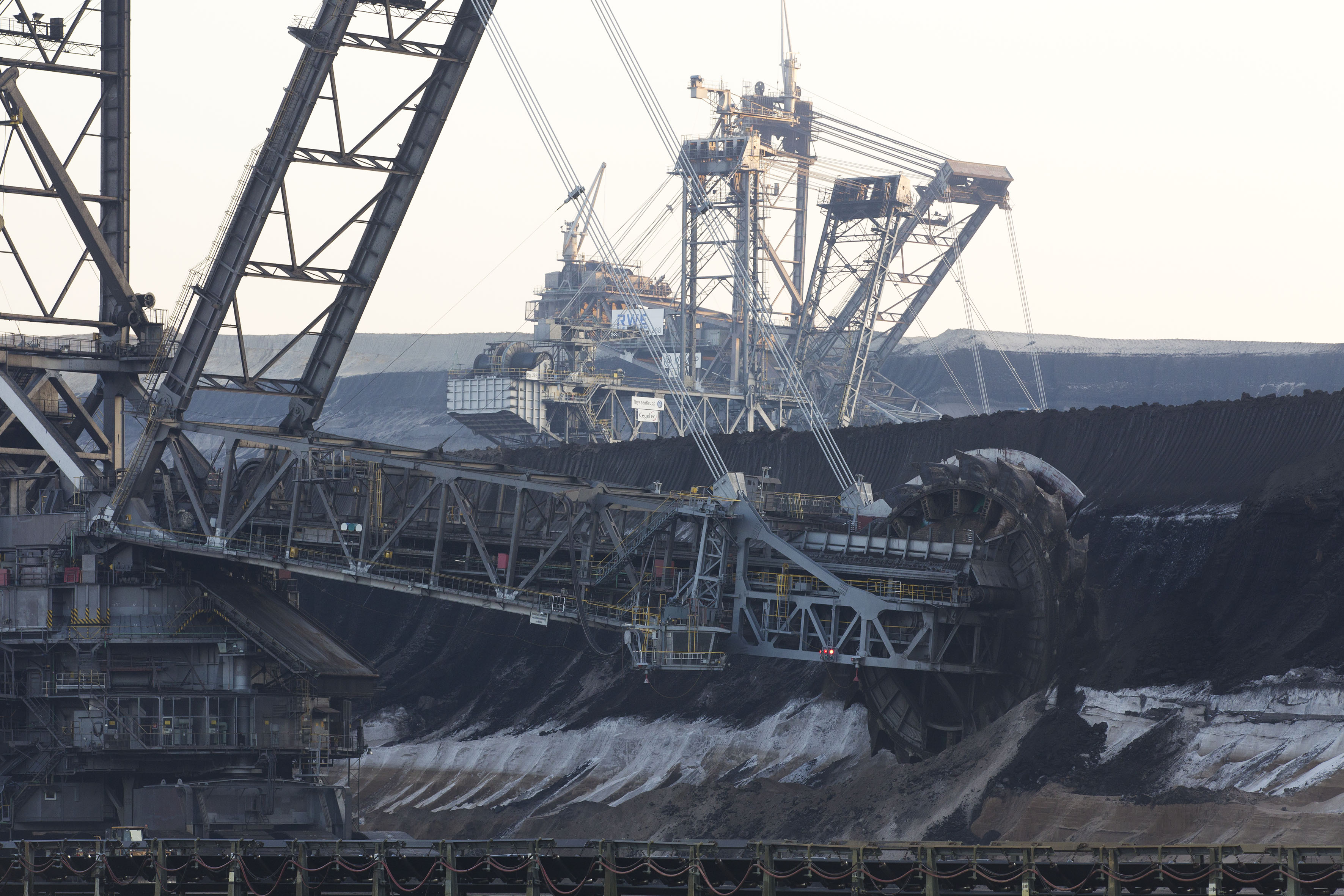
A sea of change has swept over Germany since the country agreed to phase out its historically most important energy source: After a pioneering coal exit commission reached a landmark consensus that resulted in a 2021 law on ending coal-fired power generation no later than 2038, Germany went through a pandemic, an energy crisis fuelled by Russia's invasion of Ukraine, its own nuclear exit, two national elections, and the second election of Donald Trump as US president. All of these left their imprint on the energy transition. The agreed deadline for coal, however, still stands.
The government plans to publish a first stocktake of the phase-out’s impact on energy supply security, power prices, greenhouse gas emissions, and coal mining regions in August 2026. Five years after the law was adopted, the highly-anticipated report will be the first official evaluation of the phase-out’s progress, after previous reports were cancelled without replacement due to the energy crisis caused by the Ukraine war and the previous government’s collapse.
At the time of the agreement, environmentalists criticised the envisaged end year as far too late. The decommissioning of coal plants has progressed since then: Coal's share of electricity production dropped from 23.3 percent in 2020 to 20.4 percent in 2025, while renewables increased their share from around 44 percent to over 57 percent in the same period. The country retired over 14 gigawatts (GW) of coal plant capacity by the end of 2025, equal to about one third of its total capacity at the time of the deal. Contrary to concerns surrounding the end of nuclear power in Germany in 2023, coal power did not step up to fill in the gap left by the last three nuclear plants, as new renewable power installations alone more than compensated for the loss of capacity.
According to a 2025 report by the Stockholm Environment Institute (SEI), Germany remained one out of only a handful of countries that have set out a clear decommissioning path consistent with its emission reduction targets. However, the country has also remained Europe’s largest coal consumer.
Roughly 15 GW each of hard coal and lignite capacity remained available at the end of 2025, down from about 50 GW in 2010. About 6.7 GW of the remaining hard coal capacity have already been moved to the so-called grid reserve for plants that have been taken off the electricity market and only feed in power when grid operators need to bridge bottlenecks.
“The market is outpacing the schedule”
The Federal Network Agency (BNetzA) has ceased auctions for early voluntary coal retirements, and will mandate closures of the oldest plants without compensation in the future. It plans to oversee the retirement of up to 5.5 GW of additional coal capacity by the end of 2028, though a BNetzA spokesperson cautioned that "plant operators have only indicated that they plan to retire certain plants. But there is no obligation to do it." Grid operators can also declare plants "systemically relevant" to keep them online for longer.
Market forces, however, may render the 2038 deadline moot well before it arrives, as renewable energy sources already produce electricity at much lower cost than coal. According to energy company EnBW, generating one kilowatt-hour (kWh) with new onshore wind costs between 4.3 and 9.2 cents, and between 4.1 and 14.4 cents with solar. Hard coal power, by contrast, costs between 17.3 and 29.3 cents per kWh, and lignite between 15.1 and 25.7 cents. Carbon pricing under the EU Emissions Trading System (ETS) adds roughly 7 cents per kWh on top. "This makes coal power economically unviable," EnBW concluded.
Electricity market modelling suggests that a phase-out driven by prices rather than by politics could be completed much faster. “The market is outpacing the schedule,” researcher Hauke Hermann from the Institute of Applied Ecology (Öko-Institut) told Clean Energy Wire. Through a combination of comparatively low gas prices and high emissions allowance prices in the ETS, Germany might see the end of coal as soon as 2031 or 2032, said the researcher who represented his institute at the coal exit commission talks.
According to Hermann, this trajectory has not changed substantially following the US- and Israeli-led attack on Iran, which let market prices for gas spike and revived a debate about coal's role in supply security. While receding from a peak in March, prices have remained volatile and elevated as the conflict in the Persian Gulf region progressed. If higher prices persist and there is no parallel increase in ETS prices, this could slow down a market-driven phase-out, Hermann said. “But it does not change the broader picture of coal being pushed out of the market,” he argued – assuming that the Iran war’s fallout on gas prices remains limited in time and scale.
Coal “Made in Germany” touted as energy crisis fix
But what if the Iran war’s effects on gas prices do not subside relatively quickly? Chancellor Friedrich Merz has already warned that coal plant closures would have to be slowed in the event of actual energy shortages due to the supply disruptions in the Middle East. The coal phase-out law contains flexibility clauses that allow for a temporary return to the market of selected hard coal and lignite plants. This already happened after Russia’s invasion of Ukraine, when the risk of direct supply shortages was much higher than they have been so far as a result of the Iran war.
Parts of the coal industry want to use the energy crisis as an opportunity to further expand the role of coal. Domestic coal power should not only be seen as a last resort to prevent shortages, but also as a buffer for gas price hikes, coal company Steag Iqony argued, pointing to a corresponding clause in the government’s coalition treaty. Energy-intensive industry association VIK said it was “questionable” to burn gas for power production if there are alternatives – even if heating consumes a much larger share of gas than electricity generation. Coal company Leag, which operates lignite mines and power plants in eastern Germany, in a leaked document prepared to lobby for an exemption for lignite plants from European emissions trading, arguing that the fossil fuel “made in Germany” was only uncompetitive because of the ETS.
While Merz has not called the coal exit’s completion in question, he repeatedly said that climate policies should not stand in the way of economic competitiveness – and that an upcoming ETS reform should reflect this hierarchy. However, Nina Scheer, an energy expert of the Social Democrats (SPD), the coalition partner of Merz’s conservative Christian Democrats (CDU), warned that relaxing rules for coal would be "counterproductive for the energy transition and mean new fossil lock-in effects."
Apart from the fact that most coal plants that are slated for decommissioning are rather old and inefficient, making their potential contribution to lower prices questionable, lifting rules for operators would also come with a raft of legal challenges at the domestic level and in the EU. The coal exit law already provided more than four billion euros in compensation payments to operators and 40 billion euros in structural support to coal states, meaning any changes would likely draw scrutiny from the European Commission’s competition watchdogs.
2030 phase-out for western coal state still within reach, operators say
Some key coal industry representatives consequently reject the idea to increase the country’s reliance on coal again. CEO Michael Lewis of Uniper said such a step would “weaken market signals and undermine urgently needed investment security.” Echoing RWE CEO Markus Krebber, Lewis said that a 2022 agreement to end coal in the western industry state North Rhine-Westphalia (NRW) by 2030 can still be implemented. Krebber said his company expected to only hold plants in the security reserve after the end of the decade, for which the federal government would have to cover any costs in their limited operation, including for emissions allowances. “RWE wants to exit coal by 2030,” he said.
Both energy managers stressed that the construction of sufficient backup capacity remains the precondition for an early phase-out in NRW. Germany plans to install 12 GW of new gas-fired backup plants to replace decommissioned coal capacity, but repeated delays to the required auctions mean these are unlikely to be operational before the early 2030s. In the second half of 2026, economy minister Katherina Reiche plans two auction rounds for the plants, which would eventually be integrated into a new capacity market.
Both the energy industry and NRW’s state government say that the time needed to construct new gas plants, estimated at five years from auction to operation, determines when coal can be phased out entirely without compromising supply security. But environmentalists and renewable energy associations counter that the plans for new gas plants are oversized and neglect other options such as batteries for improving supply security. Öko-Institut researcher Hauke Hermann also said a one-to-one substitution with gas for every retired gigawatt of coal may not be necessary, as grid stability reserves and other flexibility mechanisms could bridge gaps. “I’m optimistic that a 2030 phase-out can be achieved in NRW as planned,” he said.
But what about Germany’s other coal states in the east? State governments in Saxony and Brandenburg, who share the vast Lusatia mining region between them, have been much more reluctant to commit to a more ambitious exit schedule, arguing that structural economic challenges are hitting them harder than the more industrially diversified NRW.
Notwithstanding the rhetoric by political leaders, there is a growing acceptance also in eastern states that the development of carbon pricing and renewables expansion will speed up the phase-out, according to Hermann. Structural economic support targeted at job markets, transport and digital infrastructure, and research and development clusters will secure the regions' long-term futures as energy industry hubs rather than coal-dependent backwaters, he said. Even if a faster coal exit is unlikely to be a political priority under the Merz government, “market forces will continue regardless,” Hermann said.