
Germany orders state-owned gas importer to increase storage filling
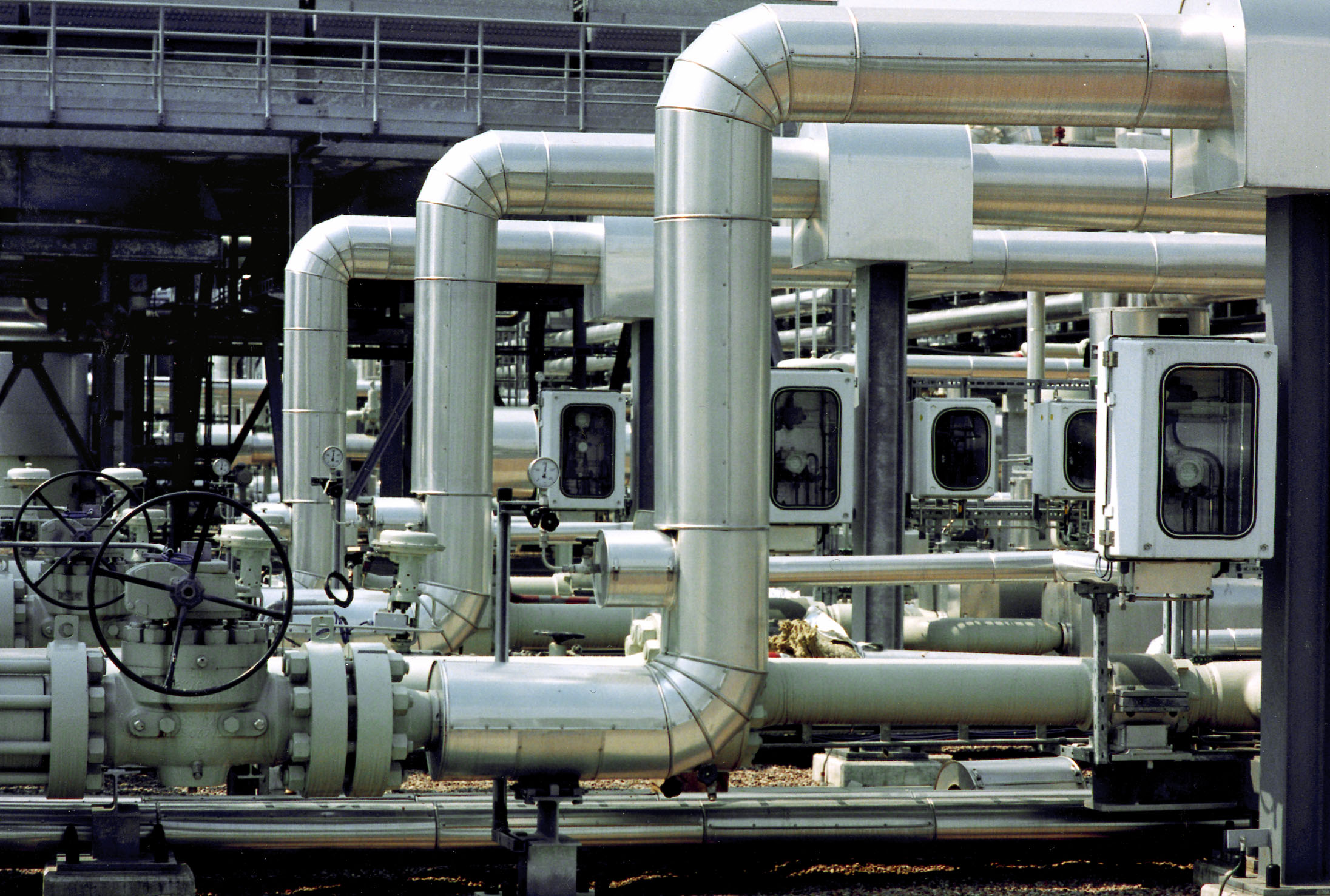
The German government has ordered state-owned energy company Securing Energy for Europe (SEFE) to bolster supplies in a bid to avoid shortfalls in winter. The economy ministry told Clean Energy Wire that minister Katherina Reiche had agreed to introduce the measure in coordination with chancellor Friedrich Merz. The ministry said that the measure is "an important additional contribution to securing the resilience of Germany's gas supply," citing ongoing geopolitical instabilities as a reason for the intervention.
The step comes amid concerns over the security of supply and price increases of natural gas, as storage levels hit historic lows after the US- and Israeli-led war in Iran sent global fossil fuel markets into turmoil.
Confirming an earlier report by business newspaper Handelsblatt, SEFE’s chief sales officer Hamead Ahrary told an audience at Handelsblatt's annual gas sector conference that the government had required the company to store eight terawatt-hours (TWh) by mid-December. The company that operates a quarter of Germany's storage capacity said it sells about 200 TWh of gas and power per year.
The government had previously rejected direct interventions on the gas market to avoid sellers adapting to state-mandated purchases and raising prices. Gas importers have held back on storage purchases due to elevated prices during the summer. In response to questions about the risk of price increases, Ahrary said that “overall, it is important to us that we do this in a way that minimises the impact on the market as much as possible.”
The economy ministry said that deciding on storage filling levels generally remains a task for traders and storage owners that operate under market-based principles. "The expectation that all market actors fulfil their duty and store gas for the winter remains unchanged," a ministry spokesperson said, adding that the intervention should be seen as a "clear signal" to other companies that swift action is required.
Energy industry association BDEW welcomed the announcement and said it would provide additional safeguards for gas supplies for the coming winter. “This makes sense given the highly uncertain geopolitical situation and the fact that a strategic gas reserve has yet to be established,” BDEW head Kerstin Andreae said. Gradually storing eight terawatt hours of gas until mid-December would help avoid market distortions, she said, adding that the supply in Germany remained reliable.
Minister Reiche earlier this month called on the state-owned gas importer to ramp up storage filling, but stopped short of ordering the company to comply. The government now made SEFE’s gas purchases mandatory, after filling levels did not increase fast enough and supply risks on global markets remained largely unchanged.
"No denying that this situation is having an impact on our economy"
Energy companies in mid-September had urged the government to ease administrative hurdles for faster gas imports. Industry lobby groups said they did not expect a physical gas shortage but were worried about price hikes during winter. In the 2022 energy crisis, following Russia’s invasion of Ukraine, Germany passed legislation that obliged gas infrastructure operators to fill storage facilities. Contrary to the 2022 energy crisis, Germany now has a more diversified supplier base and also built the infrastructure needed to import liquefied natural gas (LNG). The country ended its dependence on Russian pipeline gas, but now relies more on LNG from the US. It also sought to enter into long-term contracts with suppliers from the Persian Gulf region.
Environment ministry state secretary Jochen Flasbarth warned that while Germany would likely manage in terms of gas volumes this winter, "there is no denying that this situation is having an impact on our economy." Ongoing market volatility and upward price trends presented a “cause for concern,” he said at the Handelsblatt conference.
Sebastian Heinermann, managing director of gas storage industry association INES, said that while a filling level of 75 percent by 1 November would be possible if feed-in ran at full capacity from now on, the trend pointed at a much lower level. Most storages must be filled by 80 percent by November, while several large facilities must be filled 45 percent, bringing the average mandatory storage level to about 70 percent.
Speaking at the same conference, researcher Anne-Sophie Corbeau from the Center on Global Energy Policy (CGEP) at Columbia University said Europe must prepare for the coming winter. The shortage of LNG on world markets meant that European countries should do scenario planning for "black swan events", check for alternative supplies, have coal-fired plants ready to step in, as well as having an industrial rationing framework ready and coordinate at EU level. She added that the US would play an increasingly important role in the future of the continent’s LNG supply, but countries should avoid “putting all eggs in one basket.”
The role of gas in Germany’s energy transition has been heatedly debated over the years, with some calling it a bridge fuel until the system can fully run on renewables. The country aims to be climate neutral by 2045, which means that gas consumption will have to be largely phased out by then. The government last week presented its plan to transition away from oil, coal and gas by 2045, but is faced with criticism that its current policies often favour fossil fuels.
Germany’s gas exit is underway, but the country must overcome key challenges in the heating sector, heavy industry, and the grid. During the energy crisis exacerbated by the war against Ukraine, high prices for gas had pushed the population to lower heating, and companies to increase efficiency and reduce industrial production, helping to lower greenhouse gas emissions.