
Germany sets sights on global carbon removal leadership
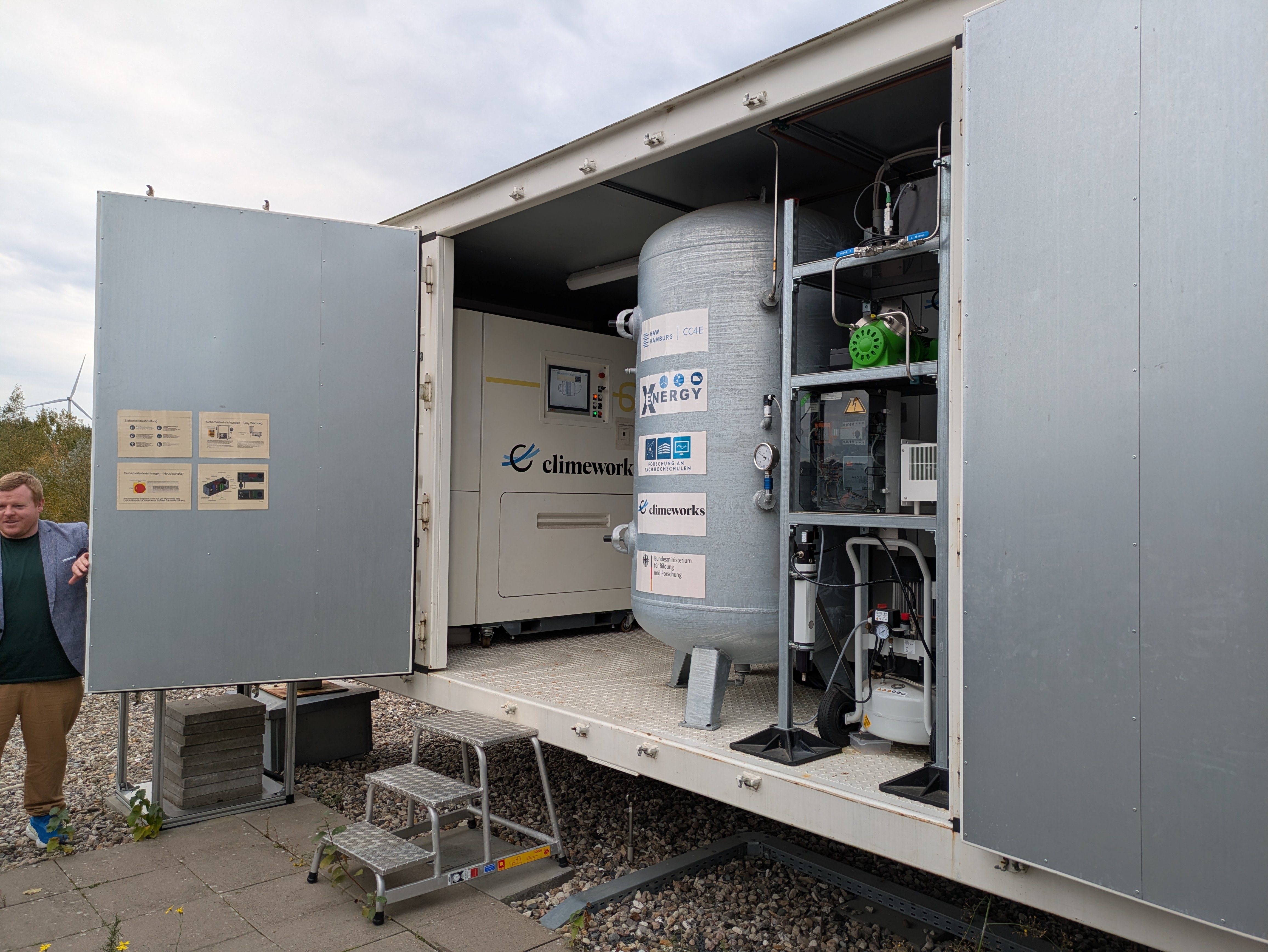
The German government will support the ramp-up of a market for carbon dioxide removals (CDR) with subsidy programmes starting as early as 2027, environment minister Carsten Schneider has announced. His government would soon adopt the long-awaited strategy on negative emissions to lay out the technologies’ role in German climate policy and set targets.
“Germany must become the global market leader in this future-oriented sector, as the carbon removal industry has enormous potential and I want to harness it,” Schneider said at an event in Berlin.
The country has the necessary technological know-how, the industrial base and a progressive climate policy, which puts it in an excellent position to use export opportunities and create jobs in the field, he said. “My aim is to drive the roll-out of these technologies forward rapidly now,” said the minister, adding that the government’s task now is to create the right framework conditions “and to provide support where necessary.”
Removing CO2 from the atmosphere and permanently storing it is set to become an increasingly important part of global climate action efforts. Climate researchers expect that global warming will exceed the 1.5°C goal of the Paris Climate Agreement in the 2030s, and that the world must work towards limiting the period of “overshoot” and reducing temperatures after a peak – ultimately by taking more carbon out of the atmosphere than it emits in greenhouse gases.

We are entering a new phase in climate policy. We will consistently implement measures to prevent and reduce emissions, continue to strengthen natural carbon sinks, and supplement this with the new element of carbon removals.
Germany aims to reach climate neutrality by 2045, and minister Schneider emphasised that the main focus continues to be avoiding and reducing greenhouse gas emissions. This will be achieved through a fossil fuel phase-out, the renewables build-out, improving energy efficiency, a functioning circular economy and the ramp-up of green hydrogen.
However, a relevant amount of emissions are considered hard or impossible to abate with technologies known today. This is true for certain industrial processes, such as cement production, but also waste incineration and agriculture – for example methane emissions from cattle. Remaining greenhouse gas emissions must be balanced out either through natural sinks like forests or by technological means, such as direct air capture of CO2 and permanent storage underground (DACCS).
Germany’s natural sinks will not be sufficient, especially if the country wants to capture and store more CO2 than its total greenhouse gas emissions. The country’s land use and land use change sector (LULUCF) has even been a net emitter of greenhouse gases, driven by emissions from drained peatland.
Germany to support carbon removal investments and credits market
Minister Schneider said his ministry would “very soon” finalise the long-term strategy for negative emissions, which has been delayed for years due to the break-up of the previous coalition government. Environment ministry official Thomas Kralinski said the government aims for the full cabinet to adopt the strategy by the end of the parliamentary summer break. In addition, the ministry proposes two subsidy programmes to support the emerging carbon removals market.
German government plans on carbon removals
- Long-term strategy for negative emissions
- Lays out potentials, demand, and technology basics
- Spells out the planned targets for technical carbon sinks for 2035, 2040 and 2045
- Investment support programme
- Supports pilot and demonstration projects, scaling of removal technologies
- For projects with measurable and sustainable removals
- Projects must be eligible for certification according to EU rules
- Market incentive programme
- Aimed at supporting the market for carbon removal credits
- Reduce market-entry barriers, investment risks and demand risks
- Supports buyers of carbon removal credits
- German state will not buy/use credits
- Government will set up trading platform
The government would earmark more than 400 million euros for the two support programmes until 2033, said Schneider. “In the long term, we are aiming for the emergence of a market that does not require public support,” he said.
“With all this, we are entering a new phase in climate policy,” Schneider added. “We will consistently implement measures to prevent and reduce emissions, continue to strengthen natural carbon sinks, and supplement this with the new element of carbon removals.”
German companies seen as well-placed but facing stiff competition
A panel of experts at the event in Berlin agreed that Germany was in a good starting position regarding carbon removal technologies, but that other countries like Denmark, the UK or the US could also take a leading role in the budding industry.
“We are in a strong position, both in terms of the research landscape – we lead the way in patent applications, for example – and as an industrial hub, for instance with our plant engineering or in the field of measurement technology,” said Corinna Enders, CEO of the German Energy Agency (dena).
We may well become the market leader within Europe, but that also depends on the funding landscape.
German companies would also be able to profit in the wider European market that is emerging due to climate targets, said Oliver Geden, a researcher at the German Institute for International and Security Affairs (SWP). “We may well become the market leader within Europe, but that also depends on the funding landscape,” he said. He cautioned that it was difficult to predict the economic potential of the carbon removal sector, but “of course it would be a very large market if we need to achieve volumes that correspond to five or more percent of 1990 emissions levels.”
Jochen Flasbarth, German state secretary in the environment ministry, highlighted that the adoption of energy-intensive carbon removal technologies like direct air capture at a large scale would likely happen in other world regions, where renewable is cheaper to produce. This meant that Germany should focus on developing the necessary technologies, “climbing the learning curve faster than others.”
This approach by the German government is similar to that regarding the green hydrogen market ramp-up. Germany wants to become a global leader in the technologies, but actual production will likely rather happen in regions of the world with cheaper renewables.
Next five years are crucial for carbon removal ramp-up – climate scientist
Negative emissions are not an issue for the distant future because investments and relevant regulatory changes must be made or prepared today, said Ottmar Edenhofer, director and chief economist of the Potsdam Institute for Climate Impact Research (PIK). “We now need to find ways to support CDR’s growth, and the next five years will be crucial in determining whether these investments are actually made, particularly when it comes to technical carbon sinks.”
The climate researcher recommended creating a new type of emissions allowance for carbon dioxide removals in the European Union Emissions Trading System (EU ETS). A company would be allowed to emit one tonne of CO2 today, but required to agree to ensure that one tonne of CO2 would be removed from the atmosphere at a certain point in the future. The European Commission is currently reviewing the ETS and plans to make reform proposals on 15 July, and is required to also lay out how carbon removals can be included.