Preview 2026: Europe urgently needs lead markets for clean steel, cement, plastics - think tank
This piece is part of a series of expert interviews to preview energy and climate policy developments in Germany and Europe in 2026. You can find the overview here. We will publish more interviews in the coming days, so stay tuned.
Clean Energy Wire: What has the government achieved last year in terms of decarbonising industry? What are the most successful approaches and the biggest failures?
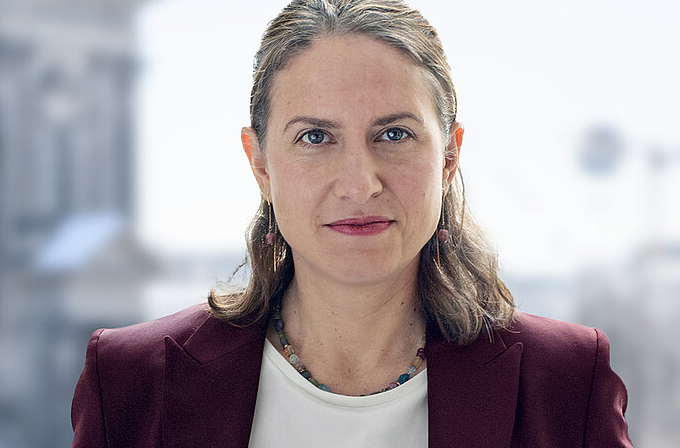
Julia Metz: The new federal government has consolidated the reduction in electricity tax for the manufacturing industry to the European minimum and approved a federal subsidy to reduce grid fees from 2026 onwards. This will provide short-term relief and strengthen electrification – in other words, the switch from fossil oil and natural gas to electricity in industrial production, for example with electrode boilers or large heat pumps. However, from a long-term perspective, there is still a lack of a reliable political framework to support industrial locations in Germany on their way to sustainable business models. In addition to short-term relief, companies need planning security for their investments, for example through reliability in CO₂ contracts for difference [that compensate companies for the higher costs of climate-friendly production (CCfDs)], instead of delays and funding cuts. The special fund [for infrastructure and climate neutrality worth 500 billion euros] should enable future investments and incentivise the development of green lead markets through binding requirements in public procurement, thereby creating secure demand for green steel and low-carbon cement.
What steps must the government take this year?
The key issue is financing: How can scarce budgetary resources be used to effectively and efficiently promote climate-neutral modernisation? In our view, three things are needed to achieve this: Firstly, investment incentives for a broad switch to energy-efficient and electricity-based technologies – this will reduce operating costs in the long term, accelerate modernisation and make industry and the country less dependent on gas and oil imports. Secondly, reliable funding is needed for CO₂ contracts for difference and the ramp-up of hydrogen production in order to give companies planning security. Thirdly, clear guidelines are needed for green steel and cement in infrastructure investments from the special fund. Together with measures to strengthen a European internal market for low-carbon industrial products, this will protect companies in increasingly tense global markets.
What should happen at EU level to advance industrial decarbonisation? What are the most important decisions ahead?
At the EU level, the coming year will be crucial for ambitiously advancing the Clean Industrial Deal. In particular, measures to strengthen lead markets for low-carbon steel, cement and plastics must be implemented quickly, for example within the framework of the Industrial Accelerator Act. The announced action plan for electrification should create a European framework that enables a faster transition to electricity-based technologies – through accelerated grid connections, guarantee instruments for investments and lower electricity prices. The EU should strengthen emissions trading (ETS 1), which has proven to be a key instrument of European climate policy, as part of the upcoming revision in order to continue to reliably promote the European internal market for climate-neutral products. Mistakes that weakened the ETS in its early years around 2010, such as the inclusion of international carbon credits, must not be repeated. Instead, foreseeable price spikes in the final phase of emissions trading until 2040 must be cushioned without weakening the instrument itself. This can be achieved, for example, by including negative emissions.