
Fears of becoming “Europe’s Detroit” dominate vote in Mercedes’ home state
Political attention in Germany and beyond is increasingly turning to the country’s southwestern state of Baden-Württemberg, where voters will determine a new state government on 8 March. It’s Germany’s only region with a government led by the Green party, who currently rule in a coalition with the state branch of chancellor Friedrich Merz’s conservative Christian Democrats (CDU) as their junior partner.
A win for the CDU was widely expected for months. But the latest surveys signal that the Greens have caught up with the conservatives in popularity, putting the election on a knife edge. Both Greens and the CDU are now projected to get 28 percent of the vote each, followed by the far-right Alternative for Germany (AfD) at 18 percent, and the Social Democrats (SPD) trailing behind at 8 percent.
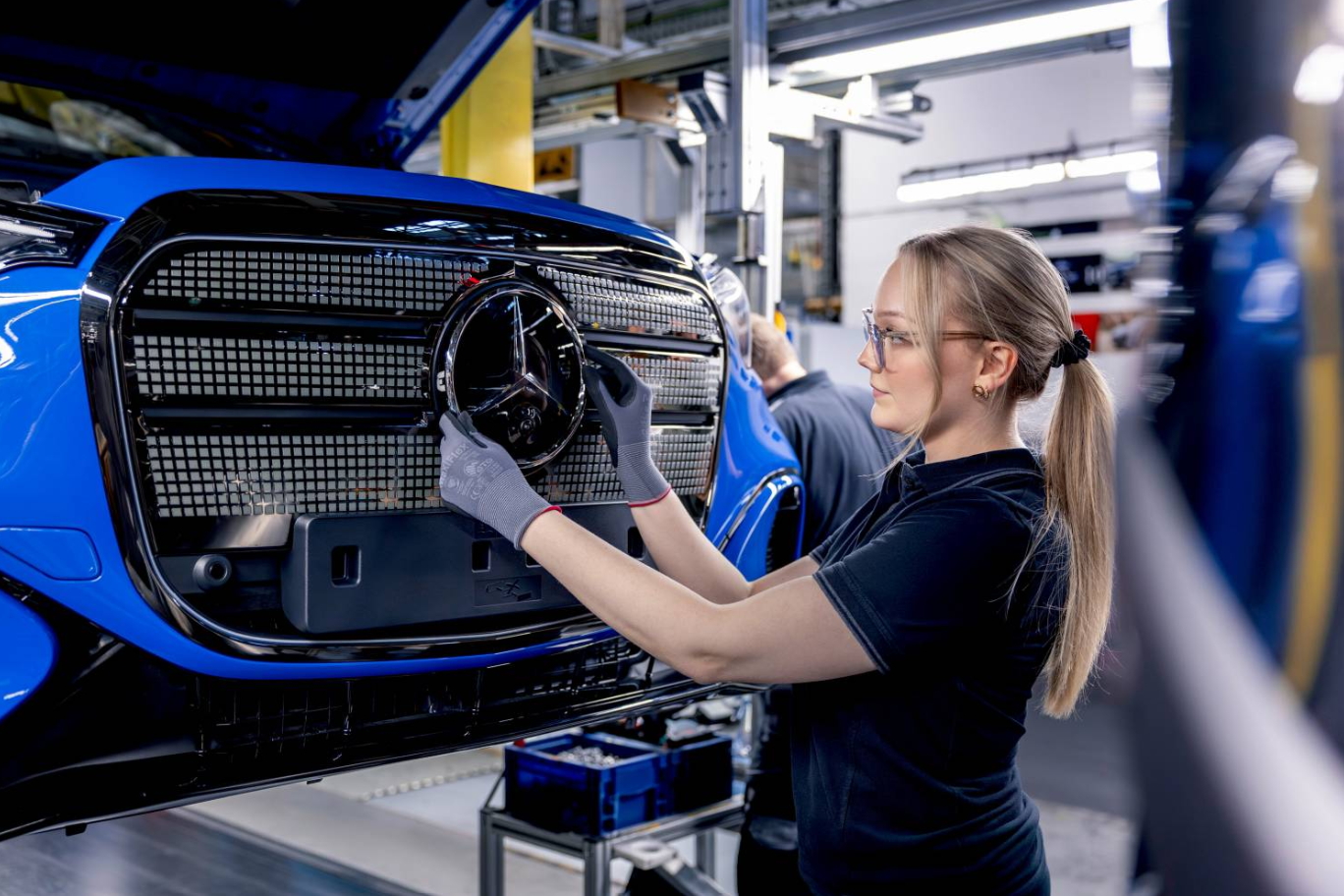
Jobs and the economy dominate the election campaign in the prosperous region with a renowned car industry, which not only includes carmakers Mercedes-Benz and Porsche, but also a massive ecosystem of suppliers dominated by Bosch, making the shift to electric mobility a central issue for many voters.
The region’s heavily export-dependent industry is in the midst of a structural crisis, as it is not only grappling with the transition to electric cars, but also with weaker global demand, US tariffs, and rapidly growing Chinese competition, resulting in job losses and widespread fears of economic decline.
While the Greens emphasize the economic opportunities linked to the transformation to climate neutrality, the conservatives warn against “overburdening the economy with climate targets.”
The state election's results are set to echo well beyond its borders: “Germany needs to establish a new model of prosperity, and that will be decided in Baden-Württemberg, among other places,” political consultant Arne Jungjohann told Clean Energy Wire. He added Germany’s and the region’s earlier economic success was partly built on fundamentals that have disappeared and require a reinvention: Cheap Russian gas, strong Chinese demand for products “Made in Germany” including cars, as well as US security guarantees.
Europe’s Detroit?
Current Green state premier Winfried Kretschmann, whose pragmatic approach made him very popular even with many conservative voters, steps down after 15 years in office, meaning the region will get a new leader following the election.
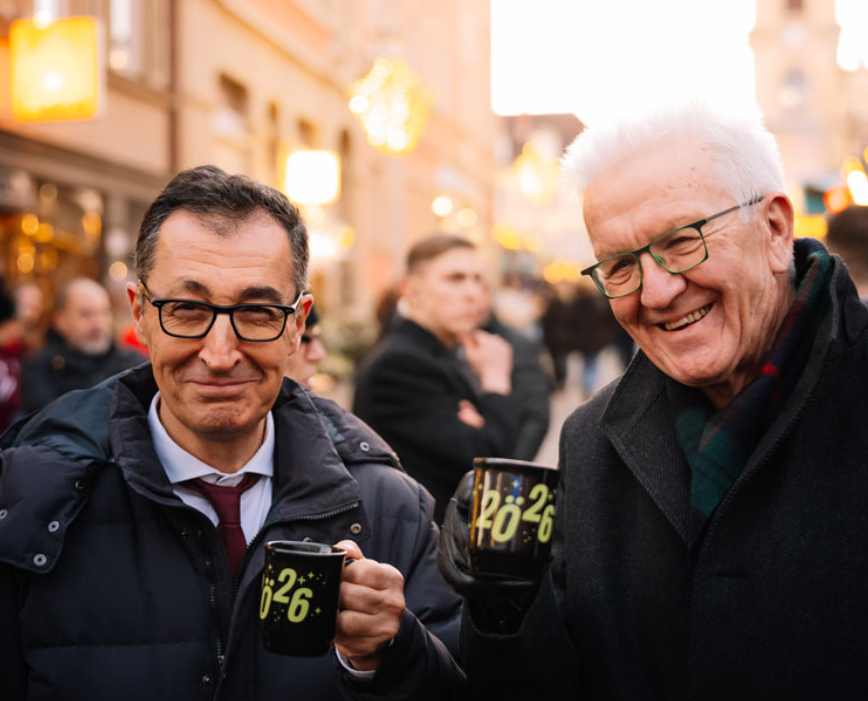
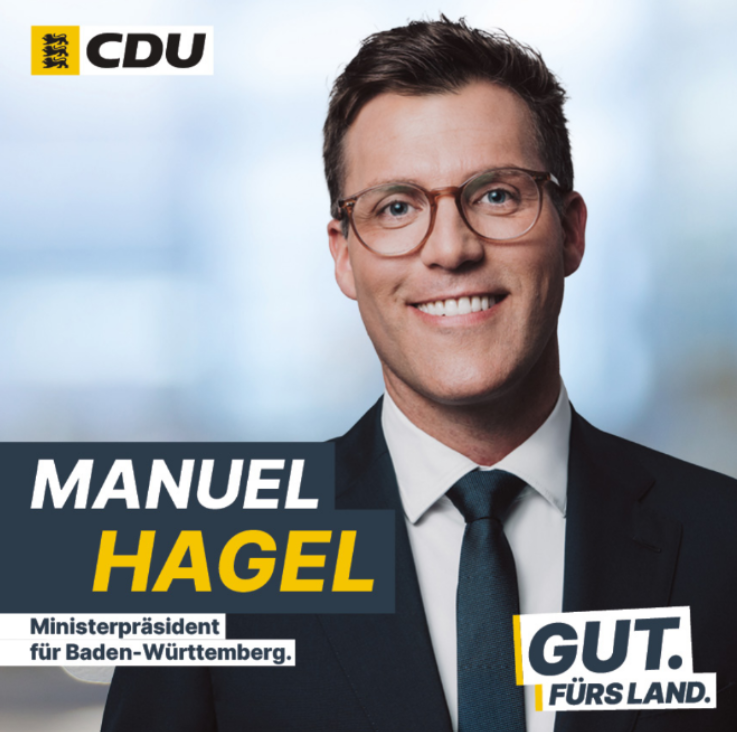
Green Party candidate Cem Özdemir, Germany’s former agriculture minister, rallied his party for an election campaign focused on “the economy, the economy, the economy,” while CDU candidate Manuel Hagel warned that everything must be done to prevent the region’s capital Stuttgart from becoming “Europe’s Detroit” by suffering an industrial decline comparable to that of the US car industry hotspot.
About 50,000 jobs were lost in the automotive industry throughout Germany in the past year. Leading supplier Bosch, also based in the Stuttgart region, plans to axe 22,000 jobs.
The crisis already makes itself felt – both in daily life and in politics. “When I’m in Stuttgart I increasingly hear about people on the lookout for new jobs. That’s new”, Jungjohann said.
The region not only depends on the car industry for jobs, but also for tax revenue. Trade tax revenue in Stuttgart almost halved last year to 750 million euros, due to lower payments by carmakers Mercedes and Porsche. Nearby Rastatt even saw its trade tax revenue drop by two thirds due to the crisis at Mercedes, its largest tax payer.
Both Özdemir and Hagel have pledged to continue the legacy of popular state premier Kretschmann, meaning differences between the region’s Greens and the CDU are much smaller than on the federal level. While Green politician Özdemir is careful not to sound too progressive, the CDU’s Hagel avoids sounding too conservative, making it difficult to spot clear differences between the two.
Pragmatism is the name of the game
As regards the future of the car industry, Özdemir stresses electrification as the way forward, while Hagel puts more emphasis on combustion technology. But both are stepping into Kretschmann’s footsteps by stressing their pragmatism.
Following Kretschmann’s example, Özdemir has spoken out against heavy EU fines for carmakers who miss the bloc’s emission limits during the campaign, and even questioned a strict 2035 combustion engine phaseout. “The decisive factor is not whether we achieve a precision landing, whether we achieve it a year earlier or later. The decisive factor is that the path must be right,” Özdemir said.
Kretschmann often put his state’s economy above his party line, especially when it came to defending car industry interests. To the horror of environmentalists and some Green politicians in Berlin, he said EU fines for excessive car emissions “make no sense”. The Green state premier's government also joined other car industry-heavy states in fighting strict emission rules at EU level.
In a similar vein, the CDU’s Hagel stresses his flexibility in the name of the local economy. “I don't care how a car is powered, whether it's a plug-in hybrid, a range extender, an electric vehicle, an electric motor, or a highly efficient combustion engine. The main thing is that it comes from Baden-Württemberg,” he said.
Dealing with the backlash
Even though Kretschmann made national headlines with his pro-car industry stance, he made climate action a cornerstone of the current government’s coalition agreement, and oversaw the introduction of an ambitious new climate law committing the state to become climate-neutral by 2040, five years ahead of the national target. This would not only require rapid industrial transformation, but also a faster renewables rollout.
Climate action in the car industry and beyond is a key issue in the upcoming election, but it has become increasingly controversial. Recent national polls indicate that voter concerns about the economy and security have partly superseded concerns about climate change, while scepticism about current implementation of the country’s landmark energy transition has grown. Like in many other countries in Europe, people in Germany are increasingly torn between the long-term necessity of climate action and short-term fears about financial burdens and economic stability.
The election in Baden-Württemberg is therefore also a test of public support for green transition policies at a time when regional and national debates over how to meet Germany’s climate goals remain unsettled.