
German government drops mandatory renewable energy share for heating
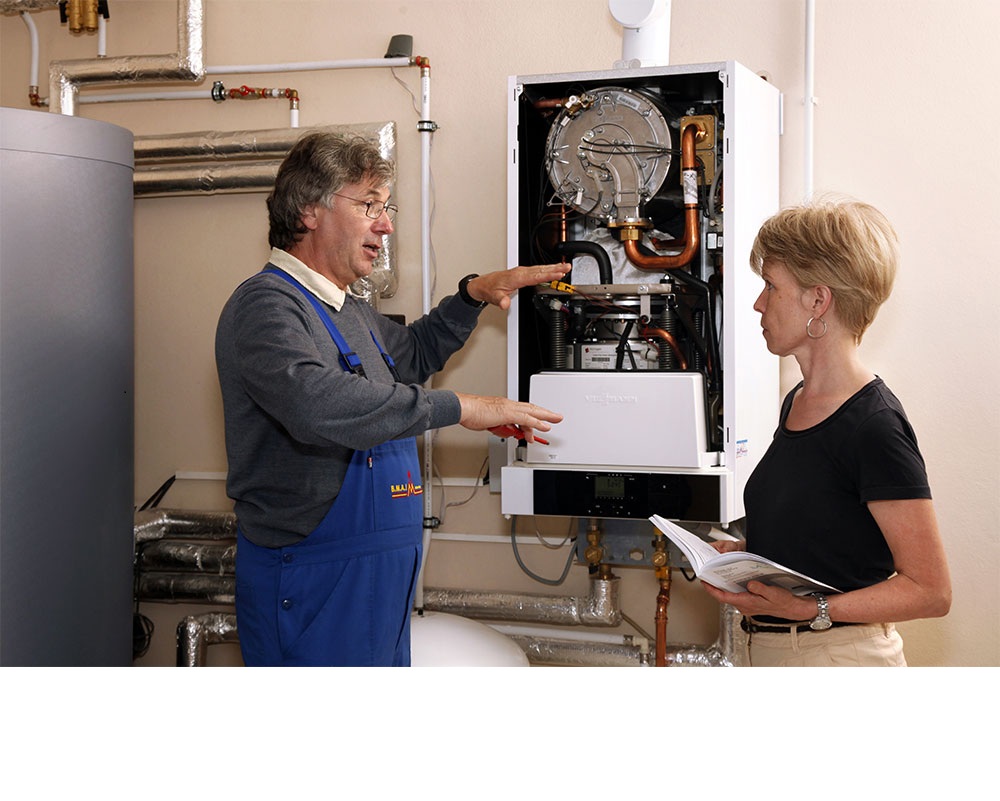
Germany's coalition government has published key points to a reform of the country’s law for decarbonising energy use in the buildings sector, removing a key provision requiring new heating systems to operate with at least 65 percent renewable energy.
Instead, the coalition of chancellor Friedrich Merz's conservative CDU/CSU alliance and the Social Democrats (SPD) plans to introduce a “green oil and gas quota” to gradually increase the share of climate neutral fuels in heating networks. Installing new gas- and oil-fired boilers will be allowed under the reform, with the condition that these operate with a rising green fuel quota from 2029.
The highly anticipated reform proposal was a key election promise of Merz's conservative alliance, and follows months of uncertainty around the future of Germany's Building Energy Act (GEG), which the coalition had relabelled into the Building Modernisation Act (GMG) at the end of 2025.
A key piece of the legislation aimed at bringing down emissions in the sector turned into a national controversy under the unofficial term “heating law”, which stipulated a gradual phase out of oil and gas boilers. The law, passed originally in 2023 under then-economy minister Robert Habeck from the Green Party, remained a key point of contention in the 2025 election, even though the previous government under chancellor Olaf Scholz had already softened its most controversial requirements.
Under the new agreement, responsibility for clean heating now passes from consumers to utilities, which have to ensure the oil and gas they provide is increasingly fed with biomethane, hydrogen or bio-oil. From 2029, the proportion of CO2-neutral fuels is set at 10 percent and incrementally increases afterwards. Specific percentages and annual figures are not yet included in the key points paper. Subsidies for clean heating systems, such as heat pumps and district heating, will continue until at least 2029, the parties agreed.
While heat pumps and district heating are prevalent in new buildings, fossil fuels continue to dominate the heating market for existing buildings. Cutting greenhouse gas emissions from heating is one of the biggest hurdles on Germany’s path to climate neutrality, with the buildings sector continuously failing to meet emission reduction targets.
The cabinet plans to pass the bill in April so that it can come into force before 1 July.
“A cost trap for consumers” – NGOs and energy industry
Environmental and social organisations including criticised the agreement, saying that a green gas quota places a financial burden on consumers without making an effective contribution to climate protection.
Mira Jäger, energy expert at environmental organisation Greenpeace, said the proposed reform amounted to “a big present for the oil and gas industry” and would “burry climate action in the buildings sector.” Since the green additives that are supposed to be mixed into fossil fuels are scarce and expensive, a rise in gas grid fees is to be expected, Jäger said.
Energy industry association BDEW said the fact that gas and oil heating systems may continue to be installed in the future risks that climate targets in the buildings sector will not be achieved, and come with “cost increases and lock-in effects.”
The critics are particularly concerned with expected increases in gas grid fees. More and more households disconnect from the heating gas networks after having switched to heat pumps or district heating. This means the shrinking number of remaining users will have to carry the entire network's running costs - or that operators decide running the network is no longer viable and shut the grid down.
“Anyone who installs a gas heating system now can no longer expect to be able to use it for long – simply because of the exploding grid fees,” said Till Irmisch, energy policy advisor at the Munich Environmental Institute. According to a report commissioned by the institute, households that continue to rely on gas heating systems in Germany may face additional costs of more than 4,000 euros per year by 2045 due to rising grid fees.
“This law completely loses sight of the people. It protects fossil fuel business models – and at the same time jeopardises the climate, affordability and social cohesion,” said Barbara Metz, head of NGO Environmental Action Germany (DUH).
Other risks include the additional costs of gas with additives, as these are usually not so widely available and more expensive. According to DUH, this makes green gases and fuels too scarce and valuable to be used on a large scale in the heating sector.
An analysis by price comparison website Verivox showed that the current average price of biogas tariffs is around 25 percent higher than the price of conventional fossil gas ones.
Utility association VKU warned that the green gas quota might turn out to be a sham, lulling consumers into a false sense of security and then costing them dearly. “We do not currently see how the ramp-up of green gases, and biomethane in particular, for blending into the gas grid can be massively increased without causing further cost increases for owners and tenants,” VKU head Ingbert Liebing said.
Meanwhile, a report by non-profit consultancy co2online concluded that the cost of buying and running a new gas boiler in Germany is predicted to be twice as high as a heat pump over a 20-year period. This is largely due to the rising CO2 price, which makes burning fossil fuels more expensive year-on-year to incentivise the move to cleaner alternatives.
Reducing emissions in Germany’s buildings
Renewable energy association BEE warned that the proposed reform might fall short of European climate requirements. “A well-designed green gas quota can make a meaningful contribution to increasing planning security for investments. However, this depends very much on the exact design,” said BEE head Ursula Heinen-Esser.
Germany has struggled to reduce emissions in its buildings sector for years, and faces a costly EU carbon target miss for its lagging reductions. The uncertainty unleashed by the opposition to the law's initial proposition to completely phase out fossil fuel boilers has weighed on the market. Sales of heating systems fell 12 percent in 2025 after an already weak previous year, according to the German Heating Industry Association (BDH) – marking the lowest level in 15 years.
The industry group, which largely welcomed the agreement, said that the long-term stability of funding instruments was of central importance for consumers and the industry. “Our industry has invested heavily in recent years, particularly in heat pump expertise and capacity. These investments need reliability,” said BDH head Markus Staudt.
The government has until 25 March to present a raft of proposals showing how it aims to close the gap towards reaching a 65 percent emissions reduction by the end of the decade. According to the latest emissions projections data from early 2025, Germany would reduce greenhouse gas emissions by around 63 percent by 2030, compared to 1990 levels, if all current policies are fully implemented. The effects of the new proposals for heating have not been taken into account.