
Climate change outpacing athletes’ ability to adapt, world of sports must act – researcher
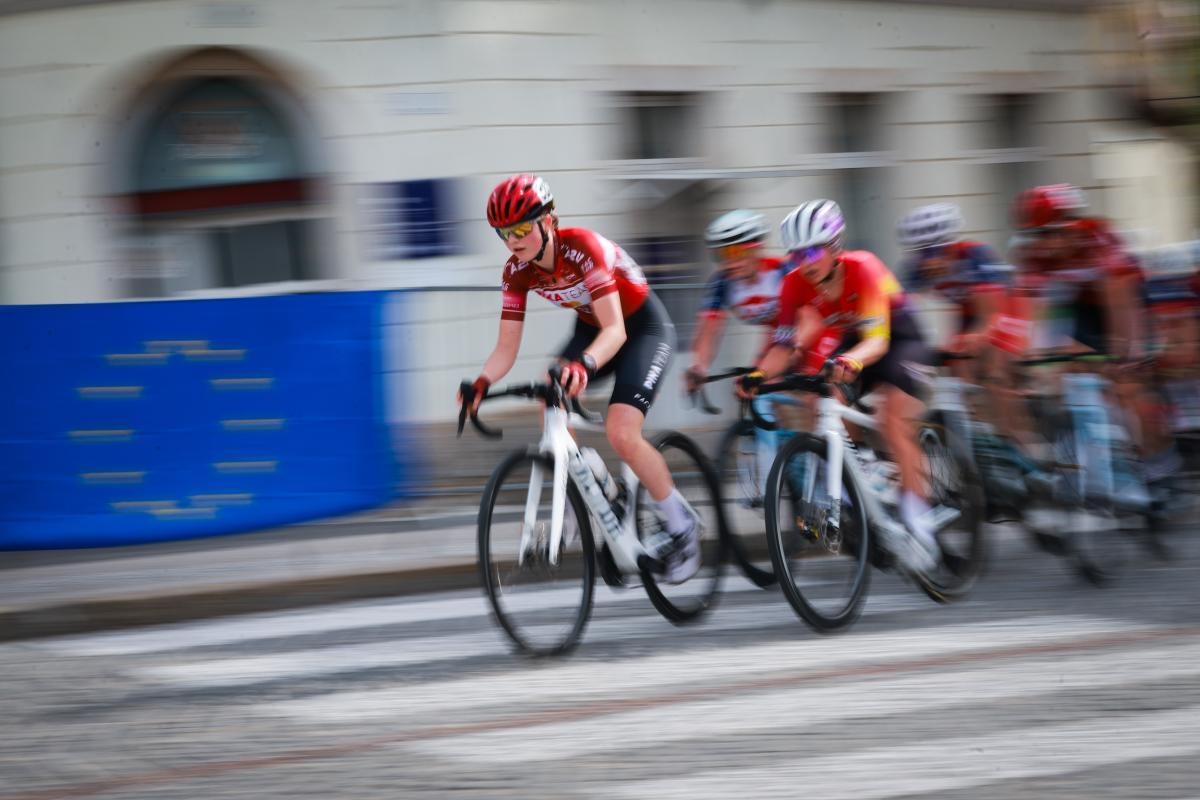
*** Please note: This article marks the start of CLEW’s reporting on climate resilience in the sporting world. This project was made possible by a grant from the Checkpoint Charlie Foundation. More articles to come. ***
Sven Schneider is a sports sociologist and professor at Heidelberg University in Germany. He develops strategies for climate adaptation in sports for the German federal government and the German Olympic Sports Confederation (DOSB).
Clean Energy Wire: You have conducted extensive research into the intersection of climate change, sport and health. In one of your papers, you divide climate risks into six clusters: heatwaves, UV radiation, other extreme weather events, bacteria and viruses, allergens, and air pollutants. Can you expand on the research on risks and their division?

Sven Schneider: This classification is the result of an expert study, where 24 specialists in dermatology, internal medicine, allergology, sports medicine, infectious diseases and toxicology were involved, together with 24 experts from the eight outdoor sports associations with the largest membership (including elite athletes, Olympians, World Cups and World Championship participants, as well as national coaches and top officials from football, tennis, athletics, golf, equestrian sports, swimming, mountaineering and skiing). Risks and recommendations were agreed upon by this 48-member expert panel.

In competitive sports, temperature-related risks are especially high due to the more intense and often longer duration of exertion.
This expert study identified three so-called ‘direct’ risks associated with climate change:
- High outdoor temperatures place a general strain on the cardiovascular system, the respiratory system, metabolism and thus key physiological regulatory circuits in the body. Thermoregulation is compromised during high physical exertion, high outdoor temperatures and high humidity, particularly when combined with low wind speeds or headwinds. This is especially true for athletes who are poorly acclimatised. In competitive sport, temperature-related risks are particularly high due to the more intense and often longer duration of exertion. Above all, there is a risk of hyperthermia, often in conjunction with dehydration. The higher the core body temperature rises above 39°C, the more severely cognitive abilities are impaired. As the condition progresses, heat-related illnesses such as sunstroke, heat cramps, heat exhaustion, heat syncope, heat collapse and heatstroke become a risk. Heatstroke, in particular, is a medical emergency.
- Climate change also leads to higher risks of accidents and injuries in sport. These can result, on the one hand, from acute extreme weather events (storms, lightning and falling branches). In mountaineering and skiing, the thawing of permafrost areas and more frequent heavy snowfall events have led to additional risks of accidents caused by landslides, slope slides, and avalanches. In water sports, high or low water levels can result in unpredictable current speeds, narrowed navigation channels, overestimated water depths, and the loss of portage, entry, and exit points. In addition to such acute events, extreme weather conditions also indirectly increase the risk of accidents and injuries due to dried-out grassy areas, drought-induced unevenness, and erosion-related changes in topography.
- The increased UV exposure resulting from climate change (due, among other things, to longer periods of sunshine and an extended outdoor season) places a particular strain on competitive athletes. This leads to long-term consequences of prolonged exposure to UV radiation resulting from training and competition, particularly in the form of skin cancer.
Scorching heat is one of the most obvious health risks for athletes, but you have previously also talked about what I found to be less-obvious consequences of climate change on sport, for example horse riders facing an increased risk of tickborne diseases, or how a higher concentration of pathogens in warmer, shallower waters resulting from heatwaves and droughts put kayakers or rowers at higher risk of infections. What other more obscure risks have you found?
The experts from academia and the field whom we interviewed identified three so-called ‘indirect’ risks. These are risks arising from ecosystems, which are themselves changing as a result of climate change.
Firstly, climate change leads to increased respiratory risks. The intake of pollutants is particularly high among competitive athletes due to their increased respiratory volume per minute. Changes to the ecosystem also increase pollen dispersal, concentration and allergenicity. Consequently, athletes with polyvalent sensitisation rarely experience symptom-free periods.
The intake of pollutants is particularly high among competitive athletes due to their increased respiratory volume per minute.
Secondly, the expected increase in infection and intoxication risks due to climate change is also relevant in sport: for instance, vectors such as ticks and mosquitoes are becoming more prevalent. Furthermore, persistently high water temperatures during hot summers lead to risks of infection and intoxication in water sports due to pathogenic agents in the water.
Thirdly, climate change can also affect the mental health of athletes. On the one hand, heat, nitrogen oxides and ozone can influence the experience of stress. On the other hand, unpredictable conditions can complicate training planning, including periodisation and cycling, particularly in elite sport.
How about indoor athletes, are they essentially immune to climate risks?
The extent to which indoor sports are also affected by climate-related risks, such as prolonged heatwaves, depends largely on the energy efficiency of the sports facilities.
Sports halls often suffer from poor air circulation, and indoor athletes cannot, as they can outdoors, seek out breezy shaded areas.
In Germany, the vast majority of sports halls are not air-conditioned. Furthermore, sports halls often suffer from poor air circulation, and indoor athletes cannot, as they can outdoors, seek out breezy shaded areas or cooler spots, as microclimatic conditions are often virtually identical throughout the entire hall.
In Germany, for example, final matches in the women’s table tennis Bundesliga [the national league] were suspended when indoor temperatures reached 39°C due to the risk of athletes collapsing – including underage players.
What about positive effects of climate change on traditional summer sports? Are there any?
The generally milder weather contributes to the sport-specific benefits of climate change: many competitive athletes benefit from the outdoor season starting earlier and ending later. In addition, explosive sports (such as track and field sprint events) benefit from temperatures above 25°C due to improved muscle contraction properties, provided that force production only needs to be maintained for a short period of time or over a few repetitions. Last but not least, higher UV exposure helps prevent depressive symptoms (for example, ‘winter depression’), vitamin D deficiency and osteoporosis.
We make the rules for sports, and decide on scheduling, cooling breaks, stadium design. How climate adaptable is the sporting world, and are there risks that are harder to adapt to?
Compared to the workplace and other high-risk settings, such as care homes for the elderly, the sports sector has been significantly slower to adopt preventive measures. As part of our research, we adapted the “TOP” principle – long established and validated in occupational health and safety – to the sports sector. This model is now in use throughout Germany. The acronym encompasses the following T-O-P measures:
- Technical and structural measures: Heat and UV exposure at sports facilities can be reduced through technical and structural measures. So-called ‘cool’ and open-air halls are becoming increasingly popular. Further examples of technical and structural measures include misting systems (‘mist showers’) at running events or in coaching zones. Natural (for example trees) and artificial shading (such as sun sails) offer simultaneous protection against heat and UV radiation. Lightning shelters, such as those already widely implemented in golf, protect against the risk of injury from lightning strikes.
- Organisational measures: Climate-related health risks can also be addressed through the intelligent organisation of training and competition schedules. Daily or seasonal heat, as well as UV, pollen and ozone exposure, can be mitigated by rescheduling training and competition times. Examples from running include the increasingly popular “night runs”.
In many sports, the official rules currently prohibit additional breaks or adequate UV protection through clothing. Sensitive rule changes, such as those recently introduced in football, beach volleyball or cycling, could enable shorter match durations, more frequent player substitutions, additional drink and cooling breaks, or more protective sportswear. - Personal measures: Furthermore, clubs should support the preventive actions taken by individual athletes that are always carried out in parallel. Such individual measures include the provision of pre-, during- and post-cooling methods (cooling vests, ice cubes, spray bottles and cool kits) and the installation of water dispensers at training venues. UV-related risks can be mitigated by ensuring that UV-certified competition and training clothing are purchased.
You have looked into the intersection of climate and sport from a German context, but I'm assuming that risks and action could also be applied to an international context – is this correct?
Common to all existing adaptation concepts known to us is the realisation that – particularly in elite sport with its long and intense periods of exposure – it will not be sufficient to leave adaptation to a changing environment solely to the athletes.
Naturally, the climate adaptation measures we have developed for sport must be adapted to the respective local and regional contexts. If one compares existing concepts from other countries, such as the USA, Australia and New Zealand, clear similarities become apparent.
Common to all existing adaptation concepts known to us is the realisation that – particularly in elite sport with its long and intense periods of exposure – it will not be sufficient to leave adaptation to a changing environment solely to the athletes. Rather, sport as an institution – as the operator of sports facilities, as the organiser of competitions and major events, and as the employer of highly qualified coaches – has a duty to supplement and support the individual (so-called ‘behavioural prevention’) measures of each individual athlete through overarching (so-called ‘contextual prevention’) measures on site.
Health and safety principles have long been standard and mandatory practice across industries in Germany. Competitive sport can take this as a guide and learn from it by transferring established safety concepts and adapting them to specific sports – so that we can continue to practise sport in all its forms at the highest level in the future.