
Government agrees to phase out Germany’s landmark fixed feed-in tariffs for new small solar PV
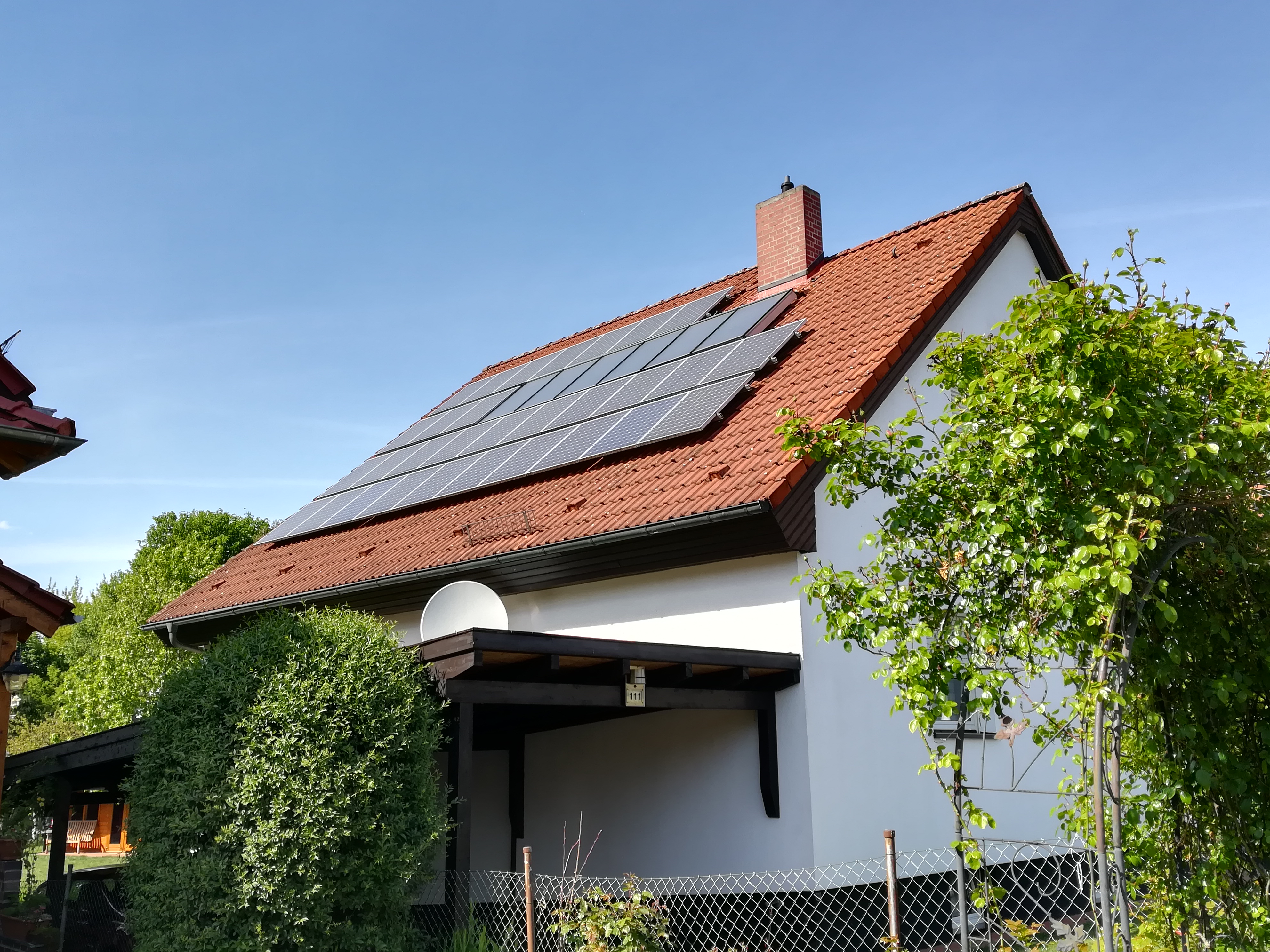
The German government cabinet has decided a law reform to lower support for new renewable energy projects, and cut compensation payments for electricity that is curtailed due to grid bottlenecks, in an effort to reduce costs associated with the energy transition.
The step represents a “paradigm shift” and is the most comprehensive renewables reform Germany has passed in years, economy and energy minister Katherina Reiche said at a press conference. Reiche said the energy transition would continue successfully, but the “resolute expansion” of renewables needed to be made more cost-efficient.
“We are putting an end to subsidies for installations that generate such high returns that they would be installed anyway,” she said. “We are introducing so-called contracts for difference, which cap profits at a maximum level. And we are stopping the practice of renewable energy plants knowingly locating in grid areas that are already at full capacity, with costs being reimbursed by taxpayers.”
Renewables support has been a cornerstone of Germany’s energy transition for decades, helping to drive the global rollout of technologies like solar photovoltaics and wind turbines. The government currently spends 15 to 17 billion euros annually from the state budget on renewables subsidies, Reiche said. Renewables are now among the cheapest forms of electricity generation – and the government argues that support can be cut – but converting the entire energy system to intermittent solar and wind requires additional changes, such as large-scale grid expansion.
The German Environment Agency (UBA) said in a 2021 report that environmentally damaging subsidies reached 65 billion euros annually – a number that has since risen to more than 85 billion euros due to the energy crises, according to calculations by Green Budget Germany (FÖS).
Today’s decision means lawmakers in the Bundestag can debate the reform after the parliamentary summer break ends in September, potentially making changes before final adoption later this year.
Key elements of the reform of the Renewable Energy Act (EEG)
- renewables targets remain unchanged (80% share in electricity consumption by 2030, as well as gigawatt targets for onshore and offshore wind, and solar PV)
- phase-out of fixed feed-in tariffs for small PV installations (<25 kilowatt (kW))
- stronger focus on cost-effective ground-mounted solar installations
- introduction of a clawback mechanism to prevent windfall profits: so-called “two-way contracts for difference” (for installations > 100kW)
- cap the permissible level of land lease payments for onshore wind turbines subsidised under the EEG
- increase volumes in bioenergy auctions from 2027
- create the legal basis for “resilience auctions” for onshore wind and large-scale solar according to EU Net-Zero Industry Act, e.g.: components must be made in Europe
- improve cross-border cooperation on joint renewables projects with neighbouring countries: allow projects abroad to participate in German support auctions
Reform means Germany will miss renewables expansion targets – industry
The cabinet decision has put an end to the “months-long nail-biting wait” over the energy reform, but it will be “impossible to achieve” Germany’s renewables expansion targets with the current draft, said Ursula Heinen-Esser, president of the German Renewable Energy Federation (BEE). Heinen-Esser criticised that the reform shifts responsibility for the lagging expansion of grids onto renewable electricity operators, while imposing few new requirements on network operators to speed up the buildout.
Industry welcomed the draft reform. The proposals provide important and long-overdue impetus for an efficient and competitive energy system, said industry association BDI in a statement. It welcomed that renewables would be integrated more strongly into the market, which would improve cost-efficiency. “The greater focus on cost-effective ground-mounted installations and direct marketing provides the right incentives to reduce the costs of the overall system and to utilise renewable energies in a way that better serves the system,” BDI said.
The government is proposing the reforms in response to a combination of EU deadlines, debates about the costs of renewables support, and electricity grid bottlenecks.
A 2024 EU power market reform, decided in the wake of the energy crisis exacerbated by Russia's war against Ukraine, requires Germany to adapt its renewables support system. From 1 January 2027, new state-backed support mechanisms for wind, solar, geothermal, hydro and nuclear power must include a clawback provision to prevent windfall profits when market prices are high. The draft reform introduces this mechanism. Once adopted by parliament, the European Commission must approve the new funding scheme based on state aid rules – increasing the urgency of a quick adoption to ensure the seamless transition over the turn of the year.
Fixed feed-in tariffs for private rooftop solar come to an end
Much of the debate surrounding the reform has been centred on economy minister Reiche’s push to reduce renewables support in an effort to save the state budget, and align the expansion of wind and solar energy with lagging electricity grid development. The minister has argued that renewables no longer require the level of support granted until now, and that the rapid buildout has strained transmission and distribution networks.
The government has said it will stick to the existing target of increasing the share of renewables in electricity consumption to 80 percent by 2030 (56% in 2025), and stressed that solar and wind power development remain central to the country’s energy transition. However, the renewables industry and environmental NGOs have warned that the proposed changes could threaten the progress of the energy transition.
The reform brings two major changes for new renewables projects.
To enhance the cost-effectiveness of solar energy expansion, there will be a stronger focus on cost-effective ground-mounted installations in future. As a consequence, small-scale, private PV installations will no longer receive guaranteed fixed feed-in tariffs, which have been at the heart of Germany's energy transition since they were introduced in 1990, and have been emulated across the globe. Since 2000, these have been provided to new installations over a period of 20 years, fuelling a boom in solar buildout.
Step by step, these will now be phased out, and operators of new installations will have to sell their electricity directly on the market. During the transition phase, installations can receive a temporary payment, but this will be lower than current feed-in tariffs.
Support for large solar will continue to be decided in government auctions.
Curtailment compensation cuts
In addition, new large solar parks will see cuts in the compensation they receive when their output is curtailed due to grid bottlenecks. In future, new projects built in grid bottleneck areas will not receive compensation for a fifth of their annual electricity yield.
“The costs are currently borne by the public, regardless of whether the electricity is needed or not,” said economy minister Reiche. “The subsidy is always paid. We must and will put an end to this ‘produce and forget’ principle,” she said.
Key elements of the grid reform package
- limit to curtailment compensation to steer the location of new renewable projects
- in “capacity limited” areas where more than five percent of the previous year’s electricity generation could not be fed into the grid, new projects forgo curtailment compensation to be connected to the grid
- volume of uncompensated curtailed electricity capped at a maximum of 20 percent of annual electricity yield, or 18 percent in wind priority areas, for up to six years
- new rules for grid connections, giving operators powers to prioritise connections
- regionally differentiated grid construction fees that renewable projects would also have to pay
- standard digital grid connection processes by 2028
Reform puts up new hurdles for much-needed electrification – NGOs
Local utilities association VKU welcomed several elements of the reform proposal, including additional tender volumes for onshore wind energy, improvements for wind sites in southern Germany, the introduction of a cap on lease rates, the shift to direct marketing for rooftop solar installations, and caps on the output of new onshore wind and solar installations. “It is now a matter of shaping the legislation in the parliamentary process in a practical manner, so that investments can be implemented more quickly, efficiently and cost-effectively,” said deputy managing director Kai Lobo.
The Association of German Chambers of Commerce and Industry (DIHK) welcomed the grid access changes. “The proposed regulations create more accountability and thus speed up grid connections,” said Sebastian Bolay, who heads DIHK’s energy, environment and industry department. Through improved management, digital processes and more targeted grid integration, bottlenecks could be avoided at an earlier stage and investments planned more efficiently, he said. Bolay criticised the latest changes to earlier drafts, which would now still guarantee some compensation to new facilities that are being built in grid bottleneck areas. “In order to limit the rise in grid charges, facilities should be expanded primarily in areas where the necessary grid capacity is available,” he argued, also calling for more speed on grid expansion.
Wind power industry association BWE warned that the proposals risk the future German energy system and the quality of Germany as a business location, criticising that the government had not taken industry comments into account. “Never before has the government disregarded the expertise of those on the ground to such an extent as it has with this amendment to the Renewable Energy Sources Act (EEG) and the grid connection package,” it said. The drafts failed to create the reliable framework for renewables that the government had promised. “Germany needs more renewable electricity. Instead, what we’re getting are fewer prospects for expansion,” criticised BWE president Bärbel Heidebroek.
Environmental organisations criticised the reform proposals, arguing that they would create new hurdles to the necessary expansion of renewable energy in the country.
The legislative changes will create barriers to investments in renewables expansion at a time when heat waves and wildfires affecting large parts of Europe highlight the need of climate action, said environmental NGO umbrella organisation DNR. “The answer to heat waves, wildfires, and dependence on fossil fuels cannot be to slow down the expansion of renewable energy,” said the organisation’s president Kai Niebert. “Making Germany resilient requires consistently electrifying industry, heating, and transport using renewable energy,” he said, calling for changes to the draft laws in the parliamentary process.
NGO Germanwatch criticised the planned grid access reform. “Instead of establishing clear guidelines for the accelerated upgrading of grid areas with limited capacity and for the systematic digitalisation and standardisation of distribution grids, the government intends to restrict grid access for renewable energy sources as well as the right to compensation payments in areas with limited capacity,” said energy policy officer Henri Schmitz. Rather than achieving the desired cost reductions, this would increase investment risks and, consequently, drive up the costs of expanding renewable energy capacity, he said. He called on the government to present improved rules in the announced distribution grid package.
Schmitz also called for longer transition periods before ending support for small-scale solar PV, arguing that simple systems for private investors to sell their electricity directly on the market, and cheap smart meters are currently lacking. “Small solar power systems encourage participation in the energy transition and, for many households, are the first step towards heat pumps and electric cars,” he said. The abolition of the feed-in tariff for new installations – coupled with increasing requirements on operators – would make investing in small PV systems uneconomical in many cases, he added.