
Los Angeles works to shed its car-centric identity as “transit-first” Olympics approach
*** Please note: this article is part of CLEW’s reporting on climate resilience in the sporting world. You can find the full package here. This project was made possible by a grant from the Checkpoint Charlie Foundation. More articles in this series to come. ***
“The Games are over, let the traffic begin,” proclaimed Los Angeles mayor Tom Bradley the morning after the 1984 Olympics ended. It was an unscripted moment that spoke of success: LA – a city built around the car and synonymous with gridlock – had not only avoided a transport collapse, but actually saw improved traffic flows during those 16 summer days as sports fans flooded in.
“The 1984 team did much to alleviate the bad traffic in order not to be embarrassed,” says Genevieve Giuliano, a transport researcher at the University of Southern California (USC), describing efforts to reduce congestion by encouraging businesses to let employees work from home or shift working hours, and to move lorry deliveries into the early morning. Driving around the city was almost easy. “It did not last,” Giuliano adds.
With two years left until the Games return to LA, officials have a different definition of success. They use the word “legacy” almost recklessly: from strategic documents to public meetings, it is clear that LA would rather its roads not be immediately filled with traffic again once the Olympic torch moves on.
“The year ahead is not just another busy season. Really, it’s the most consequential year in a generation to put to rest that notion that we are dependent on cars,” says Los Angeles city mayor Karen Bass as she begins her second tenure as chair of the Los Angeles County Metropolitan Transportation Authority (LA Metro). “This is a rare moment, and I intend for us to meet it and to build something that lasts long after the world stops watching.”
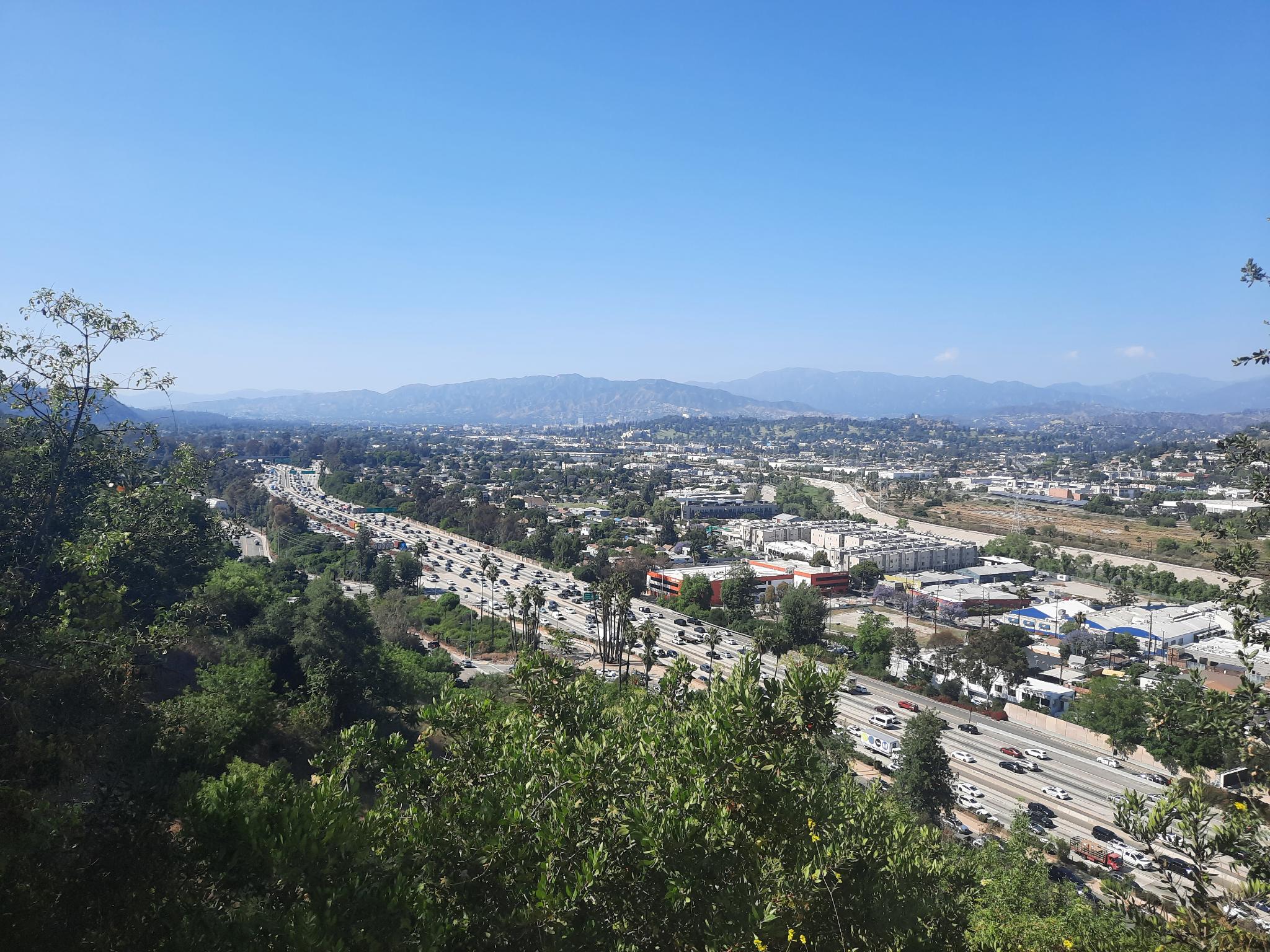
Transport is one of the biggest sources of pollution in the US and, like most American cities, LA has struggled to cut emissions from the sector. Bass outlined the bold vision to host the first “car-free” Olympics as the 2024 Paris Games ended. The pledge is narrower than it sounds: it omits the fact that most fans will have to fly in and only applies to travel directly linked to the Olympics, without meaning cars would stop driving alltogether. Still, over the next four years, the city where most journeys are made by car would build out its transport network so that hundreds of thousands of spectators could reach every venue by any means other than the car.
The organising committee, LA28, prefers the more modest goal of staging “transit-first” Games. Whether that is unambitious or simply realistic is up for debate. Either way, the shift matters in a city where air pollution hazes the hilly horizon and losing hours to traffic jams is part of everyday life.
Travelling through the sprawling metropolis in the spring of 2026 the way officials hope fans will do during the Olympics shows how long the road ahead is.
LA still experiences bad air quality days, largely driven by transport
Greater Los Angeles sits in a basin ringed by mountains and hills that trap pollution, with sea breezes concentrating polluted air inland. Air quality has improved significantly since the city’s infamously smoggy decades between the 1960s and 1980s, but the region still has some of the worst air quality in the US, largely driven by transport.
Matt Petersen has a clear picture of what the Olympics could bring to the city, or more specifically, what they could leave behind. He heads the Los Angeles Cleantech Incubator (LACI), which is working to use the Games as a catalyst for clean investments, with more than 100 million US dollars already committed.
“When the world arrives, hopefully they see more investments, more electric vehicles, more charging, more clean energy,” he says. “We can have clean skies, clean air, clean streets, and clean corridors in LA.”
In Petersen’s vision, the Olympics are a chance to showcase American innovation in clean transport. “What we do here matters, not because of self-importance, but because California and LA are seen as first-movers.”
Cars remain the most convenient option
Across the 88 cities that make up Los Angeles County, the streets are wide and the pavements narrow. Concrete abounds and roaring freeways cut across the region. Despite growing options, public transport accounts for only around five percent of journeys. “People who live in LA don’t even know there is a subway in LA,” says Jacob Wasserman of the University of California, Los Angeles (UCLA) Institute of Transportation Studies.
It is already possible to get almost anywhere by public transport in LA; it is just not convenient. Olympic venues are scattered around the county, sometimes more than 50 kilometres apart. On a normal day, travelling between Long Beach’s seafront, where beach volleyball, climbing and rowing events will be held, and Pasadena, which will host diving and the football finals, takes around an hour by car – or two and a half by public transport.
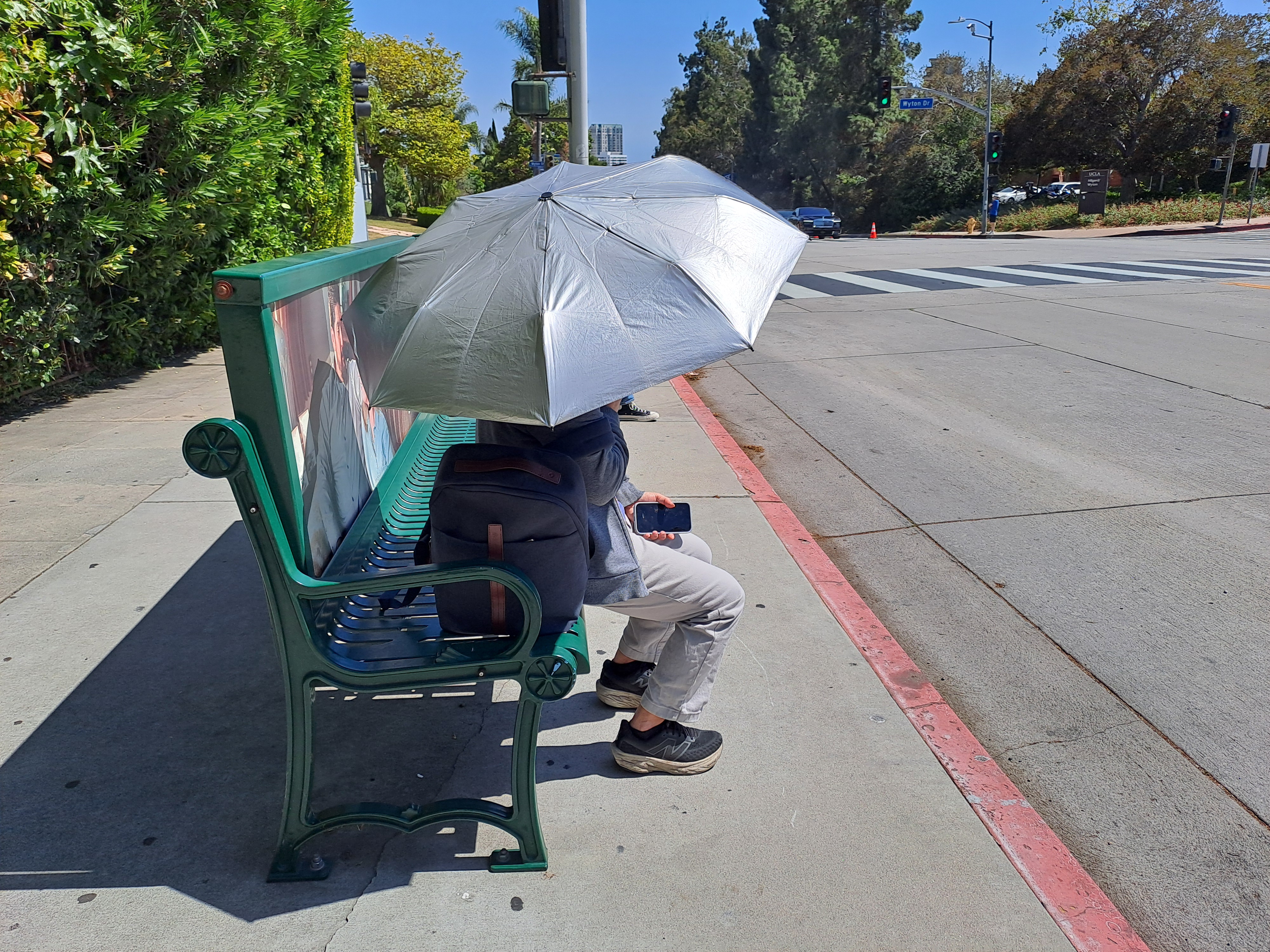
Waits for connecting buses can add up to well over an hour, often on unsheltered pavements facing six-lane roads. Those unfamiliar with the system walk aimlessly around junctions hunting for inconsistently marked bus stops. Once aboard, automated announcements advise passengers to keep valuables out of sight, and travel times stretch as buses get stuck in the same traffic drivers love to complain about.
The vast city is far more congested now than in 1984, says USC’s Giuliano, and buses – the backbone of the system, carrying nearly 700,000 people a day – are routinely far slower than getting in a car. “As long as public transit takes three, four, five-times as long as it does to take the car, that's not the option that most people are willing to take.” Local politicians, she adds, are reluctant to discourage driving by tolling highways, introducing congestion pricing or expanding parking charges: “We have a system where we give a lot of incentives to the automobile, you can’t be surprised that it is hard to entice people out when they get such a good deal.”
Driving habits are slowly shifting, but not necessarily towards public transport. It is easy to confuse camera-clad self-driving vehicles for Google Maps cars, and to dutifully smile as they drive past. Robotaxis – a rarity in most parts of the world – are now a common sight on LA’s streets. The technology could eventually improve traffic flows, road safety and give space for urban planners to redesign streets – yet it can itself struggle with predictable disruptions like road closures near sporting venues.
Millions of journeys, almost no parking
A “transit-first” Olympics should help buck this trend: the region has stepped up efforts to fix pavements near venues to improve walkability (LA also “squanders millions” on accessibility lawsuits) and to create dedicated bus lanes that should outlive the Games. Organisers expect to sell between 10 and 15 million Olympic tickets. Under a “transit-first” Games, those journeys, plus travel by roughly 65,000 volunteers and staff, should happen by bus, rail, bike or foot – on top of LA’s normal transport demand. Because of Olympic security requirements, parking near stadiums will be virtually non-existent.
Much of the task to move the masses falls to LA Metro. “We are not just planning for a surge of demand during the Games, we are planning with legacy in mind,” says chief executive Stephanie Wiggins. For the Olympics, LA Metro plans to roughly double its bus fleet temporarily and set aside road space for the sole use of official Olympic vehicles, a requirement by the International Olympic Committee (IOC).
It also identified 28 major transport projects it wants to deliver by 2028, from bike paths and fleet electrification to a transport hub near the airport and an underground line extension, meant to connect venues better while improving the system as a whole. The city’s Climate Action Plan, published in April, promises LA will be recognised globally for upholding ambitious climate commitments while hosting the world.

Our goal was never only to move people to a match. It was to introduce more people to what Metro can be.
Critics argue that channelling funds towards Olympic-linked projects is not the best way to prioritise wider transit improvements. “More often than not, when you create an artificial deadline, the priorities go to where the tourist dollars are, not to the people who are transit-dependent,” says Jonny Coleman, a member of advocacy group NOlympics LA, which campaigns to cancel LA’s Olympic bid.
Moreover, it remains unclear how much will endure once the Games end. A federal government hostile to climate-related projects, LA’s strained finances, and disputes over who is responsible for what mean the city is likely to fall short of the clean transport legacy advocates once envisaged.
Smaller ideas may still get a boost: “We have a few start-ups that will pilot temporary or mobile charging – that wouldn’t have happened without the football World Cup and the Olympics,” says LACI’s Petersen.
LA’s “transit-first” Games won’t be powered by clean buses
The US federal administration under president Donald Trump has stifled efforts to clean California’s air and has challenged the state’s zero-emission vehicle rules, with California withdrawing its regulation for cleaner trucks. Federal money for electric buses is drying up and resources for safe cycling are disappearing from official federal websites.
With Washington largely unresponsive to funding support requests, LA Metro has revised its list of 28 projects and gradually reduced the number of buses it plans to lease whenever critical funding milestones were not met, from an initial 3,000 to around 1,700. The agency, which already runs the second-largest public transport system in the US, needs federal money for buses, extra drivers and temporary depots. It had hoped its entire fleet, including the supplemental Olympic buses, would be zero-emission by 2028. Instead, its board will soon vote to procure 200 new electric buses.
“It’s a drop in the bucket, it is less than 10 percent of our entire fleet, but it is a move in the right direction,” board member Katy Yaroslavsky said at a summit marking the two-year countdown to the Games. “Many of us on the board hoped that it would be 100 percent electric by the Olympics, [a target] which we are not going to hit for a variety of reasons, but we are continuing to make meaningful progress,” she added. Electric buses are large, costly and slow to manufacture, and are in short supply in the US.
The supplemental fleet fares little better. LA28 said 100 percent of the fleet would be “zero or near-zero emissions”, without specifying a split. “There will be few electric buses brought in for the supplemental fleet,” says LACI’s Petersen, explaining the buses LA can borrow are likely to run on compressed fossil gas or be hybrid – better than diesel, but not zero-emissions. LA28 did not respond to requests for comment.
Who will fund improvements that outlast the Games, such as temporary bus lanes, is also unanswered. Previous US host cities received federal help covering transport costs but, given the administration’s hostility to climate projects, that seems unlikely. “If there is federal investment in transit in LA, both for the Olympics and beyond, that could really be a game changer,” says UCLA’s Wasserman. “LA has rail projects programmed 40 years from now, which could happen far sooner if the federal government puts money in.”
Connecting Angelenos in new ways
Angelenos – as locals are called – broadly favour public transit, yet many are convinced it is not for them. LA Metro hopes simple exposure to its system will be enough to quash negative preconceptions and win new customers over. It tested the theory during the recent football World Cup, which brought eight matches to LA across June and July.
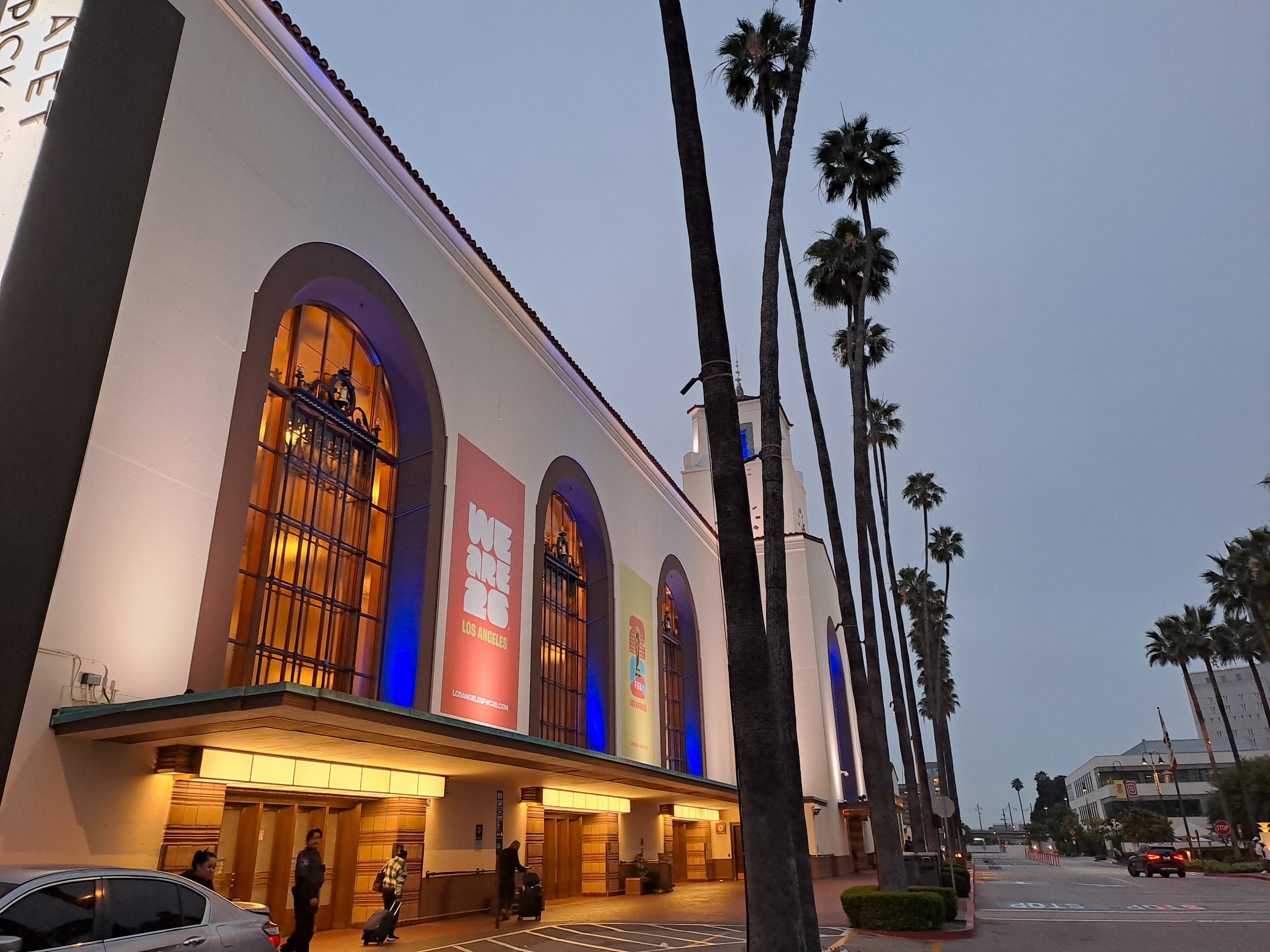
“Our goal was never only to move people to a match. It was to introduce more people to what Metro can be,” Wiggins wrote, assessing ridership on the Games Enhanced Transit System (GETS), a temporary network linking park-and-ride sites and central transport hubs with SoFi Stadium – the world’s most expensive stadium, and one poorly served by public transport. Ridership on regular services grew nine percent in June, compared to the previous year, and more than 212,000 people used the dedicated shuttle service.
LA Metro also added multilingual signs to stations, introduced contactless payments on its buses, and consolidated eight apps into one platform for planning, paying, and receiving live information and service alerts.
LA is doing an admirable job trying to fit a transit network into land use that was not made for it. Despite progress being slow, it is happening.
The success positions LA Metro well for 2028. Meanwhile, attitudes are changing. Amid high fuel prices, the agency has kept fares affordable, connecting the sprawling city for 1.75 US dollars a journey and capping fares for disadvantaged groups. “There are certainly problems, but LA is doing an admirable job trying to fit a transit network into land use that was not made for it,” says UCLA’s Wasserman. “Despite progress being slow, it is happening.”
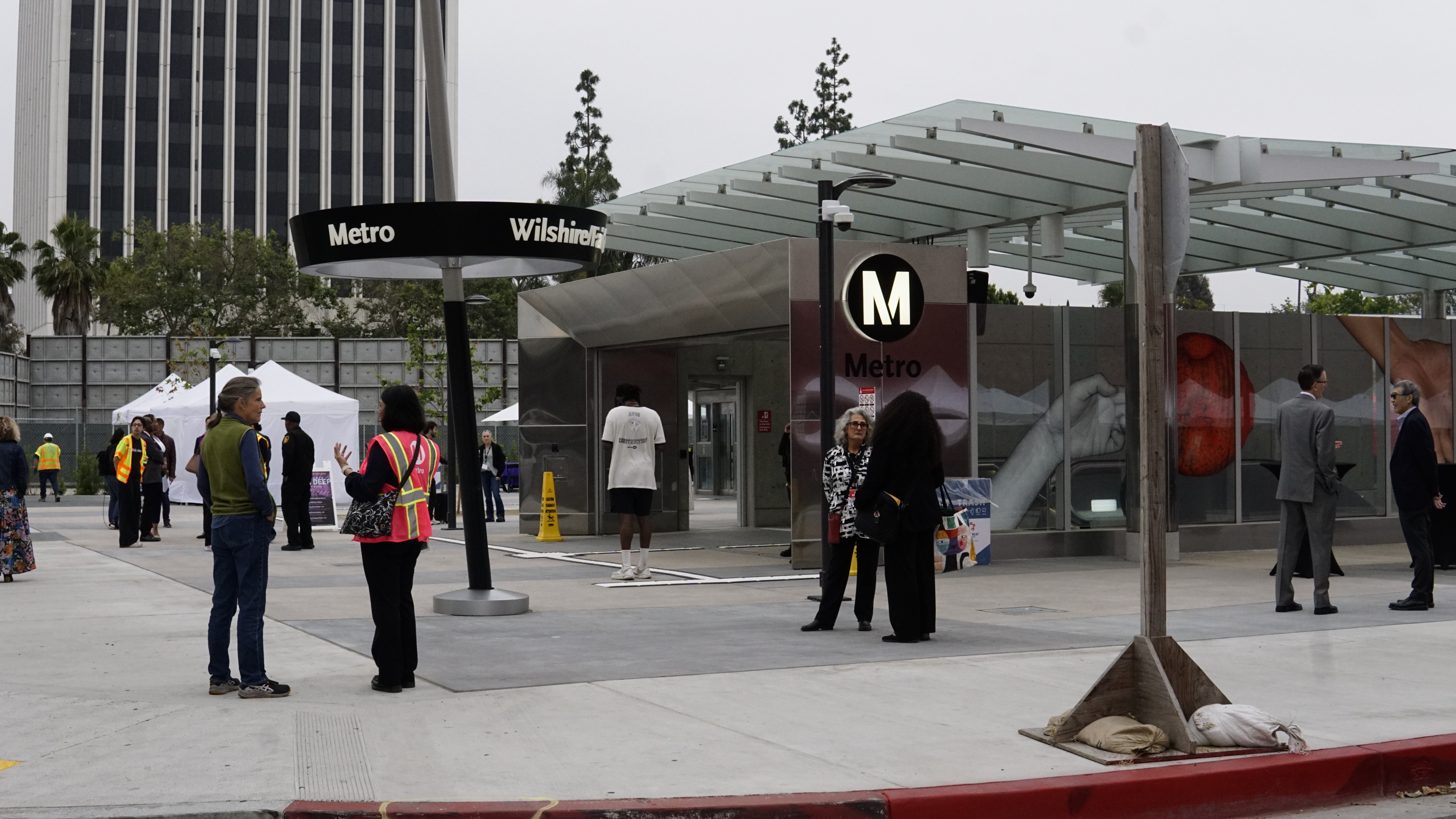
A future in which public transport is the better option becomes palpable on 8 May, as LA Metro inaugurates three new underground stations. Rides on buses, trains and bike-shares are free all weekend. Riders come from across greater LA and queue excitedly for the next carriage. Instead of the usual doomscrolling, they film their journey and strike up conversations with strangers wearing “Ride the D” T-shirts – a cheeky nod to the line's name.
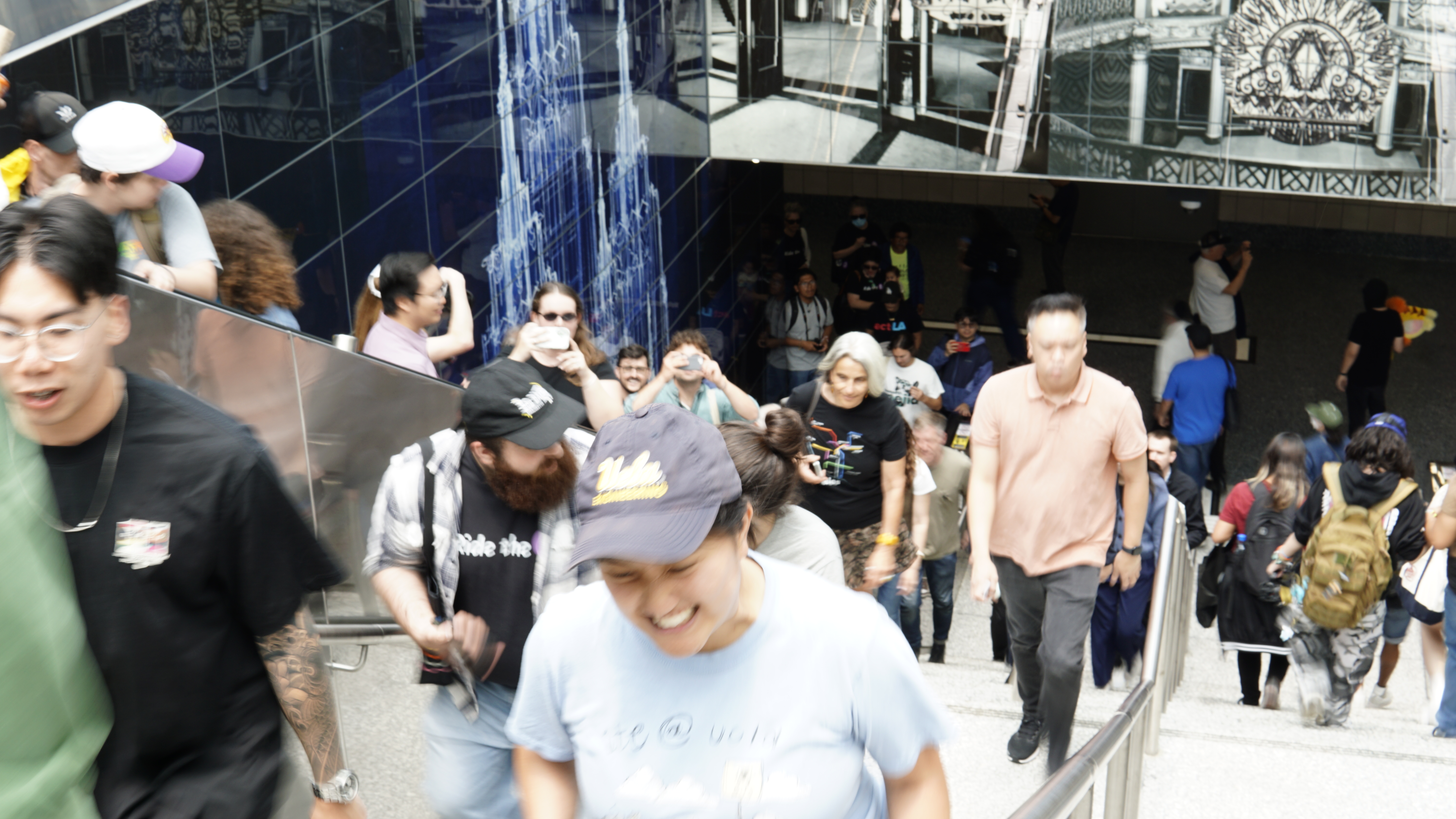
They are not trying to get from A to B; they show up to celebrate progress towards safer, cleaner, faster ways to move through the city. For a few hours, the mundane act of riding the subway is not utilitarian, but becomes an event in itself.
The D Line stations opened after more than 60 years of planning. Running through the Wilshire corridor, one of the densest in the US, LA Metro expects around 78,000 daily passengers. Once complete – if all goes to plan, before the Olympics – six new stations will connect downtown LA to the edge of Beverly Hills and the Westside.
“These projects change people’s mental map of the city,” says Wasserman. “What you think of as close and accessible is really going to change.”
Delivering on clean transport projects that stay behind
What Los Angeles achieves by 2028 will not look like Paris, where the 2024 Games left behind pedestrianised streets, new cycle lanes and thousands of parking spaces removed for good. But smaller changes are already visible. “The city of Long Beach is making amazing progress in creating an entire bikeway network,” says USC’s Giuliano. “They really stand out.”
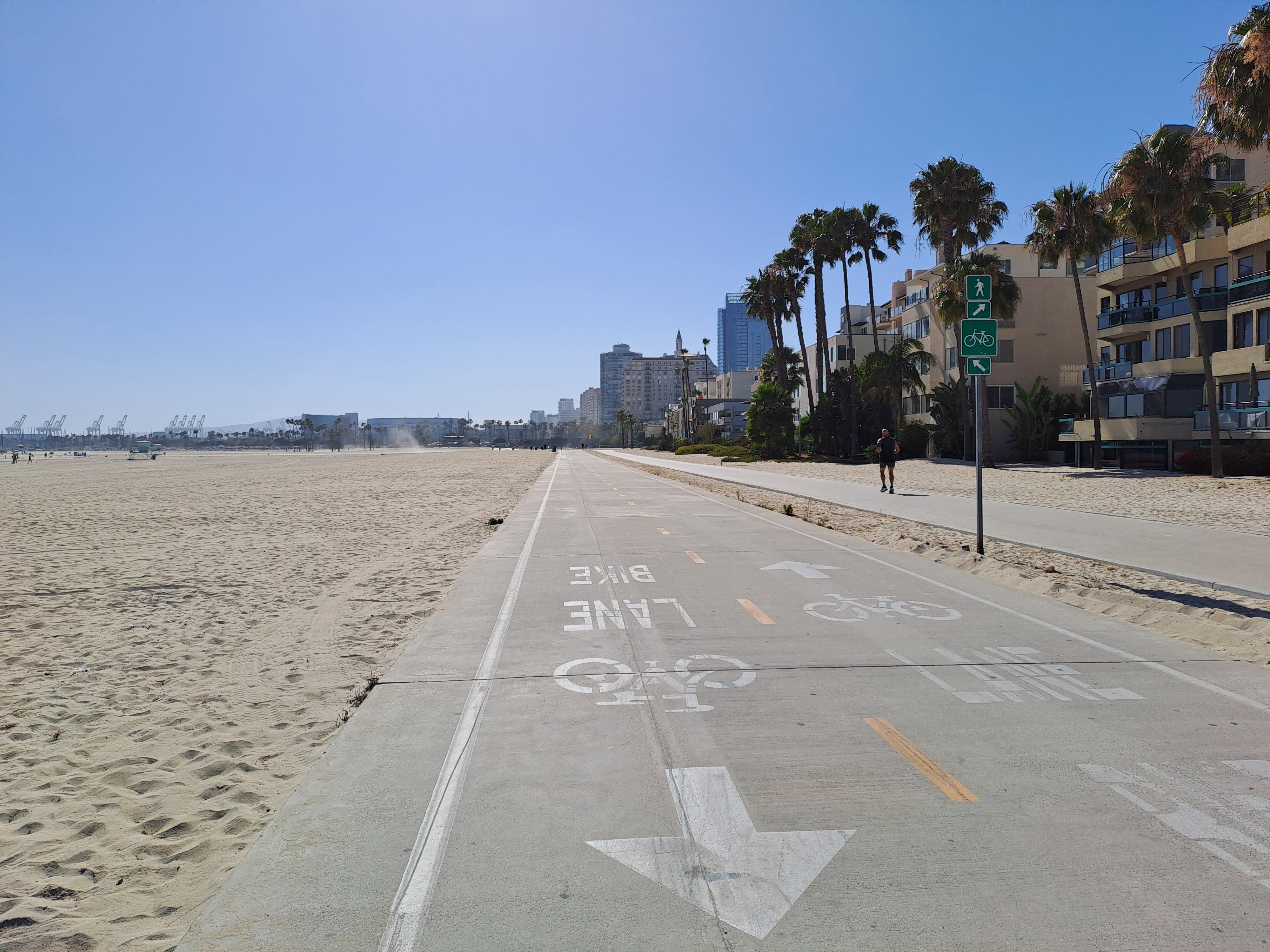
“We are a city that bikes,” says Paul Van Dyk, who was a traffic engineer at the City of Long Beach until late July. “We reached an inflexion point a couple of years ago.” The city has centred decisions on liveability since the early 2000s, he says, and residents now expect better walking, cycling and transport options.
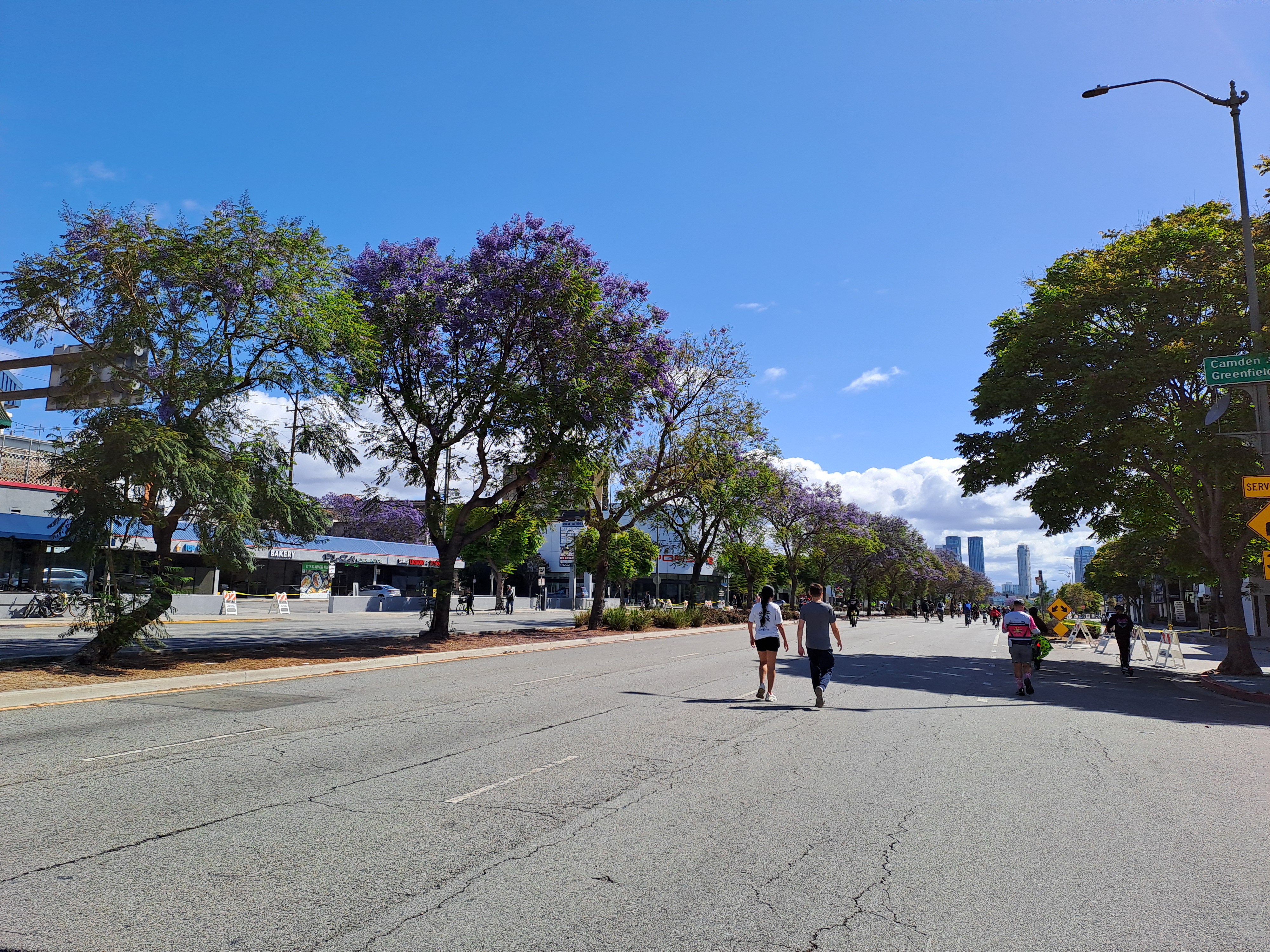
Over the next two years, the city’s focus is on cycling and walking routes leading south to the waterfront, which will host Olympic climbing, sailing, rowing, and open water swimming. The aim is to become the most bike-friendly city in the US. Long Beach already has a continuous bikeway from its northeast to its southwest, with lanes wide enough to ride side by side and others raised to pavement level on tree-lined streets, so riders of all ages feel comfortable. Speed limits have been reduced and junctions redesigned to force drivers to turn slowly.
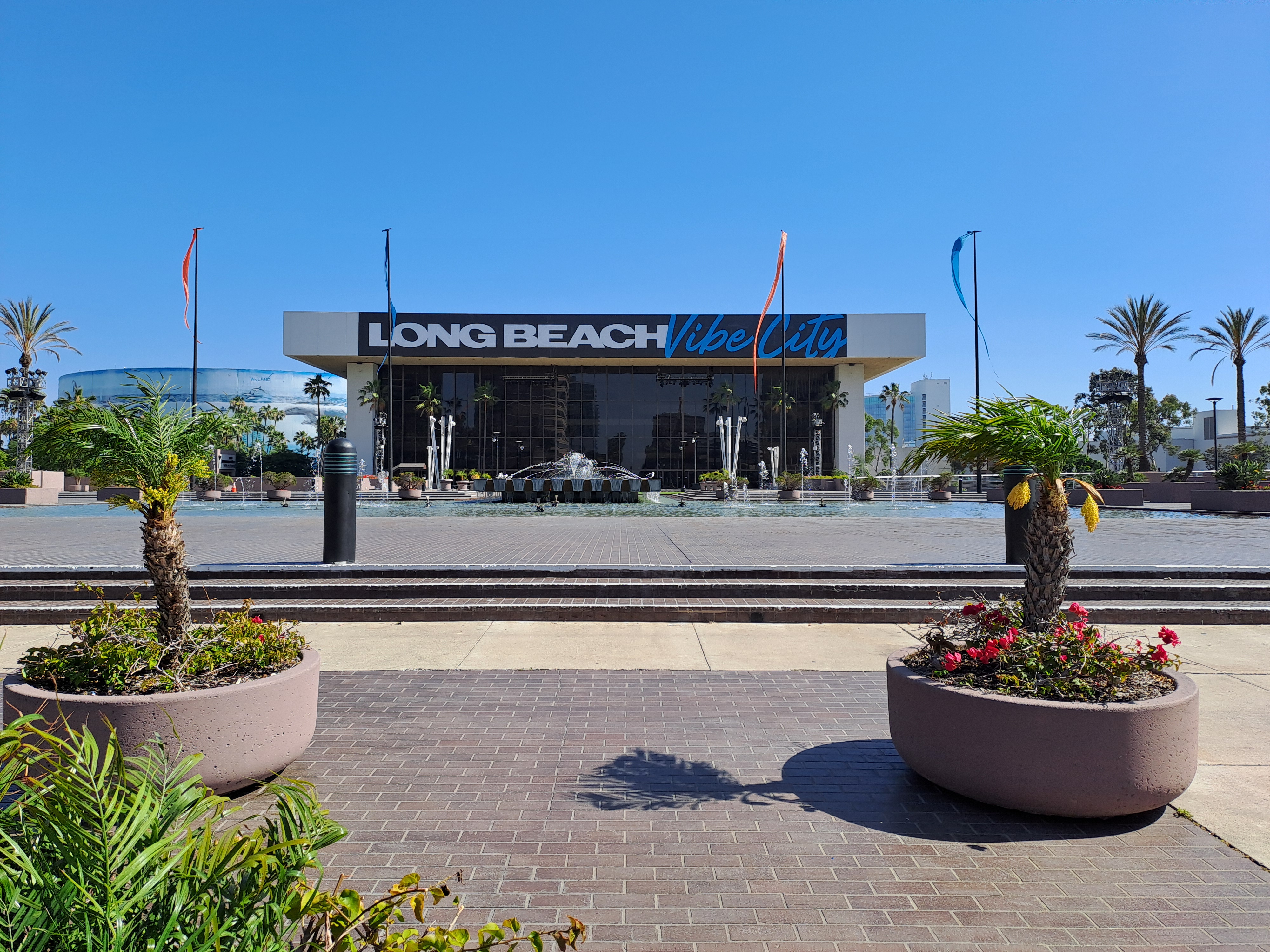
The projects were already in the pipeline. “We now get to do them with a little bit more style, a little bit more colour, a little bit more urgency,” Van Dyk says. The city has begun planting trees along the lanes the Olympic bus service will use, and plans shade and cooling features once bus stops are confirmed.
“Once the torch moves on, my kids and their friends will have infrastructure that makes it super easy to ride their bike to the beach or take the bus and enjoy the waterfront.”