
Los Angeles turns “most polluting” World Cup into Olympic rehearsal in bid for climate legacy
*** Please note: this article is part of CLEW’s reporting on climate resilience in the sporting world. You can find the full package here. This project was made possible by a grant from the Checkpoint Charlie Foundation. Follow CLEW for more from this series. ***
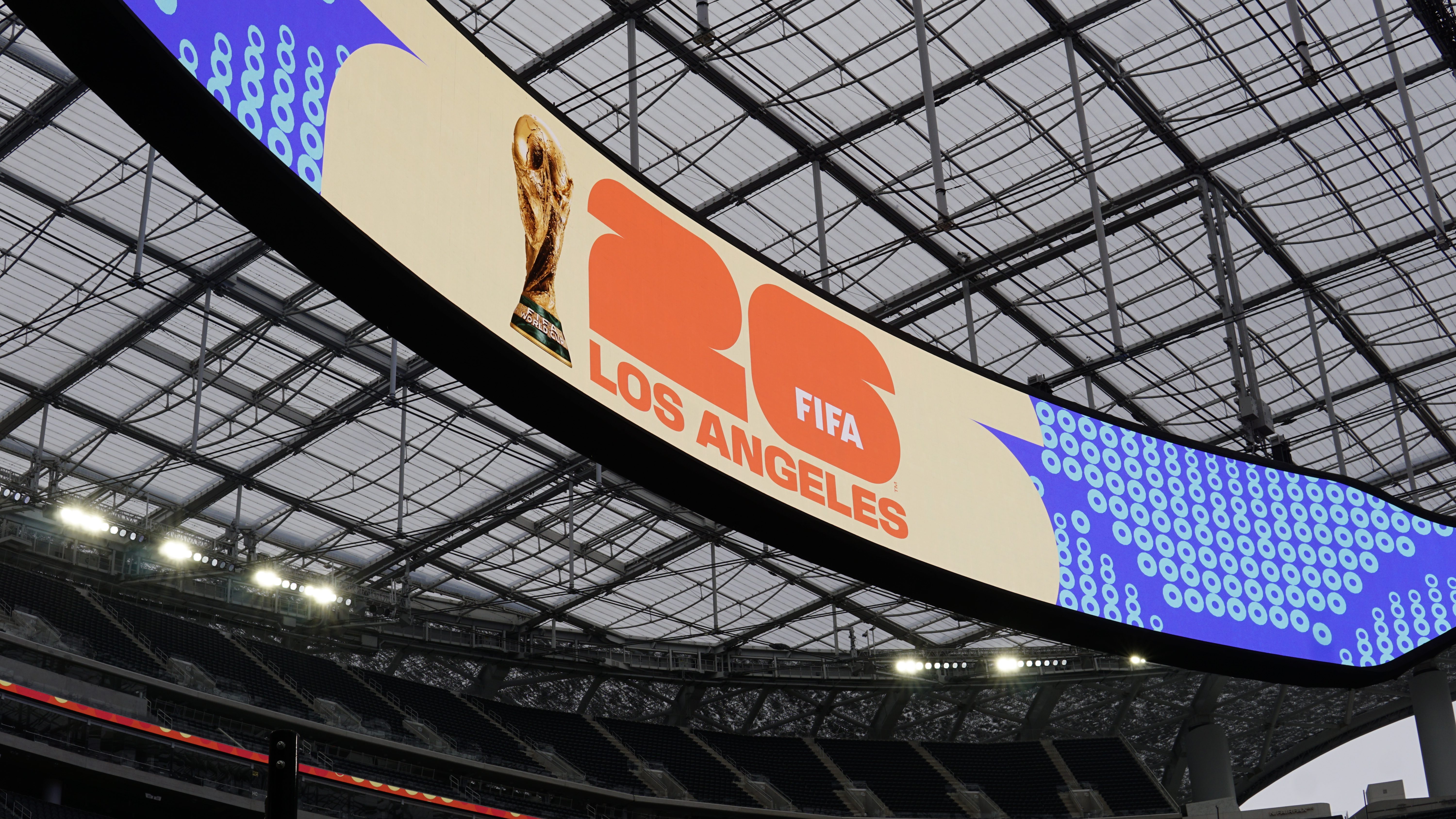
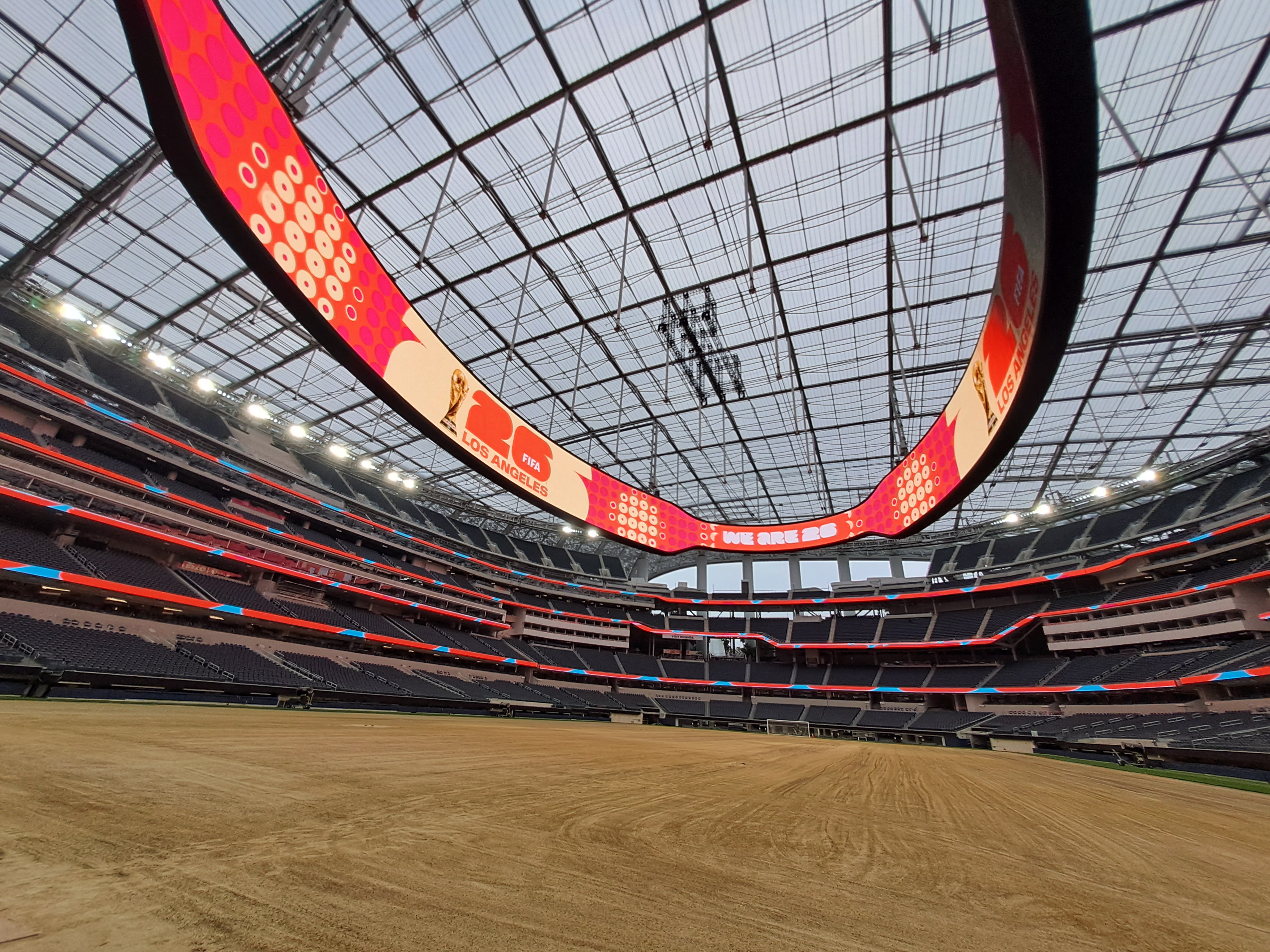
A pungent smell clouds the stadium where the US men’s football team is set to play its first World Cup match. With 30 days to go before kick-off, the venue’s operation team is busy transforming the playing field into a world-class “soccer” stadium, the freshly-laid soil covered in fertilisers ahead of the arrival of refrigerated trucks with special grass the following day.
Tending to the playing surface is one small task in the job of delivering a seamless event in Los Angeles, one of 16 cities hosting the most popular sporting event in the world this summer.
Compared to other host cities, the stakes are particularly high in LA, which hopes to use this year’s World Cup – and next year’s Super Bowl – as a dry run for the Summer Olympic and Paralympic Games, coming to the city two years later.
This is the start of LA’s mega-sporting-event era, and while the eight World Cup matches unfolding at the SoFi Stadium pale in comparison to the size of the Olympics, they provide a good starting point to stress-test security strategies, mobility protocols, and heatwave response plans. The traffic-laden city, with its stressed budget, wants to know what an influx of fans does to its infrastructure, and hopes its mega-event preparations somehow pay long-term dividends.
“We’re here to deliver a lasting legacy,” Paul Krekorian, who heads LA Mayor Karen Bass’ Office of Major Events tells council members at a City Hall meeting in May. He reminds them that the city bid for mega-sporting-events not just for the honour of hosting them, but to ensure that they delivered a lasting benefit for the people of Los Angeles.
Yet current preparations highlight existing tensions: for Los Angeles, this year’s World Cup is set against a backdrop of weak hotel bookings, high ticket prices, a growing budget deficit. The city also faces an urgent need to rebuild what burned down in the devastating January 2025 wildfires – the unprecedented scale of which scientists have linked to global warming – with tens of thousands of residents still displaced. Meanwhile, fears that ICE immigration officers struck into the hearts of residents when they raided the multicultural city a year ago, where a quarter of the large immigrant community is undocumented, are still very much alive.
Climate change is transforming sport
The consequences of climate change, particularly the threat of extreme heat and compounding air quality concerns, stoke the tensions.
“Fundamentally, we need to consider whether the mega-events of the future should be held during cooler seasons and or in locations with more suitable climates,” says sports sociologist Sven Schneider, who develops strategies for climate adaptation in sports.
FIFA set the precedent, moving the 2022 Qatar World Cup to November and December, having realised that the host country’s intense heat and oppressive humidity in June were incompatible with the tournament’s usual quadrennial summer schedule. The rescheduling upset the European football league season.
The 2026 edition, spread across 16 cities throughout Mexico, the US and Canada, is set to become the most polluting ever, doubling the event’s emissions compared to the average of previous tournaments, largely as a result of long distances between host venues, increased travel and a larger tournament. It could also become the hottest in history, with researchers warning that game-day temperatures could reach dangerous levels for athletes and fans alike.
FIFA has taken some of the concerns onboard, and changed the rules of “the beautiful game” to mandate three-minute cooling breaks in the middle of every half. Yet critics see this more as a move to increase advertising revenues than a meaningful health intervention.
“A three-minute break after 22 minutes can’t make a meaningful difference to core body temperature unless players take severe action like jumping into cold water,” says Christof Schwiening, a physiologist at Cambridge University. “Cold water on the skin will do much more than drinking in terms of heat loss.”
Beyond increasing health risks, heat and humidity affect the pace of play, so providing cooling opportunities can make or break the intensity of the match. The consequences of global warming are already changing the sport, and FIFA has taken little meaningful action to reduce its events’ climate impact.
Fans, workers at highest risk from overheating
“The vast majority of people at risk are not the athletes themselves, but rather the spectators – who are generally much less acclimatised – and other groups such as service staff at sales points or in catering,” sports sociologist Schneider says. “These risk groups require particular protection.”
Travelling around LA, oceans of concrete and limited shade or greenery make clear that fans are exposed to heat long before matches start, racking up hours under the sun as they wait in line for shuttles to venues and stand in long queues to get into stadiums. Just days before the World Cup kick-off, FIFA places a blanket ban on fans bringing sealed, transparent water bottles into matches – and quickly backtracks following backlash.
A month before, on an overcast day typical of springtime in LA, Otto Benedict, who heads operations at SoFi Stadium (rebranded the Los Angeles stadium for the World Cup), explains how his team is well versed with local climate risks, sardonically looking upwards to say that some fans might even show up underdressed for a cooler “May grey” or “June gloom” day.
Regardless, he says they are ready. “We have cooling fans and cooling zones that we deploy if it’s a hot day,” he says, adding that he is constantly in touch with the National Weather Service, and that thermometers inside the stadium coupled with metrics from previous events inform their action plans. “We are sharing with FIFA what our response protocol is, and then learning from them what they need us to be able to do.” Heat response protocols differ across host cities, based on local risk assessments.
While heatwaves are unusual at this time of year, record-breaking ocean temperatures are bucking the trend, says climate scientist Daniel Swain. “In the coastal parts of LA County, the prevalence of truly extreme heat is lower than in other parts of the country and other parts of the world,” he explains. “On the other hand, not all of the infrastructure is therefore designed for it, so when it does occur it can be very disruptive.”
The 5.5 billion US dollar SoFi Stadium is the exception. Partly surrounded by greenery, it is designed to use the natural environment to create a comfortable experience. On hot days, Benedict’s team can open roof panels to create an updraft and cool the stadium’s interior, which is not air-conditioned. On rainy days, the roof funnels water to a catchment system. That rainwater, after being treated, is used to irrigate the native plants surrounding the venue, which in turn provide shade and cooling.
Yet, one does not need to travel far to see a different story. The city of Inglewood, home to the stadium, has a tree canopy cover of nine percent – when recommended canopy cover goals stand at around 30 percent. Temporary systems to spray mist, water dispensers, and sun awnings dispatched for the World Cup at key locations can only do so much when up against the demands of a climate-stressed county.
Turning the tide of a car-centric city
When 2028 rolls around, SoFi Stadium will undergo another transformation, this time into an Olympic swimming pool. What is unlikely to change is the inconvenience of arriving at the venue – outside of mega-event times – by any other means than the car. The journey can easily take close to two hours and at least three changes.
Los Angeles is the world’s first city built specifically for cars, with decades of urban development cementing the dominance of the automobile. Freeways carve up the city and enormous traffic congestion problems are part of everyday life in a place with such large urban sprawl.
The Los Angeles County Metropolitan Transportation Authority, known as LA Metro, knows this and is trying to turn things around. For the World Cup matches, the public transport agency puts together a “Games Enhanced Transit Service” (GETS) – a temporary set of bus shuttles offering direct rides to the stadium from 15 locations across the city.
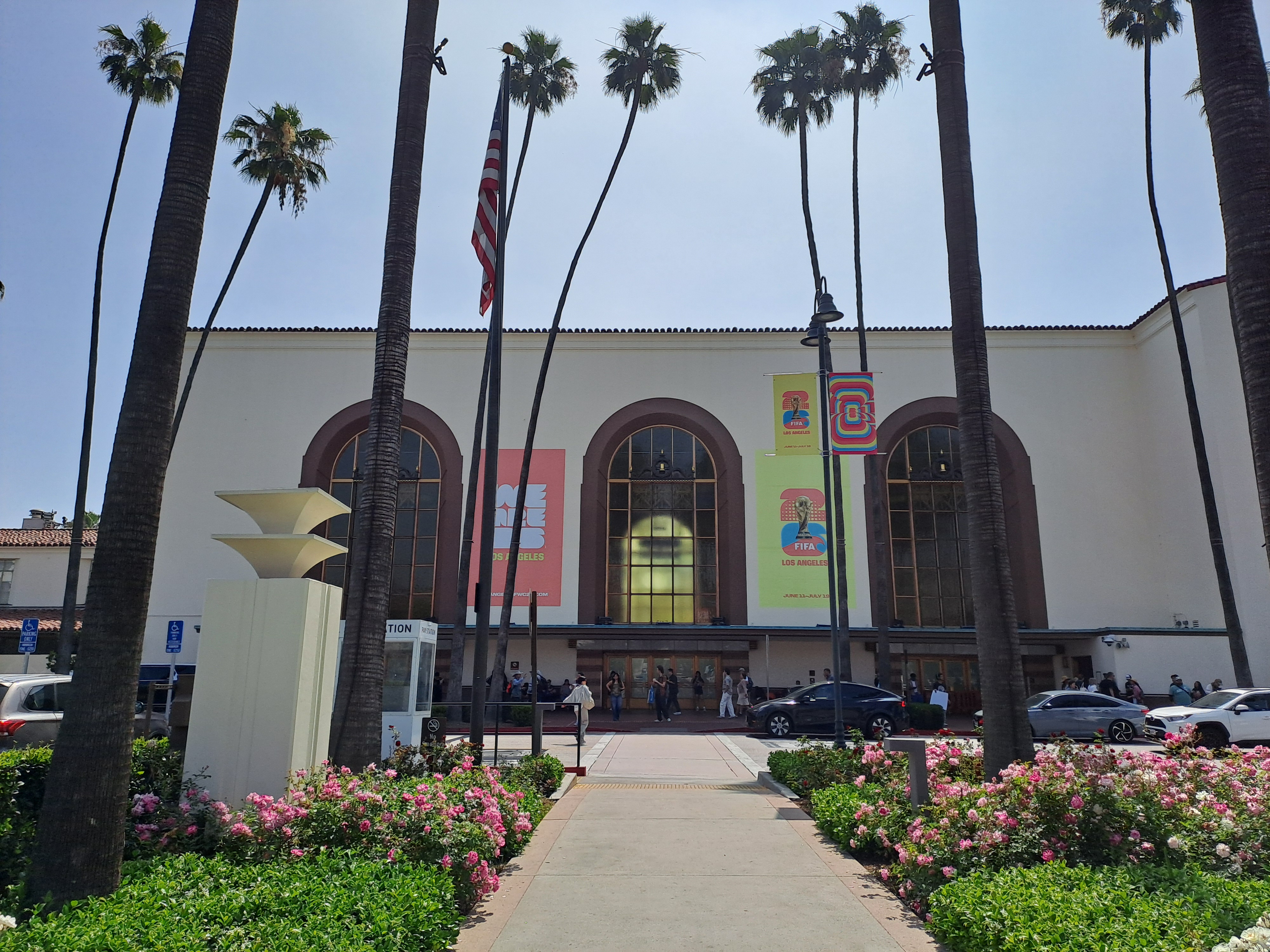
Metro runs a similar shuttle service for the Dodgers’ baseball home games, taking fans with a match ticket between Union Station – LA’s main railway station – and the Dodgers Stadium for free. Fans donning the team’s white shirt and cursive blue logo fill every seat, doing their bit as sunsets advance over hazy horizons.
For LA’s World Cup opening US vs Paraguay match on 12 June, one in four people – just over 18,500 – use LA Metro’s GETS to travel to the stadium. For the next match, the number grows to over 26,000. By the time the knock-out rounds start, LA Metro records over 31,500 GETS rides, the highest number so far. As US cities made headlines for steep price hikes for public transport services to matches, LA kept their standard 1.75 US dollar fare in a bid to lure riders for the long run.
Sporting events entice users to try out public transport for the first time
LA Metro hopes that sporting events will give people a reason to experience public transit, maybe for the first time, and that a good ride can destigmatise the experience in a city where just over three percent of commutes are completed by public transit, according to 2024 American Community Survey data.
“We are planning with legacy in mind,” says CEO Stephanie Wiggins at the edge of the SoFi Stadium pitch as airplanes roar overhead. “We’ve been rolling up our sleeves to figure out how to make this as seamless as possible.”
LA Metro has added multilingual signs to stations, introduced contactless payments on its buses, and consolidated eight apps into one platform for planning, paying, and receiving live information and service alerts. These are changes that both international visitors and commuters will notice.
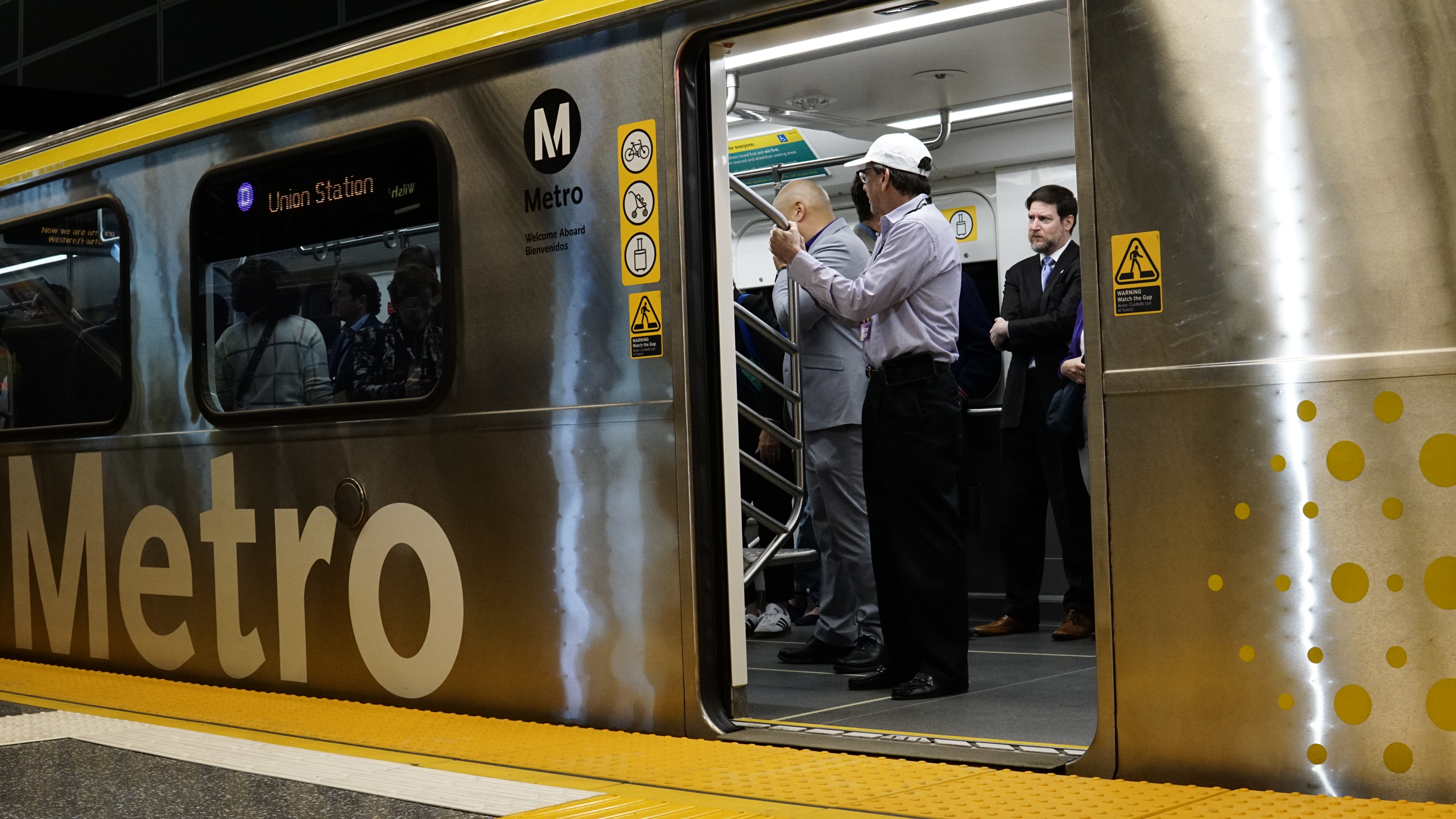
Most notably, the agency inaugurates three new underground stops in May – just in time for the World Cup – having worked on the extension for over six decades. In June, fans use the D Line to reach watch parties and Fan Zones. Come August, unlike the match-day shuttles, the stations will continue to serve residents.
Officials estimate that around 78,000 people will use the D Line every day, serving one of the US’s densest corridors. As May draws to a close, LA Metro sees its highest ridership numbers in six years. The plan is to open six more stations by 2028, connecting the UCLA dorms which will serve as the Olympic Village, with downtown LA.
LA Metro is drawing from its history: ridership numbers reached new heights in 1984 when the city last hosted the Olympics. “We know that global events can mean an opportunity,” Wiggins adds.
For the World Cup, LA Metro is providing free water at hydration stations in key locations and during four days at the end of June it transforms LA's main railway hub into a Fan Zone. Union Station comes to life in a way it has not in years. “Our Fan Zone gave people a reason to arrive early, stay longer and see Union Station differently,” reflects Wiggins. “When we make the system easier and safer to use, when we create places people want to be, and when we give riders a reason to choose transit for more than their daily commute, they respond.”
Time will tell whether ridership numbers continue to climb beyond the mega events. The backbone of LA Metro’s system is made up of buses. The agency serves around 12,000 bus stops a day, accounting for around three quarters of journeys – and the infrastructure leaves much to be desired.
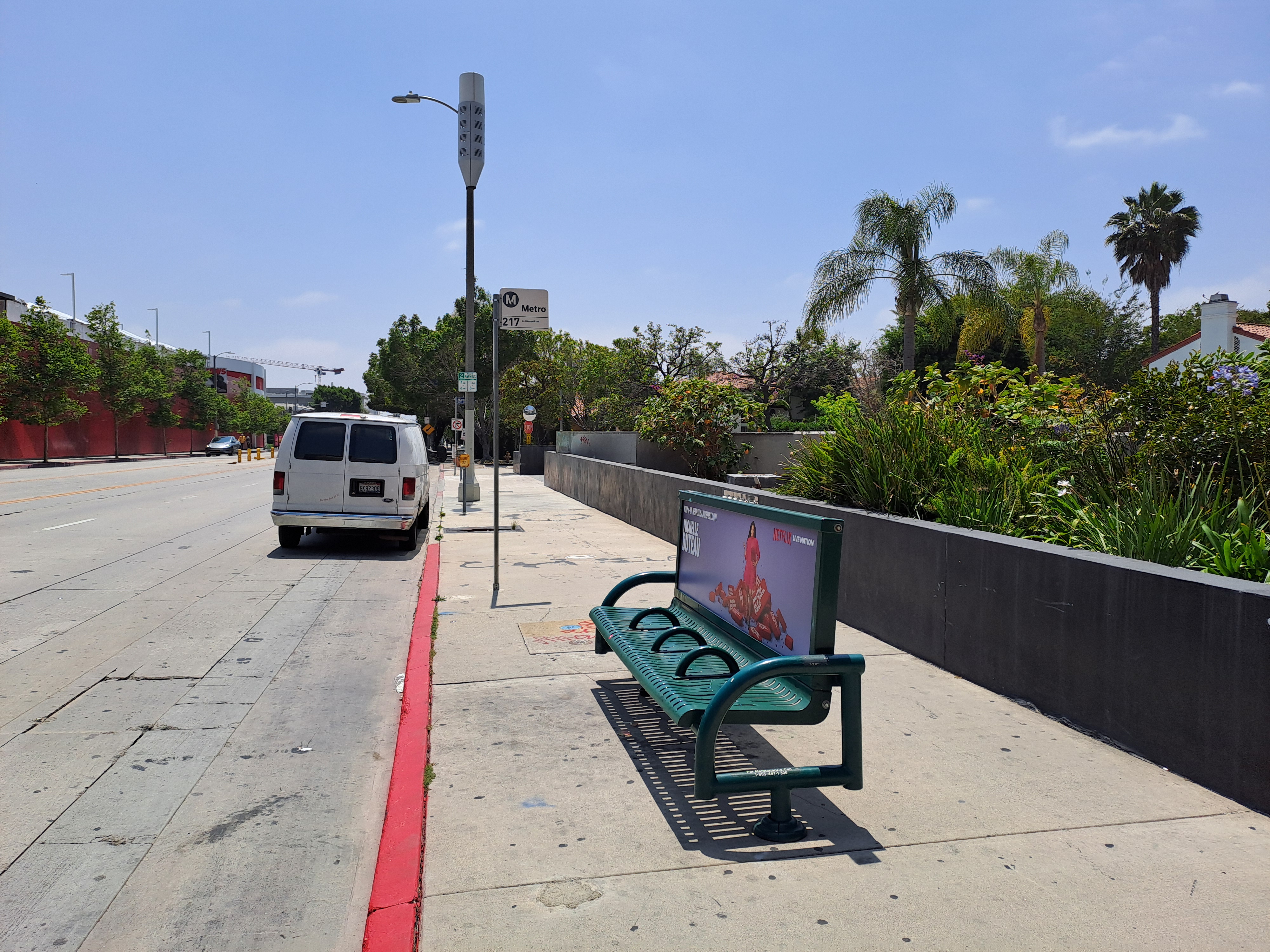
Most bus stops are unsheltered, leaving riders under the sun, clueless as to how long for without live departure boards or timetables in sight. The Sidewalk and Transit Amenities Program is currently upgrading stops, and has installed 403 shelters – yet departure screens are often out of service.
LA faces multiple tests as it counts down to Olympics
A few weeks in Los Angeles makes clear that authorities, agencies or businesses struggle to work beyond the immediate tasks in their jurisdiction. LA Metro does not own bus stops, local authorities do. Transport experts say that local politicians are not motivated to invest in shelters, as they fear the homeless population would take them over. While the bus system will take you anywhere in LA, riders accumulate hours under the sun transferring between lines, often accompanied by the city’s large homeless population. A reminder of the challenges the city faces as it readies to welcome the world.
LA’s acute housing crisis and strained budgets mean not everyone is convinced that the time and money invested in delivering a party for the world will pay off for the local residents. A few days before kick-off, workers at SoFi Stadium threaten to strike and street vendors weigh match-day profits against their personal safety.
Halfway through the tournament, LA’s streets buzz with life and there are plenty of signs of solidarity and camaraderie, with residents coming together to celebrate, writes local journalist Alissa Walker in her dispatches. Yet celebrations are also obscured by toxic air stemming from a large warehouse fire.
The city’s wounds run deeper than the past week’s smoke: many residents are still reeling from last year’s wildfires, which ravaged entire neighbourhoods in Altadena and Pacific Palisades – the most destructive fires in Los Angeles history. Air pollution reached toxic levels; pollutants still linger long after the fires are extinguished.

It was an opportunity to truly do things in a way that is more sustainable and the region chose not to.
Against the backdrop of a national administration focused on advancing fossil fuels, comparatively green California faces much pressure. Los Angeles published its Climate Action plan in April, with an entire section dedicated to using major sports events to accelerate “climate investments that extend well beyond the closing ceremonies”. The plan commits the city to net zero by 2045, 100 percent clean energy by 2035, and to host a “transit-first” Games which should upgrade mobility options in underserved neighbours.
Yet those working to make LA County more climate resilient are unconvinced by the level of ambition or the speed of progress. Following the wildfires, LA Mayor Bass dropped the requirement to build new homes without fossil fuel-powered systems.
“The people and the trauma make this all very complicated quite honestly, but it was an opportunity to truly do things in a way that is more sustainable and the region chose not to,” says Cassie Rauser, who heads the advocacy group TreePeople, which educates, plants and cares for trees across Southern California.

“It remains to be seen what the wildfire’s lasting impacts are,” says LA Metro’s Wiggins, grief palpable in her voice as she recalls her own employees’ devastation and shock at losing their homes. She regains her usual confidence to say that the wildfires showed how important it is to have good infrastructure and good transit: “We were relied on during those fires.”
Whether LA’s mega-event era will benefit the people of Los Angeles in the long run is a question that hangs thick in the air. It is exactly the kind of resilience that is deeply woven into the everyday that LA will have to build more of for its mega-event investments to have a long-term legacy. The countdown until the Olympics opening ceremony marks two years and two weeks.