
Preview 2026: Germany’s climate action programme must focus on social dimension – researcher
[This piece is part of a series of expert interviews to preview energy and climate policy developments in Germany and Europe in 2026. We will publish more in the coming days.]
Clean Energy Wire: Is 2026 a crucial year for ensuring a socially just transition to climate neutrality in Germany? What is on the agenda and what does the government need to do?
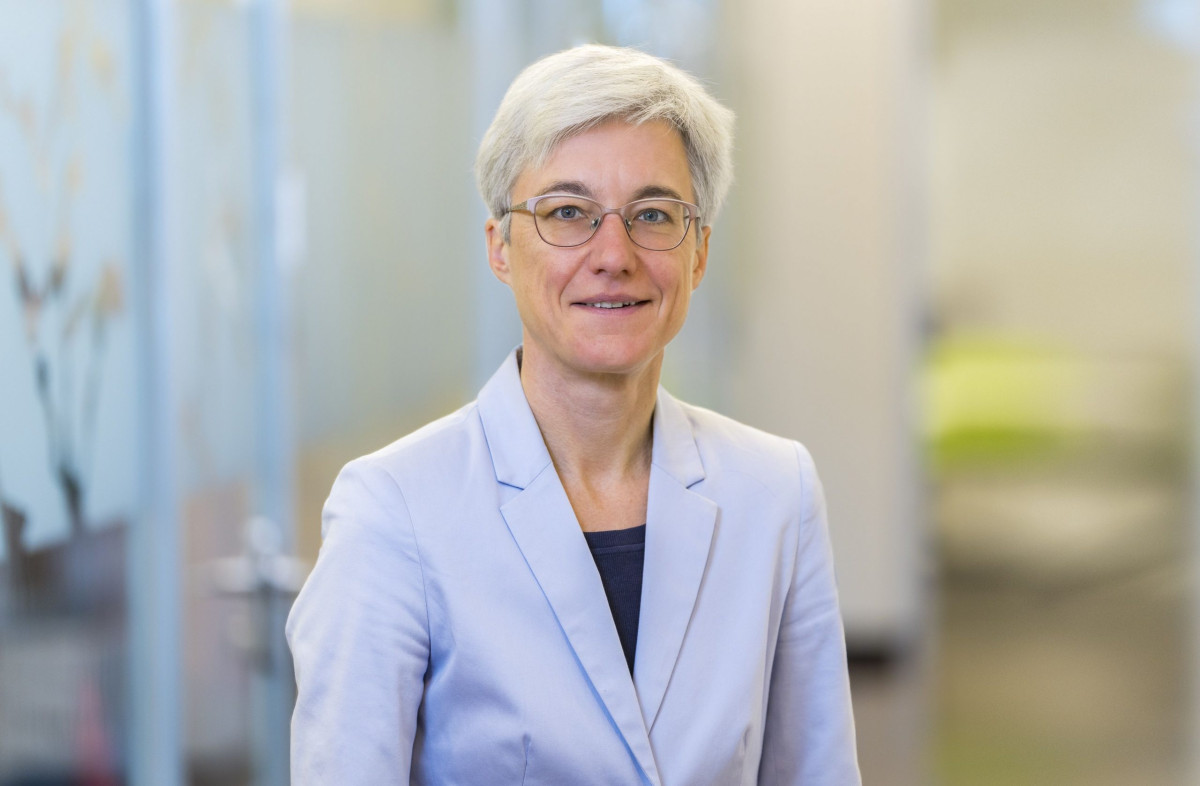
Brigitte Knopf: Because the climate issue on its own no longer resonates as strongly and, unfortunately, has the potential to become contentious in next year's state elections, it is important to address climate protection and social issues – and thus people's everyday lives – together from the outset. The government must present its new Climate Action Programme by the end of March. It will include a chapter on the social dimension, which will need to be examined in detail.
The debate around the European Emissions Trading System for buildings and transport (ETS 2), which has been postponed until 2028, and accompanying social measures will continue in 2026. And Germany is yet to present a plan for the use of funds from the EU Social Climate Fund, but this is expected to happen early next year.
However, as a decisive instrument for the transformation to climate neutrality, the Climate and Transformation Fund (CTF) is more important for Germany than the EU Social Climate Fund. A recent analysis we did showed that social aspects have not been sufficiently taken into account in CTF spending to date. Low- and middle-income households in particular benefit little from these subsidies, even though they bear a large part of the burden of CO₂ pricing. This should be made fairer.
In addition, it remains to be seen whether the funds from the Special Fund for Infrastructure and Climate Neutrality are being used sensibly, where the heating law reform is heading, and how the national CO2 price will develop.
Next year, crucial political decisions will have to be made if Germany wants to achieve its climate targets and, above all, enable lower-income households to achieve a socially just transition to climate neutrality.
The government aims to adopt the upcoming Climate Action Programme by March. What should be part of it?
The decisive factor for the impact on people's everyday lives will be how the social dimension is addressed in programme and whether it includes measures that go beyond the planned electric car subsidies based on income.
Germany is currently failing to meet its Effort Sharing Regulation targets, which set binding emission reduction targets for each EU country. This threatens to result in costs running into the billions by 2030, which would be better invested now in the transition: In the energy-efficient renovation of buildings, the replacement of fossil fuel heating systems, the socially tiered subsidy scheme for electric cars, and a high-performance public transport system, including bicycle infrastructure.
The federal government must now take significant corrective action, especially as price-dampening mechanisms in the ETS 2 are likely to keep prices significantly lower for the time being, making complementary instruments more important.
Has the coalition government done a good job integrating social and climate policy since it took office?
There is a real risk that the government backtracks on climate action, as can be seen, for example, in the debate on the phase-out of combustion engine cars and the heating law.
So far, the only positive measure that brings climate and social policy together is the announced programme to promote electric cars.
Overall, however, funding is being distributed far too indiscriminately, even though what is actually needed is social differentiation in order to achieve the transition to climate neutrality, especially for households with low and middle incomes.
To achieve this, we propose a four-pillar model of enablement and relief. By expanding infrastructure and public services, with socially graded subsidy programmes, regulatory measures, and compensation options for high CO2 prices, we can create greater well-being and participation in a climate-neutral world for all.