
In brief | 4 December '25
Renewables Now: Germany allocates over 1 GW in solar, biomass tenders
Network agency awards contracts to 121 projects with a combined capacity of 281 MW in a rooftop solar auction and 692 projects totalling 815 MW in a biomass tender.
Orsted: Borkum Riffgrund 3, Ørsted’s largest offshore wind farm in Germany, produces first power
The 913 MW farm will enable German industry to decarbonise at a large scale once fully operational, company says.
Reuters: TenneT Germany plans €35 bln debt issue for grid upgrades
The government is considering acquiring a 25.1% stake in TenneT's German unit, the country's largest high-voltage grid operator.
BBC: 'Carspreading' is on the rise - and not everyone is happy about it
In the UK and across Europe, cars are steadily becoming longer, wider and heavier. Some cities are determined to clamp down on them - but are they right to do so?
Euractiv: Europe's hydrogen dream has swallowed €20bn with little to show for it
Despite generous subsidies, electrolyser numbers fall short of targets by a factor of 20.
Deutsche Welle: EU frees billions in bid to reduce China rare earth reliance
The European Commission plans to set up a centre to coordinate the purchases and stocks of the crucial raw materials.
Reuters: EU agrees to end Russian gas imports by late 2027; Hungary, Slovakia oppose
Phaseout is part of an effort to end bloc's decades-long dependency, though legal challenges from its members already loom.
Canary Media: As solar booms and coal fades, Greece’s mining region struggles to adapt
Next year, Greece will complete its rapid coal phaseout. It’s an undeniable success for the energy transition — but residents of Western Macedonia feel left behind
European Commission: EU Agenda for Cities: Shaping Europe’s urban future
Agenda establishes a comprehensive framework for sustainable and integrated urban development.
Strategic Perspectives: Boosting electrification in Europe
With limited oil and gas reserves, but home to some of the world’s trailblasing electrotech companies, the EU is perfectly positioned to take a leading role in the global electrification race.
German environmental agency UBA: Climate protection scenarios until 2050 considering CO₂ price differences and carbon leakage
Report looks at socioeconomic effects of scenarios in which the EU moves forward in climate policy with different Emission Trading System (ETS) designs combined with the Carbon Border Adjustment Mechanism (CBAM).
Global Wind Energy Council: Workforce readiness must be prioritised to meet projected wind roll-out
628,000 technicians will be needed to build and maintain wind fleets, as global wind energy capacity is projected to grow by 86,5 percent over the next five years.
An increase in emissions from heating and transport slowed Germany’s progress in becoming more climate-friendly last year, according to energy transition think tank Agora Energiewende. The country’s emissions only fell 1.5 percent or 9 million tonnes to 640 million tonnes, meaning the pace of reduction more than halved compared to 2024, Agora said in its annual review.
“Climate protection slowed last year,” said Julia Bläsius, who leads the think tank's Germany programme. She added that the slow transition to climate-friendly technologies in buildings and transport had a clear impact on the overall balance for the first time, as emissions in both sectors rose in 2025, according to Agora’s calculations, which also showed that Germany was off track to meet its 2030 climate targets. In past years, strong emissions reduction in the electricity sector compensated for lagging progress in transport and buildings.
According to the estimates, emissions in buildings rose by 3.2 percent compared with 2024 and transport emissions by 1.4 percent. But the think tank stressed that sales of electric cars and heat pumps were picking up, pointing to potential future emissions reductions.
Last year’s overall emissions decline was driven partly by lower output in energy-intensive industry amid prolonged weak demand and difficult global market conditions, and partly by record solar power generation, Bläsius said. She stressed the decline in industry emissions was “basically bad news”, as it was a result of economic weakness rather than progress in climate action.
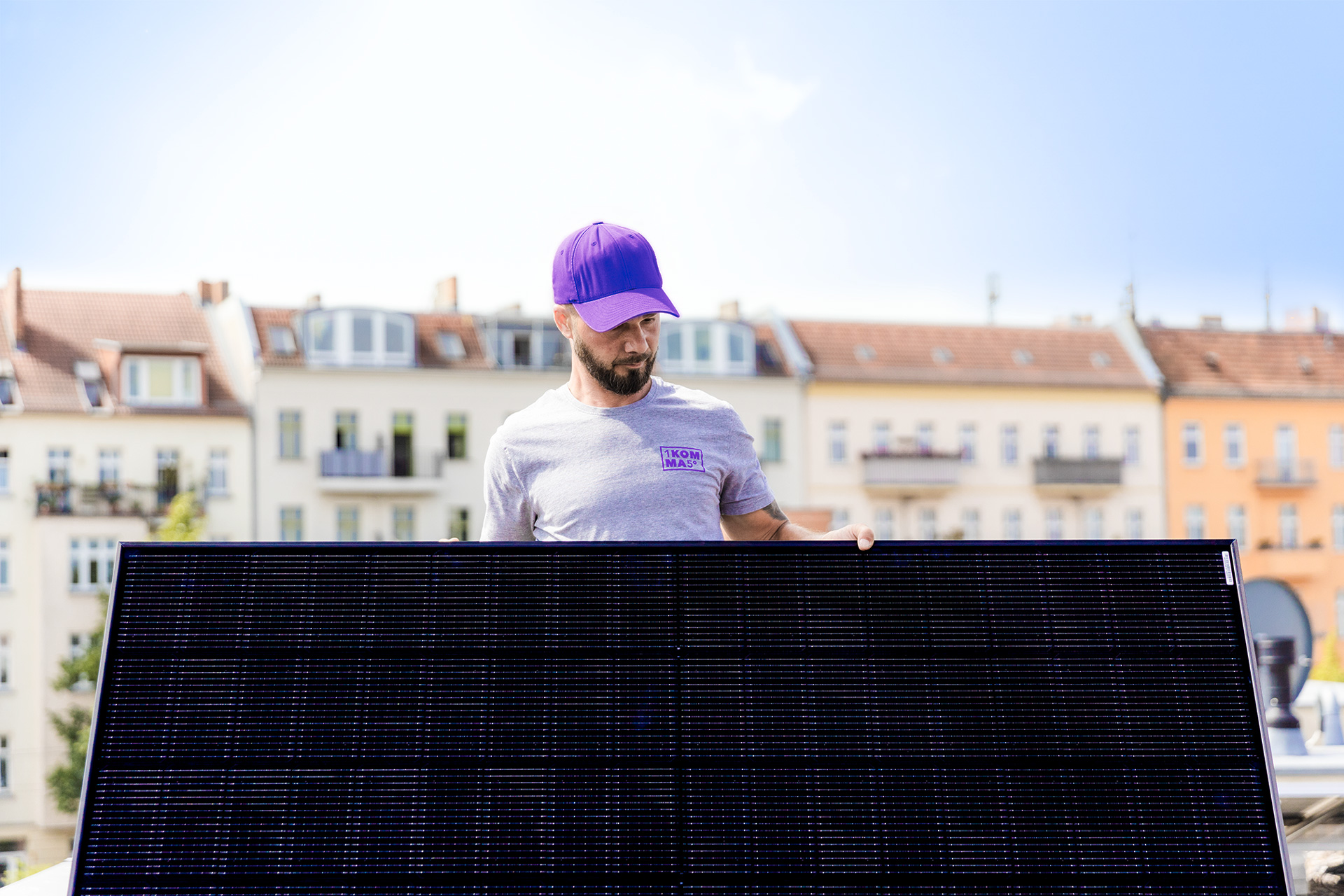
The share of renewable energies in Germany’s gross electricity consumption in 2025 rose only by around one percentage point to 55.3 percent, according to the analysis. Slow wind speeds weighed on wind power production, but these losses were offset by strong solar power generation driven by the rapid spread of the technology and many hours of sunshine.
Agora’s calculations broadly confirmed an earlier analysis by research institute Fraunhofer ISE, which put the renewable share at 55.9 percent. However, Fraunhofer ISE focusses on the renewables share in the public grid, while Agora's data also includes industry facilities which generate electricity to be used on site.
Climate activists accuse government of undermining climate action
Environmentalists said Germany’s slowdown in emissions reduction increases pressure on the government to present credible climate action strategies for heating and transport in its highly anticipated Climate Action Programme, which is meant to put the country back on track to meeting climate targets and is due by March.
Greenpeace accused the government of slowing the transition in both sectors “with wrong promises about combustion engines and gas boilers that led people into fossil fuel price traps.” The government has promised to “abolish” existing policies directing the transition to climate-friendly heating, and also lobbied the EU to weaken the 2035 ban on the sale of new petrol and diesel cars.
“With electric cars and heat pumps, the solutions have long been available and have recently been selling well,” Greenpeace said. “The federal government must strengthen this boom with its upcoming Climate Action Programme instead of weakening it.”
“We do not need a rollback of the combustion engine phase-out and heating law, but rather a build-on: measures for a sustainable transport and building sector must be expanded rather than scaled back,” said WWF Germany.
ecsecdw
ecwefwe