
Q&A: How will the 2026 energy crisis affect Germany’s energy transition?
Contents
What has brought energy prices up and what are the effects on Germany?
Gas and oil prices across the globe have skyrocketed as a result of the US- and Israel-led attack on Iran at the end of February 2026. The escalating conflict in the Persian Gulf region largely halted shipping traffic in the Strait of Hormuz, a bottleneck for a large proportion of global oil and gas transports.
Attacks on fossil fuel infrastructure of several major oil and gas producers in the region further upended energy markets, with repairs expected to take months or even years. The combined impacts amount to “the greatest threat to global energy security in history,” said Fatih Birol, head of the International Energy Agency (IEA).
In Germany, petrol prices went above the symbolic threshold of two euros per litre – the highest level since the 2022 energy crisis that was fuelled by Russia’s invasion of Ukraine. Economists have dampened their expectations for Germany’s economic growth, and expect the crisis to trigger a spike in inflation.
The increased uncertainty over future energy prices is holding back investors and prompting households to save more, economic research institute ZEW said. Higher energy prices increase production costs for industry, while simultaneously reducing consumers’ purchasing power. In addition, supply chain disruptions for fossil-fuel-based products, such as plastics or fertilisers, further weigh on planning security and price stability.
The complex and uncertain effects of soaring oil and gas prices on Europe’s and Germany’s energy transition will continue to unfold in the coming weeks and months. The highly dynamic conflict and its repercussions remain unpredictable; this factsheet analyses the situation as of mid-April 2026.
Energy shocks and fossil fuel dependencies
Most energy consumption in Europe is met with fossil fuels, despite the continent not having significant domestic reserves. The EU largely relies on imports to cover its oil and gas needs, making it particularly vulnerable to volatility and crises.
Europe must become less dependent on fossil fuels to dampen the shocks of future energy crises. That means swiftly moving ahead with its long-term plans to secure its own energy, in the form of home-generated electricity, and powering its economy with it: by moving to electric vehicles, heat pumps and electric industrial production processes.
“This is not just about the environment,” IEA’s Birol told Der Spiegel. “Europe’s economic security, Europe’s political sovereignty, and Europe’s future lie in the electrification of the energy system.”
How has it influenced German climate and energy policymaking?
Germany’s government has reacted with a number of temporary measures to protect consumers. These include:
- Limiting price jumps at petrol stations to once per day and ordering mineral oil retailers to justify prices changes at the pump.
- A two-month tax cut for petrol and diesel. The 17-cent-per-litre tax cut is expected to lead to savings for petrol and diesel users of up to 1.6 billion euros, the government said. According to researchers, however, the measure is set to disproportionately benefit high-income households. The top ten percent can expect savings totalling 21 euros over the two months, while the bottom ten percent would save around six euros.
- Discussions to give Germany’s competition watchdog greater authority to detect “abusive behaviour” harming customers, in particular when falling market prices for fuel are not immediately passed on. Experience from the 2022 energy crisis showed that price reductions were not necessarily passed on to end consumers.
- The convening of Germany’s “National Security Council”, a group of key government ministers and sectoral experts, to react to possible jet fuel shortages. The country’s airlines have urged the government to release strategic kerosene reserves to avoid flight cuts.
- Greenlighting the release of strategic oil reserves in line with other countries to ease pressure on oil markets.
Researchers at the state-backed Ariadne research project have urged the government to introduce relief measures that promote clean energy sources rather than increasing dependence on fossil fuels. Energy price reductions financed by taxpayers provide short-term relief, but they also reduce the private sector's incentive to invest in electric cars, heat pumps, and domestic renewable electricity production, which are less vulnerable to international crises, the researchers argued.
Climate NGOs and environmental groups including Greenpeace and Environmental Action Germany (DUH) have also called on the government to reduce demand for petrol by introducing a speed limit on Germany’s motorways, implementing car-free Sundays, and supporting public transport systems. IEA head Birol also urged Germany's government to consider a speed limit an effective measure to curb fossil fuel use, as have many researchers.
Will the energy crisis lead to a faster phase-out of fossil energy sources?
Interest in electric vehicles (EVs) has risen sharply, including in used models, both in Germany and across the EU. In Germany, the cost advantage of driving an EV over a combustion engine car reached record heights as a result of the rapid increase in fuel prices.
Additionally, people in Germany are showing a “willingness to invest in decentralised energy solutions,” Filip Thon, head of sales at energy giant E.ON, told newspaper Frankfurter Allgemeine Zeitung (FAZ). He added that the company has noticed a steep rise in interest in charging stations for EVs, and that enquiries for solar panels have almost doubled. Start-up 1KOMMA5° has also seen demand for heat pumps rise, albeit not as steeply as during the 2022 energy crisis, co-founder Jannik Schall told the paper.
Industrial companies across the country as well have shown renewed interest in accelerating investments in solar power, electrification, and energy efficiency, similar to 2022. At the same time, however, the energy crisis has diverted attention from the energy transition, shifted priorities, and resulted in relief measures that would keep fossil fuel use high.
Before the crisis, Germany’s coalition government had proposed and passed laws aimed at cutting power system costs, including a reform to grid connections and new rules allowing for the continued installation of oil and gas boilers. The former was heavily criticised by the renewables industry, which said the reform risked slowing down the expansion and integration of renewables, while researchers and climate groups called the latter a “cost trap” and said it would cement fossil fuel dependencies.
The increasing energy costs have intensified business calls for slowing down decarbonisation to take pressure off companies and households. The gas price hike has also revived a debate over the country’s schedule for phasing out coal and triggered new calls to increase reliance on domestic energy resources (more below).
Will the energy crisis result in Germany using more domestic fossil fuels?
Germany is heavily reliant on fossil fuel imports because domestic resources are depleted, or too costly to extract. In 2024, the country covered just five percent of its natural gas and two percent of its oil demand with domestic supplies, as production continued to sink, according to an annual report by BVEG. Germany’s largest domestic fossil fuel source is coal, but its extraction and consumption has decreased significantly in recent years.
The country may have to keep some coal-fired power plants online longer than planned should the energy crisis continue, and a shortage actually arise, chancellor Friedrich Merz said in late March. Germany is legally bound to gradually phase out coal by 2038. However, a lack of adequate backup capacity to secure energy supply at all times adds uncertainty to the earlier phase-out timeline agreed for the western lignite region of North Rhine-Westphalia.
However, carbon price trends make an exit as early as 2031 or 2032 likely, said Hauke Hermann, a researcher at the Institute of Applied Ecology (Öko-Institut).
Meanwhile, energy companies have called on the government to allow for the market return of coal power plants currently held in reserve to temporarily cushion prices. Germany has put about 10 gigawatts (GW) of coal-fired power plants into this reserve, a mechanism designed to ensure grid stability and security of supply. Germany previously made exceptions to its coal exit schedule in the 2022 energy crisis by allowing some plants to return to the market, but reverted to its original plans in 2024.
Prompted by the energy crisis, Germany’s economy minister Katharina Reiche reopened discussions about gas extraction in Germany. “We have our own reserves,” Reiche said in late February. “We need to discuss this – especially when we don’t have that many raw materials, particularly in such challenging geopolitical times.” The governing parties had already said in their coalition agreement that they wanted more focus on domestic fossil gas resources.
However, energy experts have said that the German gas reserves cannot play a significant role in answering the crisis. Conventional reserves are largely depleted, and shale reserves would require unconventional fracking to extract. The 2022 energy crisis had already reignited the debate about allowing fracking in Germany, which was banned in 2017. However, there is widespread opposition to the technology across the country, and it would likely take years before fracking output could make a meaningful contribution to the country’s energy mix.
What were Germany’s lessons from the 2022 energy crisis?
The 2022 energy crisis that emerged after the coronavirus pandemic and intensified with Russia’s invasion of Ukraine was particularly difficult for Germany. The country relied heavily on Russian gas imports in its plans for transitioning towards a climate neutral economy, with the unused Nord Stream 2 pipeline being a major factor in German-Russian relations at the time of the invasion.
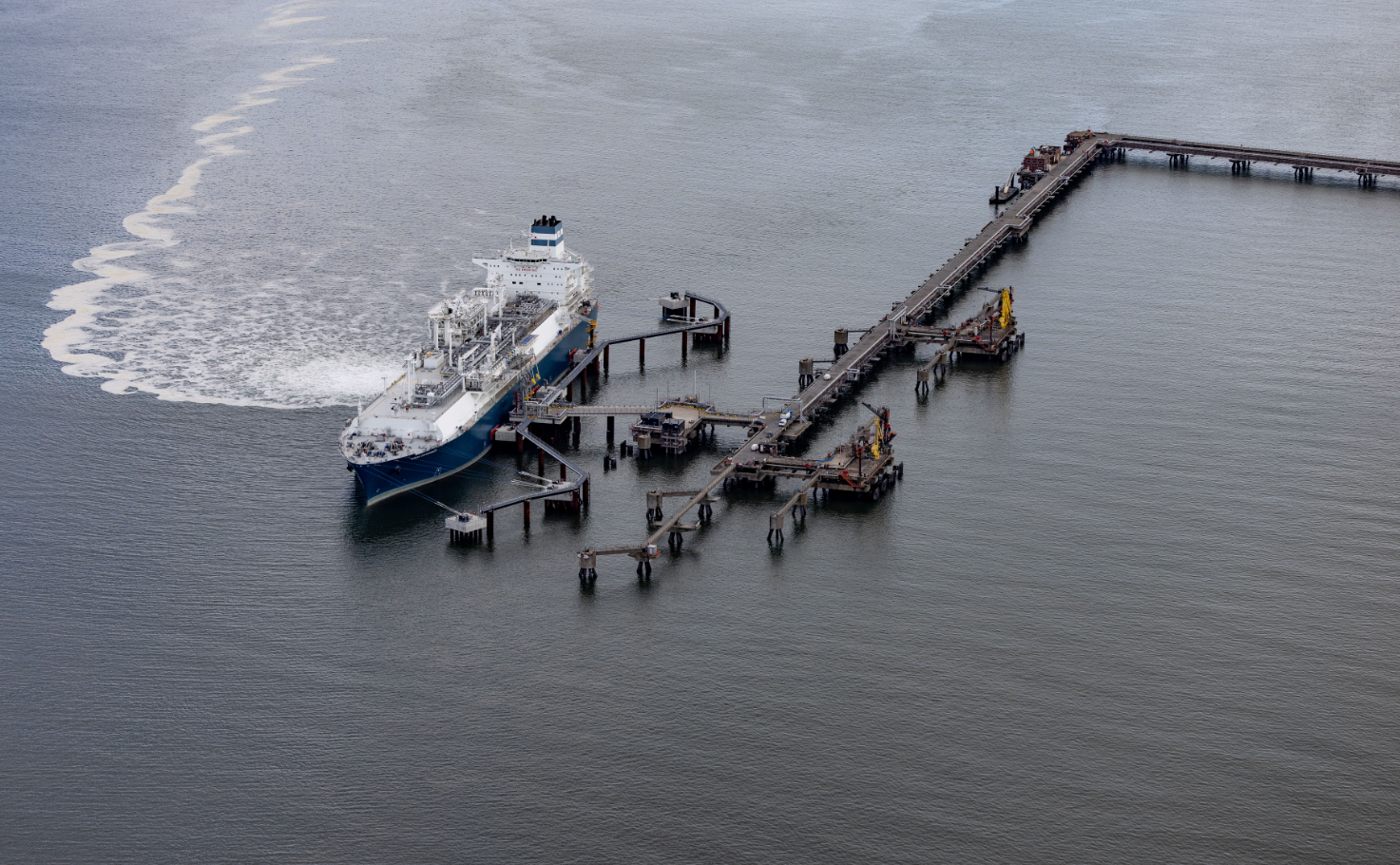
The crisis triggered a rapid reorientation that resulted in Germany diversifying fossil fuel imports building liquefied natural gas (LNG) import infrastructure and new supply partnerships, extending running times for coal and nuclear power plants and rapidly expanding renewable power capacity by reducing bureaucracy and cutting red tape – the results of these efforts are still playing out, with more and more solar and wind capacity being approved.
While the current government has said it aims to continue the expansion of renewables, recent steps by economy minister Reiche that are supposed to curb energy transition costs and better align the rollout of sources like wind and solar power with grid expansion have been criticised for amounting to “incoherent” policy that could potentially choke off the transition’s acceleration. Energy industry groups have said that geopolitical upheaval means the energy transition's funding needs a general update to make it fit for the future and better reflect renewable energy's supply security dimension.
Besides appeals to reduce gas consumption and several support schemes, such as gas and electricity price caps to ease the cost impact on customers, the government in 2022 also activated a national gas emergency plan and mandated gas storage targets to ensure full stockpiles. Thanks to new pipeline supply contracts and with its LNG ports in place, worries about gas shortages and prices eased. While the EU agreed to keep gas storage targets in place until 2027, warnings about low storage levels in Germany arose already in autumn 2025, with gas industry representatives urging the government to implement a strategic crisis reserve after the onset of the Iran war.
The economy ministry has insisted that the low filling levels did not put supply security at risk, and remains steadfast on its aim to make natural gas the main source of backup capacity in the transition towards a fully renewable energy-based power supply. However, tackling Germany’s reliance on imported fossil fuels by phasing out coal, oil, and gas entirely remains the best bet to achieve greater resilience and energy independence, environmental groups have said.
The debate around Germany’s heating sector decarbonisation further illustrated the waning sense of urgency regarding the country’s fossil gas dependency: Germany's previous government initially pushed deadlines to phase out oil and gas boilers forward at the height of the crisis, but then watered down the policy following fierce criticism, and chancellor Merz's government has now scrapped key aspects. Merz’s government presented new plans in March 2026 that would allow the future installation of fossil boilers and a growing share of biogas in the grid.
Between June and August 2022, the government also introduced a public transport ticket priced at 9 euros per month to incentivise people onto buses and trains – with positive effects on the climate. Priced at 63 euros per month by 2026, the “Germany ticket” has been found to reduce emissions and improve mobility for about a fifth of Germany’s population which holds a ticket, according to a government report.
What is Europe’s response to the energy crisis?
Energy supply security is back at the top of government’s agendas across the EU after the 2022 crisis led member states to agree a joint response to supply shortage fears and price increases. The EU since then has sought to make Europe's interconnected energy system more resilient by expanding renewable energy sources, better connecting national energy markets, modernising electricity grids, and diversifying energy supplies.
With energy markets in turmoil again in 2026, governments across Europe have scrambled to introduce immediate relief. As of 10 April, 22 of 27 EU Member States had introduced over 120 measures – largely non-targeted relief – at a combined cost of over nine billion euros, according to the Jacques Delors Institute.
The European Commission on 22 April presented a package of proposals (“AccelerateEU”) – or “toolbox to bring immediate relief to European households and industries.” It includes proposals to reduce taxation on electricity, more coordination on topics like refilling gas storages, and giving member states more leeway to provide state aid. It also said it would announce an Electrification Action Plan by the summer, which would “include an ambitious electrification target and measures to remove barriers to the electrification of the industrial, transport and building sectors.”
However, the Commission did not propose major market interventions such as capping gas prices or taxing energy companies' windfall profits – measures it used in 2022 when Russia cut gas supplies and prices hit record highs, reported Reuters.
The Commission said that the EU had already spent an additional 24 billion euros on energy imports due to higher prices resulting from the crisis – “without receiving a single extra molecule of energy.”