
Geopolitical tensions sharpen the case for offshore wind – UK ambassador to Germany
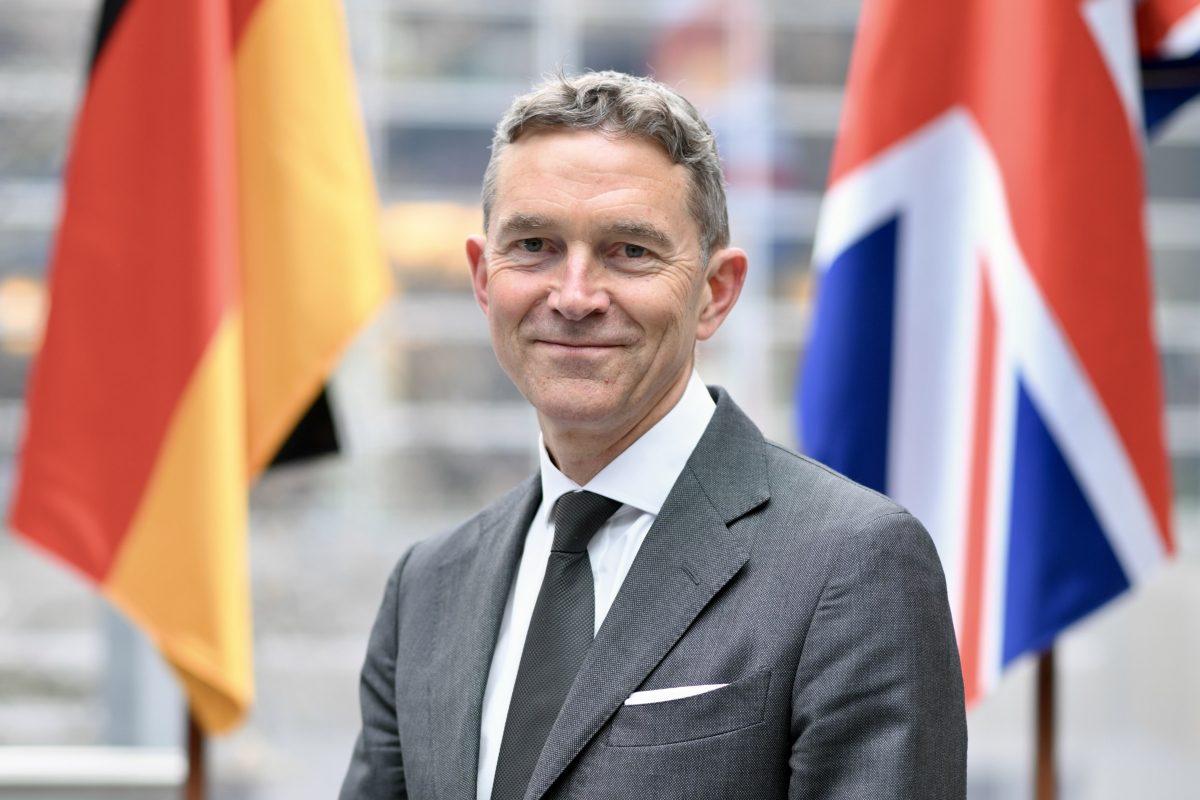
Clean Energy Wire: The security of offshore energy installations has become a focus of European countries' security policy since at least the destruction of the Nord Stream gas pipelines in the Baltic Sea. How have these new geopolitical concerns affected the UK’s view on offshore wind’s role in energy security?
Andrew Mitchell: Recent geopolitical events have sharpened, not weakened the case for offshore wind as a foundation of energy security. The UK’s position is clear: expanding offshore wind enhances long‑term security, provided that physical, cyber and hybrid risks are addressed in partnership with allies. Cooperation with Germany and other North Sea partners through interconnectors, hydrogen projects, shared infrastructure and intelligence strengthens resilience rather than creating vulnerability.
Crucially, offshore wind reduces exposure to volatile global fossil fuel markets that we do not control. At a time of geopolitical instability, the UK has taken decisive action to secure clean, home‑grown power at prices well below the cost of new gas generation.
Renewables are now the cheapest form of electricity to build and operate. The more we build, the more often clean power sets the wholesale price instead of gas, delivering lower bills, greater security, and long‑term economic stability.
Cooperation between the UK and its neighbours around the North Sea on offshore wind energy has steadily increased in the past years, both at the industry level and among governments. Would you say that offshore wind energy has defied the fallout of the UK's vote to leave the European Union?
The UK is always stronger when it works with its European allies, and our cooperation on offshore wind is an excellent example of this.
As Europe’s two largest offshore wind producers, both the UK and Germany have closely aligned long‑term net zero and energy transition goals and work together through frameworks such as the UK‑Germany Energy and Climate Partnership, signed in 2023. This commits both countries to deeper collaboration on hydrogen, CCUS, North Seas energy, energy security, and the green transition.
The signing of the Kensington Treaty in July 2024 was another positive step towards the UK and Germany realising our shared energy ambitions through its lighthouse project to accelerate practical cooperation across the North Seas.
This cooperation is reflected in a growing number of industry initiatives and partnerships aimed at creating physical energy infrastructure links, including the NeuConnect and Tarchon electricity interconnectors, which are under construction or being planned, respectively. They will directly link our two electricity markets for the first time and anchor collaboration in the day‑to‑day functioning of energy systems.
The launch of the UK’s Modern Industrial Strategy in 2025 has also helped maintain momentum, providing long‑term certainty for investors and prioritising clean energy industries.
Does this offer a blueprint for sustaining deeper cooperation in other policy fields?
With the wider EU, we have committed to further our collaboration on energy at the UK-EU summit in May 2025 and have since begun negotiations to pursue the linking of the UK Emissions Trading Scheme and the EU ETS, as well as agreeing to start talks on the UK’s participation in the EU’s internal electricity market.
It’s clear that more efficient electricity trading is vital to unlock growth and private sector investment in the North Seas, and only by working together in the region can we harness the immense renewable energy potential it holds.
The offshore wind sector in Germany looks back at a turbulent couple of years: In 2023, bidders in offshore wind auctions were ready to pay billions in "entry prices" for building new turbines, while another auction two years later failed to attract any bidders. How has the sector developed in the UK recently?
The UK also experienced difficulties in the wind sector – Allocation Round 5 (AR5), in which not a single offshore wind project was secured, was a wake-up call. The last auction round, AR6, got the industry back on its feet. Now this latest auction round – AR7 - has secured a record capacity of 8.4GW of offshore wind, the largest auction of its kind in Europe.
How was this turnaround achieved?
Offshore wind is a capital‑intensive, long‑term infrastructure sector, and outcomes can be highly sensitive to broader economic conditions such as inflation, interest rates and supply‑chain constraints. These factors have been felt across the continent and underline why policy certainty and adaptable frameworks are critical for sustaining investment at scale.
In the UK, the offshore wind sector has benefited from the stability and credibility of the Contracts for Difference (CfD) mechanism, coupled with a willingness to refine its design as market conditions change. A number of targeted reforms introduced ahead of AR7 helped maintain strong competition and investor confidence. These included updating parameters to better reflect prevailing cost and financing conditions, improving auction flexibility to support project deliverability and giving clearer visibility of the UK’s long‑term deployment pipeline.
Would you say that a "best-practice" approach is pursued around the North Sea in which regulators and companies learn from experiences gained in neighbouring countries?
The UK places strong emphasis on international learning and cooperation. Through the UK‑Germany Energy and Climate Partnership and wider North Sea forums, governments, regulators, and industry share experience on auction design, supply‑chain resilience, grid integration, hydrogen development and hybrid interconnector‑linked wind projects.
While approaches differ between countries, there is a clear and growing practice of exchanging lessons learned to improve outcomes across the sector.
All North Sea countries have ambitions to greatly expand their offshore wind energy capacity in the next years. Would you say that there are already adequate mechanisms in place to ensure that resources are pooled efficiently and spatial and infrastructure planning makes use of synergies or at least avoids interference?
Cross‑border interconnectors, work on hybrid interconnector‑linked wind farms, and closer dialogue on spatial and grid planning are all helping to unlock shared opportunities and reduce the risk of interference between projects. Industry engagement through North Sea cooperation frameworks has also improved visibility of future demand and infrastructure needs.
That said, the speed and scale of expansion now envisaged mean that closer coordination will remain essential to ensure that investment decisions across the region are aligned in time and scale, which is why the North Sea Summit, and the opportunity it provides to discuss these issues face-to-face, remains invaluable.
The North Sea Summit was launched in the wake of Russia's attack on Ukraine. Has this forum succeeded in injecting new resolve into wider European efforts to make offshore wind a pillar of greater energy sovereignty, including in the UK?
Russia’s invasion of Ukraine, and the manner in which the energy supply chain was weaponised against the UK and our allies, certainly redoubled our resolve to deliver clean, homegrown power by 2030.
With this new impetus in mind, the North Sea Summit has shifted the focus from ambition to delivery, positioning the North Sea as Europe’s self-sufficient green power hub. At the 2023 North Sea Summit in Ostend in Belgium, heads of state agreed to deliver up to 300 gigawatts of offshore wind capacity by 2050. This year’s summit will deliver on that plan.
Strengthening local manufacturing and keeping out wind turbine producers from China has been a key demand by Germany’s wind industry and many policymakers in recent years, who argue that more sovereignty and security justify higher costs. Would you say that all North Sea Summit governments share a vision of how to develop the industry going forward, or are there marked differences in some key areas?
Industrial policy choices around offshore wind naturally differ across North Sea countries, reflecting national circumstances and existing industrial strengths. In the UK, the emphasis has been on providing stable market frameworks that encourage investment and rapid deployment, while supporting domestic capability through targeted measures rather than prescriptive requirements.
Across the North Sea Summit countries, there is nonetheless a shared understanding that supply chains, skills and manufacturing capacity matter increasingly for energy security as well as economic growth. Differences tend to relate to how these elements are prioritised and sequenced, rather than to the overall objective of scaling offshore wind quickly and reliably.
The North Sea Summit offers a practical forum to exchange experience and align where appropriate, while allowing different national models to coexist within a common ambition to build a resilient and competitive offshore wind industry for the region.