
German government advisors slam new climate package as insufficient
Germany’s 2026 Climate Action Programme is “highly unlikely” to be sufficient to reach legally binding emission reduction targets, the expert commission on climate change said.
“The Expert Council finds no systematic innovation in the 2026 Climate Action Programme and notes that, overall, the level of ambition and innovation is low,” the advisors wrote in their assessment of the programme.
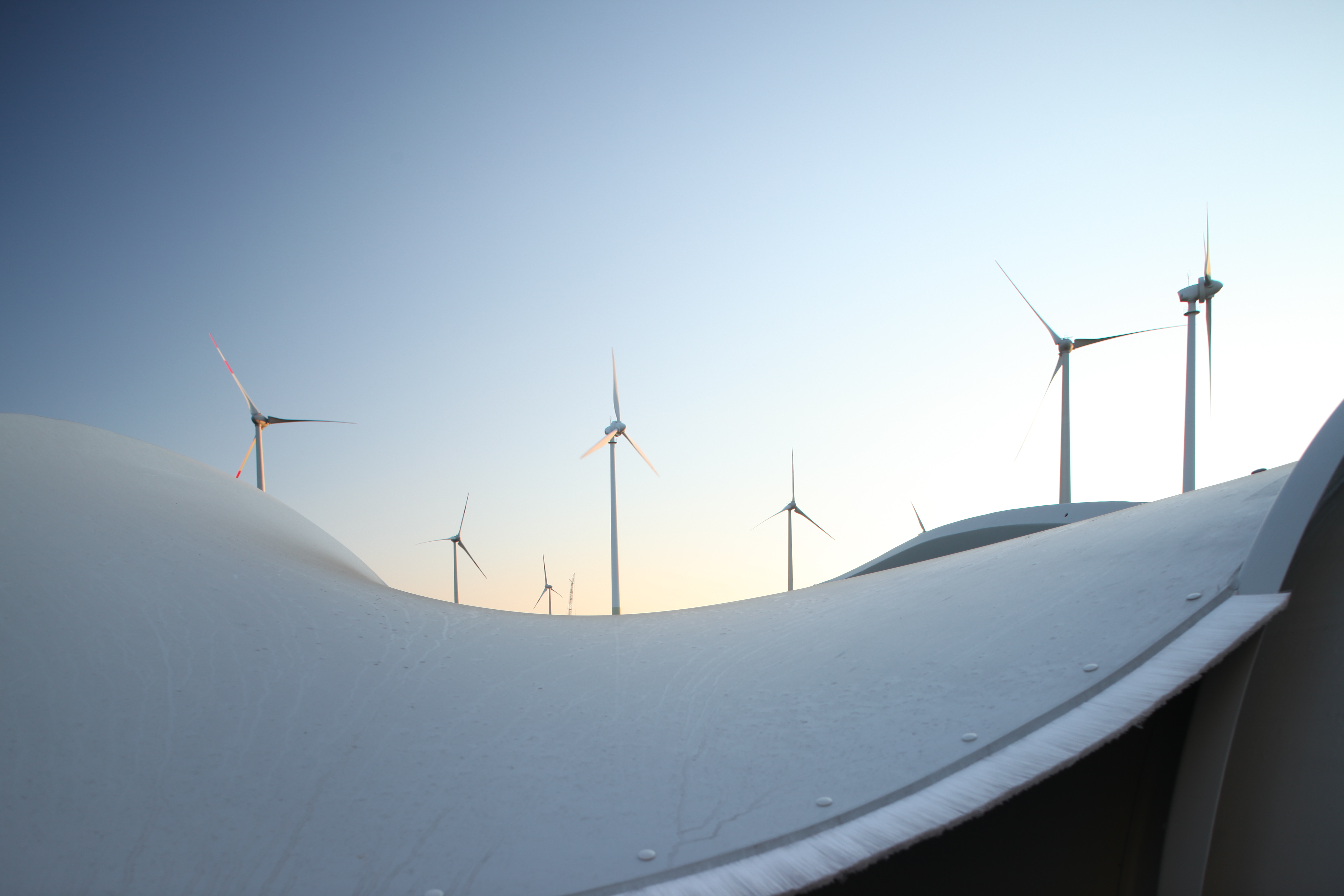
The government proposed tendering additional capacity for onshore wind, expanding subsidy programmes for industrial decarbonisation, and supporting farmers in rewetting peatlands in its programme outlining how Germany plans to meet its 2030 and 2040 climate targets.
The country is on track to miss its target of a 65 percent emissions cut by the end of the decade, according to projections by the Federal Environment Agency (UBA). The government’s Climate Action Programme thus spells out additional measures it intends to take to close this gap.
However, the expert council said that the government may be “significantly overestimating” the programme's actual greenhouse gas reduction impact. While the 2030 target could be reached because the gap was relatively small to begin with, the 2040 greenhouse gas reduction target would “very likely” be missed, the advisors said.
Renewables expansion key for German energy independence - minister
“With this programme, I want to give climate protection a new boost, move the issue away from polarisation and, at the same time, help the economy, which is suffering from high oil and gas prices,” environment minister Carsten Schneider said presenting the plans.
The programme, which spells out 90 measures across all economic sectors, relies primarily on financial incentives rather than regulatory restrictions to drive emission reductions. The government estimates the measures will save over 27 million tonnes of CO2 by 2030, and reduce fossil gas import costs by three billion euros, based on 2025 average prices.
Key proposals include tendering an additional 12 gigawatts of onshore wind capacity by 2030 and expanding industrial subsidy programmes for process heat decarbonisations and electrification technologies. In the transport sector, the government is betting on a socially-tiered subsidy programme to support the purchase of 800,000 electric vehicles (EVs), the continued funding of the Germany-wide flat-rate public transport ticket, and emissions rules for transport fuels. [For a detailed breakdown of proposed measures, see the Factsheet “Q&A: Germany’s Climate Action Programme 2026”]
The additional auctions for onshore wind came as a surprise, as the government's plans until now have indicated a lowering of ambition on renewables.
“Contrary to what you hear in the public debate, we are committed to significantly expanding renewable energy,” minister Schneider said, adding that the new tenders for onshore wind in the package were "the most important measure in the short term".
Renewables such as wind and solar power are “domestic, secure energy sources” that will make Germany independent of oil and gas imports from abroad, he added. “Given the geopolitical situation we find ourselves in, we must do everything we can to become independent. We will achieve independence by expanding renewable energy.”
NGOs criticised the government for relying on outdated data, for ignoring recent policy rollbacks such as changes to heating decarbonisation laws, and for its limited impact on the transport sector, which has consistently missed emission reduction goals. “The CO2 reductions required by 2030 are tight and based on optimistic estimates,” said Greenpeace Germany head Martin Kaiser.
Measures will largely be funded through a special climate and transformation fund (7.6 billion euros between 2027 and 2030), with an additional 400 million coming from the special infrastructure and climate neutrality fund.
Emission reduction gaps widen
Any new German government is legally required to present a Climate Action Programme one year after taking office, detailing measures to put the country on track to meeting climate targets for 2030 and 2040.
Legally, the programme is based on emission projections from environmental agency UBA from 2025, which showed that Germany would reduce greenhouse gas emissions by 63 percent by 2030 – failing the 65-percent target by about 25 million tonnes – and only if current policies are fully implemented, which is uncertain. The projected target miss for 2040 is considerably larger. Under current trends, Germany is set to reduce emissions only by about 80 percent compared to 1990 levels, clearly failing the 88-percent target set for that year.
The latest UBA projections from March 2026 show a bigger target miss for both 2030 and 2040.
Meanwhile, the programme could face legal challenges. A court recently found that the previous government’s climate action programme requires additional measures to comply with climate targets.
Additionally, Germany is increasingly at risk of failing EU-mandated climate targets for the buildings and transport sectors – which could prove very costly, as the country might be forced to buy emissions allocations from other countries under the European Union’s Effort Sharing Scheme. The government's new programme does not close the gap to the EU targets.
Stakeholder reactions
The programme adopted by the government is “inadequate and unlawful”, said NGO Environmental Action Germany (DUH). The NGO threatened a new climate lawsuit should the government fail to amend the plan in the near future. It was DUH who had filed and won the lawsuit against the previous government’s programme.
NGO Germanwatch was also critical. “On paper, this programme barely manages to meet the 2030 climate target – but only because the government is working with outdated figures,” Christoph Bals, policy director at the NGO said.
Environmental transport association VCD said that the measures “are insufficient to put the transport sector on a climate-friendly path,” and called for a speed limit on motorways to reduce emissions and save lives – a policy endorsed by DUH and Greenpeace too.
“The soaring prices of fuel and gas show everyone: the climate protection programme must provide a clear roadmap for phasing out fossil fuels,” Greenpeace energy expert Mira Jäger said.
This was echoed by Ottmar Edenhofer, director of the Potsdam Institute for Climate Impact Research (PIK), who said that “it is questionable whether these measures go far enough to address the fundamental challenge of transforming our fossil-fuel-dependent capital stock.” Particularly in the transport and buildings sectors, “there is a lack of credible policy instruments that provide clear incentives to switch to sustainable and increasingly cost-effective climate protection technologies such as electric cars or heat pumps,” Edenhofer added.
The renewables industry welcomed plans for additional onshore wind tenders, but criticised the disconnect between reform proposals from the economy ministry, which it argues would slow down the energy transition, and required emission reduction targets. Association BSW Solar argued that the government should abandon plans to scratch subsidies for rooftop solar and proposed rules that would limit curtailment compensation payments for new renewable projects, saying that “there is still a significant gap between aspiration and reality in many areas”. Renewables association BEE added: “The measures taken by the various ministries must be consistently coordinated with one another; otherwise, they will come to nothing.”