
German government approves new gas power plant auctions to back up wind and solar
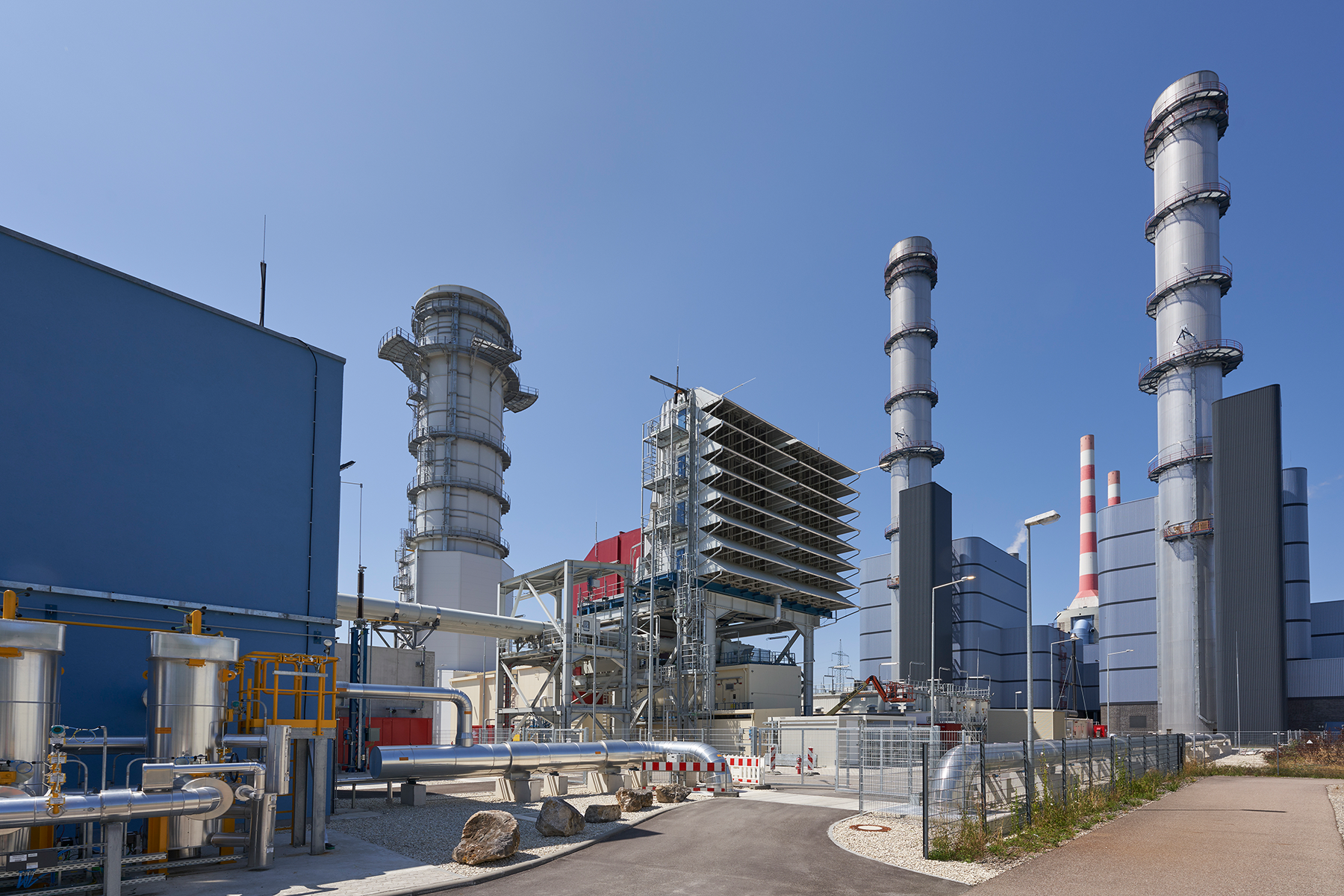
The German government has approved a new draft law to introduce auctions for government support for new gas-fired power plants and other electricity capacity to guarantee supply security as the country rapidly builds out wind and solar power and exits coal.
The government expects the plans to cost up to 3 billion euros in the year 2031 – when all tendered capacity is set to be up and running – and up to 2.3 billion euros annually from 2032 to 2045. It plans to introduce a levy in 2031 to finance the plans, in line with EU rules.
"Anyone who is serious about expanding renewable energy and phasing out coal must start building flexible power stations and new capacity now," said economy and energy minister Katherina Reiche in a press release. The draft law will now be debated in parliament.
Auctions for state support
Germany’s government plans to initially hold two sets of auctions for new backup power plants with a combined capacity of 11 gigawatts (GW), said the draft. Of these, the first tenders (8 September and 22 December 2026), covering 9 GW, are aimed at so-called ‘long-term capacity’, which is capable of supplying electricity continuously over an extended period, ensuring that even prolonged periods without sufficient renewable energy generation can be covered. It is likely that only gas-fired power plants will be successful in these auctions. Successful bidders receive remuneration for having electricity available once a facility is built, providing the financial incentive needed to invest in the first place.
These plants must be 'hydrogen-ready'. According to the draft, this means a power plant that "is designed and constructed in such a way that the capability to operate on 100 percent hydrogen can be achieved by modifying plant components or the operation of the power plant." All power plants subsidised under the planned law must be climate-neutral by 2045 at the latest.
The initial auctions will be followed by a further tender for new capacity totalling 2 GW without a long-term criterion (18 May 2027), giving batteries a chance.
Further tenders will be held in 2027 and 2029, said the ministry. In addition to generation capacity such as power stations and storage facilities, flexible consumers will also be able to apply, and existing plants will be eligible alongside new ones.
All tenders combined are intended to secure the total domestic demand for guaranteed capacity for the year 2031.
In 2027, tenders will be held for the conversion of power stations to run on hydrogen. Furthermore, a bill to implement a comprehensive capacity market to secure supply from 2032 onwards will be presented in 2027, said the economy ministry.
The new gas plants are seen as crucial to enable Germany to phase out coal as planned. Germany aims to bring the renewables share in power consumption to 80 percent by 2030. After the completion of the coal phase-out, the aim is to achieve greenhouse gas neutrality in the electricity supply. As the country exits the most climate-damaging form of fossil fuel electricity generation and rapidly expands renewable energies as part of its efforts to build a climate-neutral society by 2045, the country must ensure supply security. It aims to build up alternative capacity which it can switch on at times when intermittent wind and solar energy are insufficient to meet demand – so-called “controllable capacity”.
Germany has decided that gas-fired units will play a major role during a transitional period, to later be converted to run on green hydrogen. Flexibility options such as large-scale batteries or demand management will also play a role. The government also plans to introduce a capacity market by 2027 to ensure supply security from 2032, beyond the earlier auctions.
The government argues that there has been only hesitant investment – or, in recent years, a complete lack of investment – in essential infrastructure such as power plants. "In view of these obstacles and the observable wait-and-see attitude, a comprehensive investment and incentive framework is necessary to ensure security of supply at the usual high level," said the law reform draft. The introduction of a capacity market is therefore intended to incentivise investment in the secure supply of electricity, specifically in guaranteed capacity.
Talks have been going on for years, and the plans for auctions were delayed several times, also due to the breakup of Germany’s previous coalition government. The European Commission gave the preliminary green light based on state aid rules at the start of 2026. It will have to approve the final design once the legislation has passed parliament.
Industry urges swift parliamentary process
Energy industry representatives have previously warned that it would take at least five years to connect new gas plant to the grid after the auctions. An international law firm in autumn last year already said it expects the auction to be delayed until the end of 2026. The business case for the new gas plants can only be guaranteed with additional state support because they would only run seldomly, when wind and solar power output are insufficient.
The energy industry welcomed that the government finally adopted the new law, and urged a swift parliamentary process. “To ensure that this capacity is available by 2031, the schedule must be kept to,” said industry association BDEW head Kerstin Andreae. “The draft should now move swiftly through the parliamentary process so that the first tenders can be launched before the end of 2026.”
Local utility association VKU called for changes, saying the current draft favoured a small group of large energy companies. “Disproportionately high financial guarantees, impractical contractual penalties and costly technical requirements pose significant obstacles for small and medium-sized enterprises,” said a spokesperson. “This puts municipal utilities at a disadvantage, even though they play a vital role in ensuring a secure local electricity supply.”
Environmentalists warn of fossil fuel lock-in
The environmental and development organisation Germanwatch said the draft is "a dangerous perpetuation of dependence on fossil fuels," adding that "it relies one-sidedly on the promotion of fossil gas-fired power stations and systematically disadvantages climate-neutral solutions such as battery storage and flexible demand." It added that 'hydrogen-ready' is defined "in the vaguest possible terms," leaving it unclear how and by whom this hydrogen compatibility must be demonstrated. "In effect, this means that any fossil fuel-fired power station could be awarded a contract in the tendering process," it said.
Environmental NGO WWF Germany also criticised the planned law, arguing that new fossil fuel-fired power stations “will lock us into a path-dependent future for decades to come — financed by a levy whose amount and duration are not specified in the draft.” The organisation called on parliament to revise the draft to ensure better conditions for battery storage facilities, introduce a science-based definition of ‘hydrogen-ready’, and set out a plan for the ramp-up of hydrogen.