
How the 100-year-old LA Coliseum became one of the US's most sustainable stadiums
*** Please note: this article is part of CLEW’s reporting on climate resilience in the sporting world. You can find the full package here. This project was made possible by a grant from the Checkpoint Charlie Foundation. More articles in this series to come. ***
Matthew Buswell moves quickly between the beeping construction machines that surround the Los Angeles Memorial Coliseum. He is intercepted every time he enters a new space, answering a question here, giving an instruction there. As head of operations and sustainability at the iconic venue, he makes sure that everything happening inside runs smoothly and, as far as possible, more sustainably.
“I don’t want to be told what to do, I like to be at the forefront,” he says, walking through the sun-drenched seats that rise in a continuous arch from the pitch. “We do things here because we want to.”
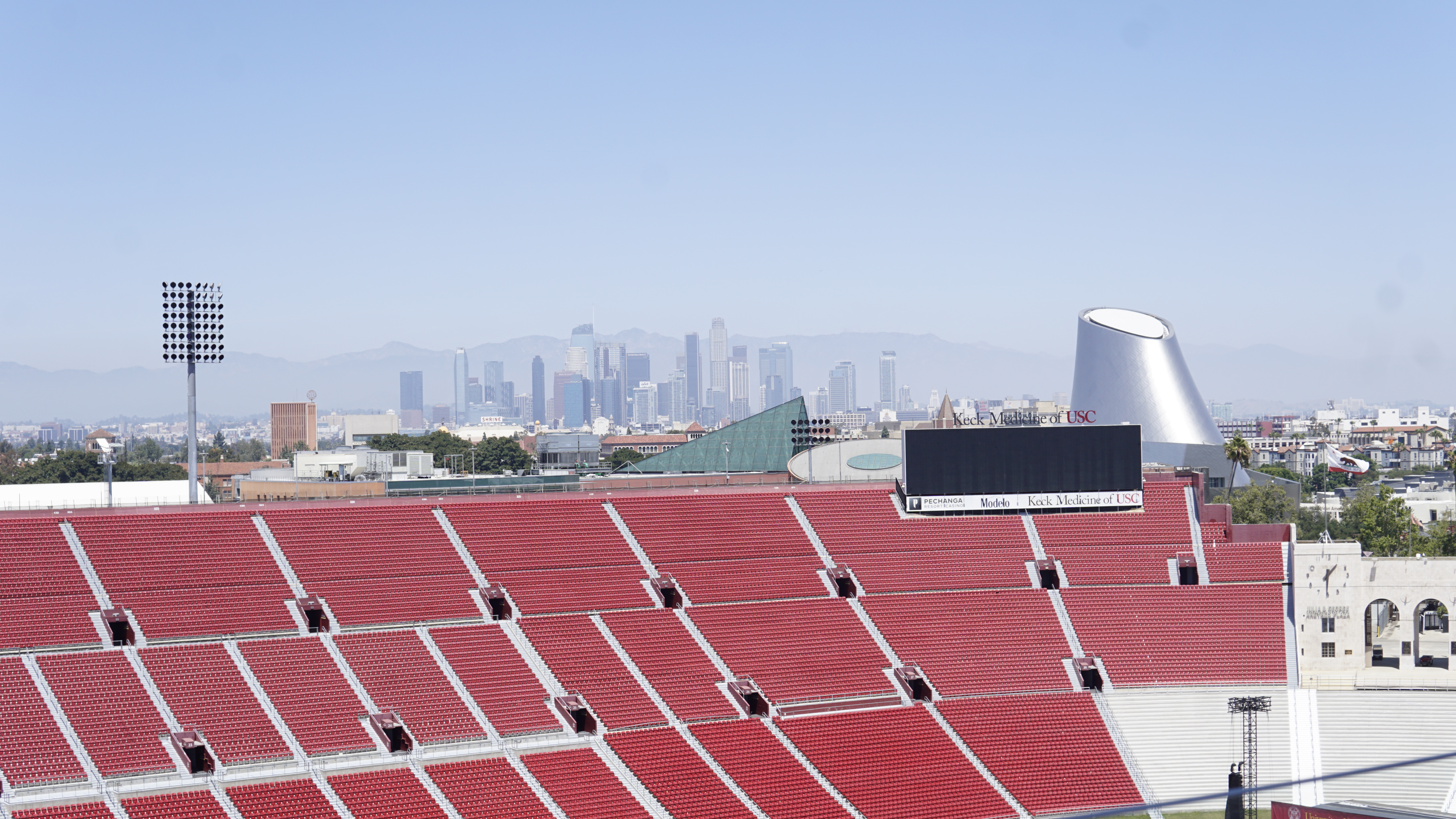
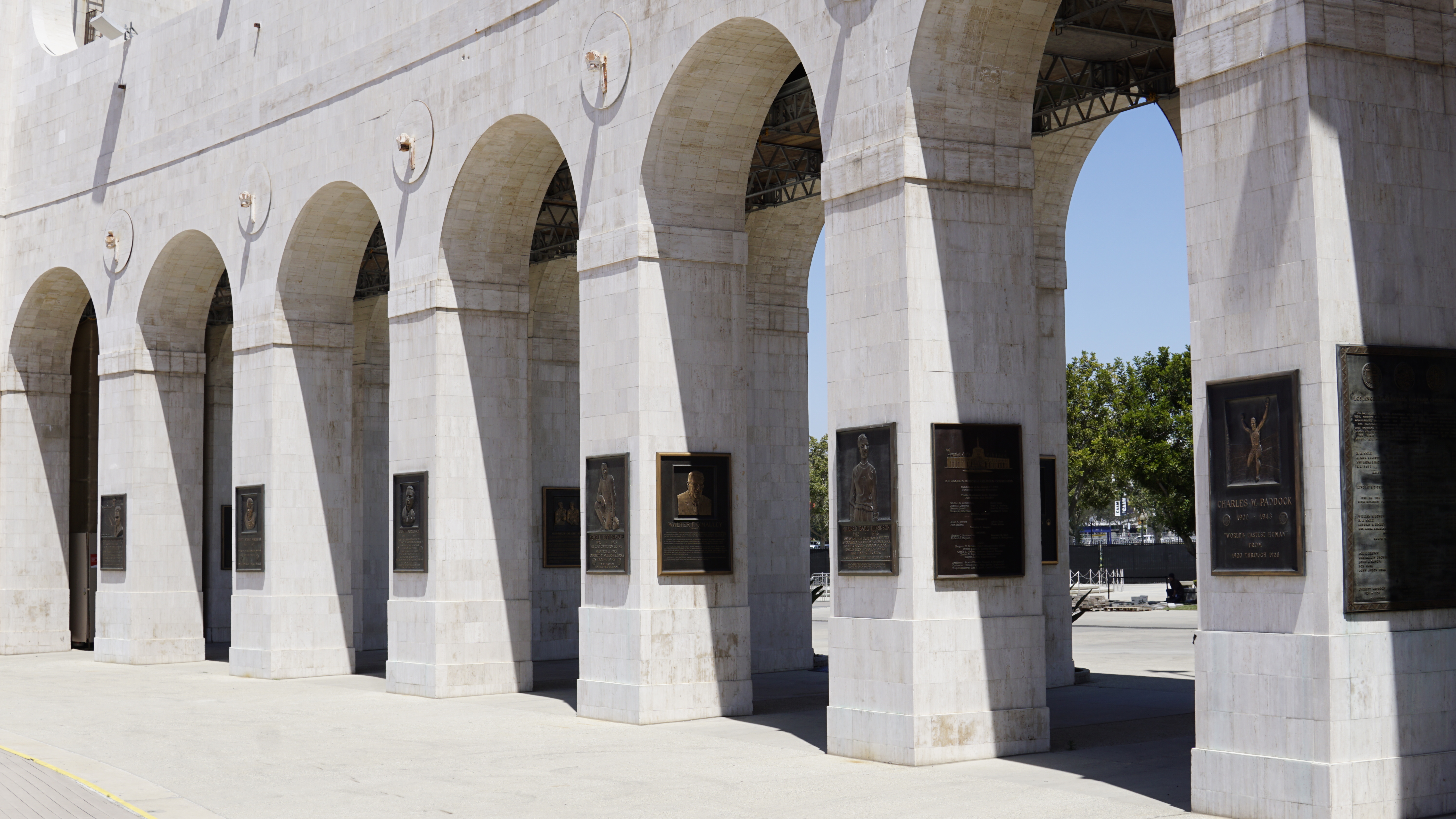
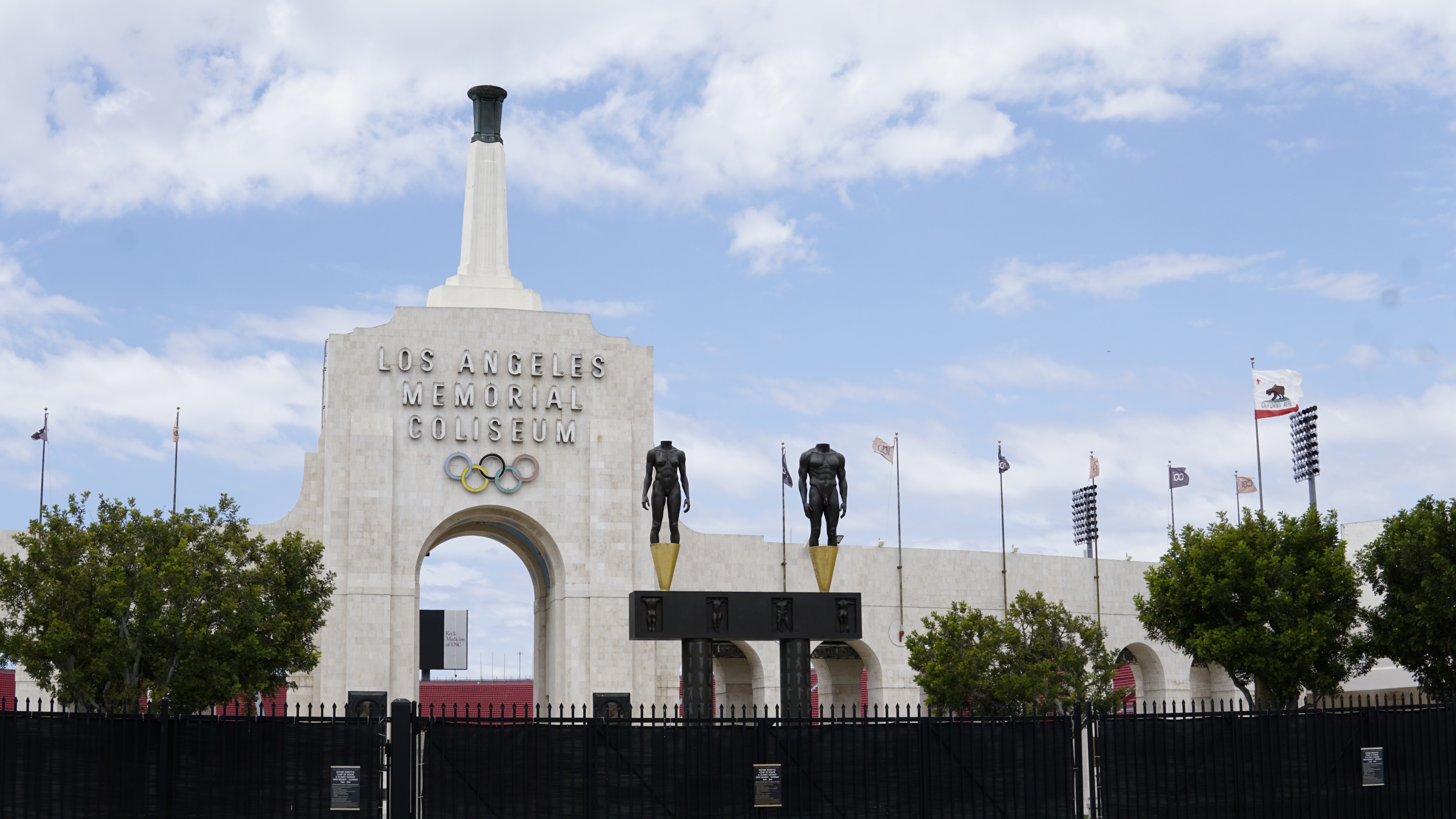
Buswell has worked at the venue for over ten years, and his team has collected multiple awards for its “zero waste” operations. The Memorial Coliseum, an open-air bowl fronted by distinctive clean white arches, will become the first venue to host three Summer Olympic Games in 2028, having been their centrepiece in 1932 and 1984. The century-old stadium, practically devoid of shade, will have to cope with competitions running on consecutive days at the height of the Los Angeles summer.
As climate change rewrites the rules of sport, event organisers have to find ways to ensure staff, athletes and fans can continue to come together as temperatures get hotter and extreme weather risks rise – while reducing their own climate impact.
A “zero-waste” event operation
For the Memorial Coliseum, a more sustainable event starts with keeping game-day waste out of landfills – which are major sources of methane, carbon dioxide, and odours. When tens of thousands of fans gather for the American football games of the University of Southern California (USC) Trojans, the venue’s main tenant, the team diverts at least 90 percent of what they leave behind away from landfills: food scraps and containers, cups and cans, taco trays and pizza boxes.

There is no excuse for us not to sort through all our trash.
After every game, a team of sorters spends a couple of days handpicking through the mountains of rubbish, sorting items into ten different waste streams. The effort began around 2015 and fewer lorry trips to landfill since have cut both costs and emissions.
“We have the time and the space, so we are going to do it – there is no excuse for us not to sort through all our trash,” Buswell says.
Running a sustainable sporting event
There are no set rules for what qualifies as a sustainable sporting event: every gathering has some impact on the environment, and the balance shifts with crowd size, how they get there, and the energy and resource efficiency of venues. As such, organisers have a vast variety of options to improve their sustainability factors, says Hartmut Stahl, a sports and environment researcher at the Öko-Institut who helped develop the knowledge-sharing platform Sustainable Sporting Events.
The project, run with the German Sport University Cologne and the German Olympic Sports Confederation (DOSB), identified over 600 measures across 17 action areas to make sporting events socially, economically and environmentally fit for the future.
These actions range from choosing local partners to minimise logistics traffic distances to biodiversity-aware route planning for outdoor races, and from responsible wastewater management to maximising the lifecycle of products and equipment, as well as introducing active travel incentives for staff and fans, offering free drinking water for all, or committing a share of event revenues to climate mitigation projects within the organisation.
Money is the main road block to a more sustainable venue
The Memorial Coliseum’s waste record is among the best in the US, but it is only one part of the picture, alongside energy, materials and resource use. Despite LA’s sunny disposition, there are no solar panels at the venue yet.
“If I had a wish list, I would love to have solar implemented,” Buswell says. “I’ve done feasibility studies and it makes sense for us; it is a big number upfront, but in the long term would take away quite a bit of our electricity bill.”
He would combine the panels with shade structures to make the experience of attending matches more comfortable. Heat protocols require portable fans, misters and temporary tents to be put out to provide cooler zones, yet standing on the black tarmac that surrounds the stadium is a sweat-inducing experience even in the spring heat.
The reason it has not happened is money.
“In an old building like this, a lot of my budget goes to preventative maintenance or fixing breaks,” Buswell says, handing over a brick-sized block of concrete that had recently fallen from one of the stands. Scaffolding surrounds the building as workers carry out concrete restoration and waterproofing to extend its life by “another 100 years”.
“I have to take care of these projects, which puts wish-list items like solar on the backburner because they are a ‘nice to have’ compared to falling concrete,” he says. “We try to find windows to get sustainability in, but it is a long burn and we have to be okay with our small wins. Something is better than nothing.”
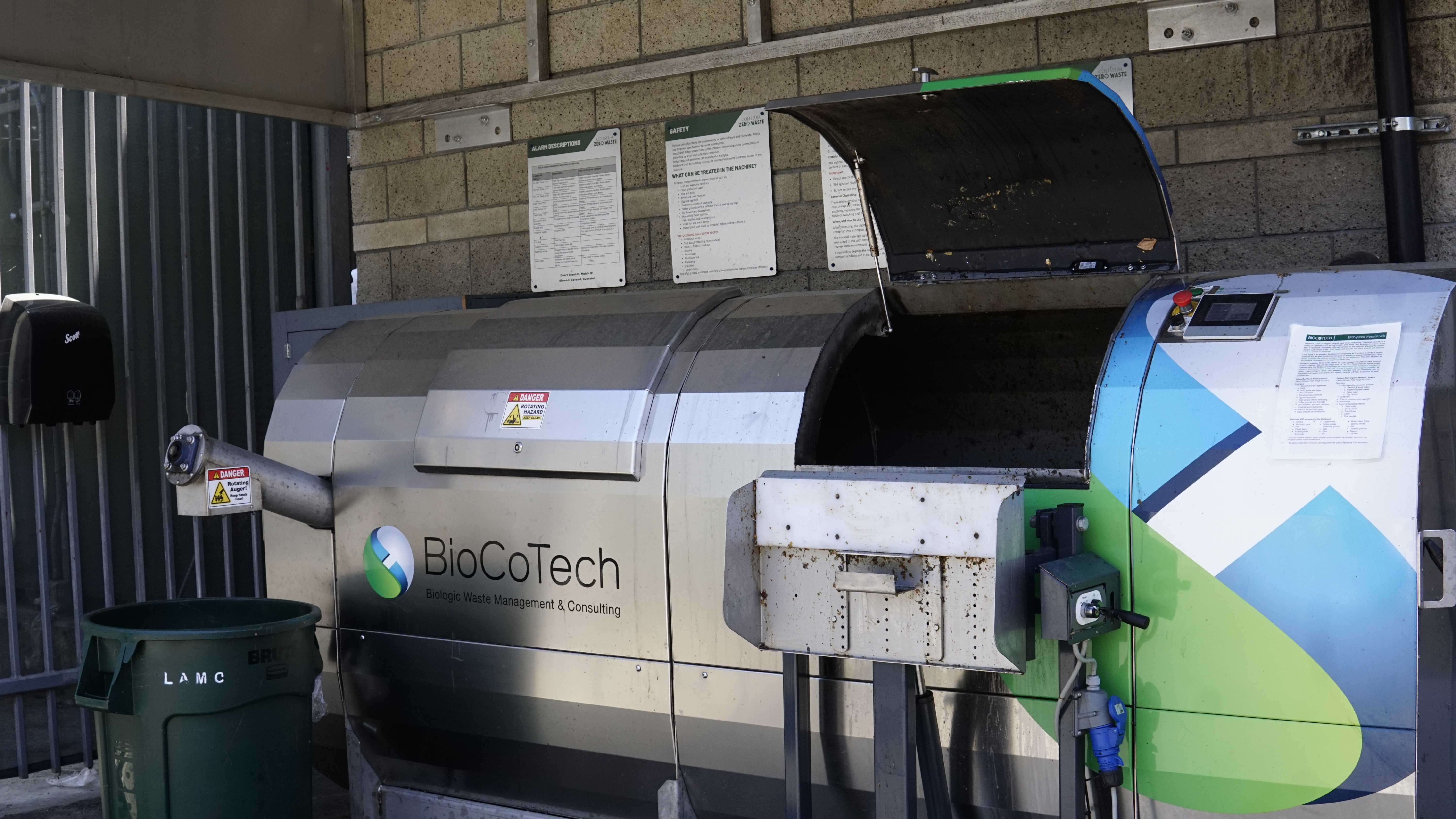
Outside money makes bigger upgrades possible. Last year, a grant from the utility LADWP enabled upgrades to the stadium’s water fountains, adding bottle refill stations so fans can top up on hot days. A CalRecycle grant covered a biodigester that turns food scraps which cannot be donated into soil conditioner within three days, cutting the volumes otherwise destined for landfill.
Can Olympic preparations help the LA Memorial Coliseum up its sustainability game?
The Memorial Coliseum will once again be a central backdrop to the Olympic opening ceremony and the athletics competitions – arguably the most popular Olympic discipline. The privately-run organising committee LA28 says it will draw on the city’s Olympic history and existing infrastructure by using only existing or temporary venues.
Under its sustainability strategy, the Games are to run on clean energy, with shade and drinking water stations added across the city. Organisers say “legacy” and long-term change is central to the effort.
“Being an Olympic venue means vendors are interested in us,” Buswell says. “I have definitely used the deadline as leverage to get projects and budgets moving.” What the venue will be left with once the Games have gone is harder to say: the Coliseum team cannot discuss any Olympic-related details, and LA28 did not reply to multiple requests for comment.
The International Olympic Committee (IOC) sets no binding sustainability standards for individual venues, unlike its requirements on safety, media infrastructure and accessibility, though its Olympic Agenda 2020+5 asks venues to be energy efficient, use renewables, save water and manage waste.
“If you look at large events, they start with very nice concepts, but what is delivered is often different from what was promised,” Öko-Institut researcher Stahl says. “There are still gaps between what is written on paper and what is implemented in practice.”
Wildfires, poor air quality and heat all threaten the fan experience
Climate change already shapes day-to-day operations. Buswell has not yet had to cancel a sporting event for environmental reasons, though his team came close during the 2018 Woolsey Fire, before judging air quality good enough for the scheduled match to go ahead.
The January 2025 Eaton and Palisades fires, the most destructive in California’s history, hit during the off season. “Even though they were miles away, we were still affected,” Buswell says, standing on top of the Coliseum’s renovated south side, which looks straight out over downtown LA. He recounts standing in the same spot the previous year in a mask, watching the smoke rise and wind cover the seating bowl in ash. “It was pretty eerie.”
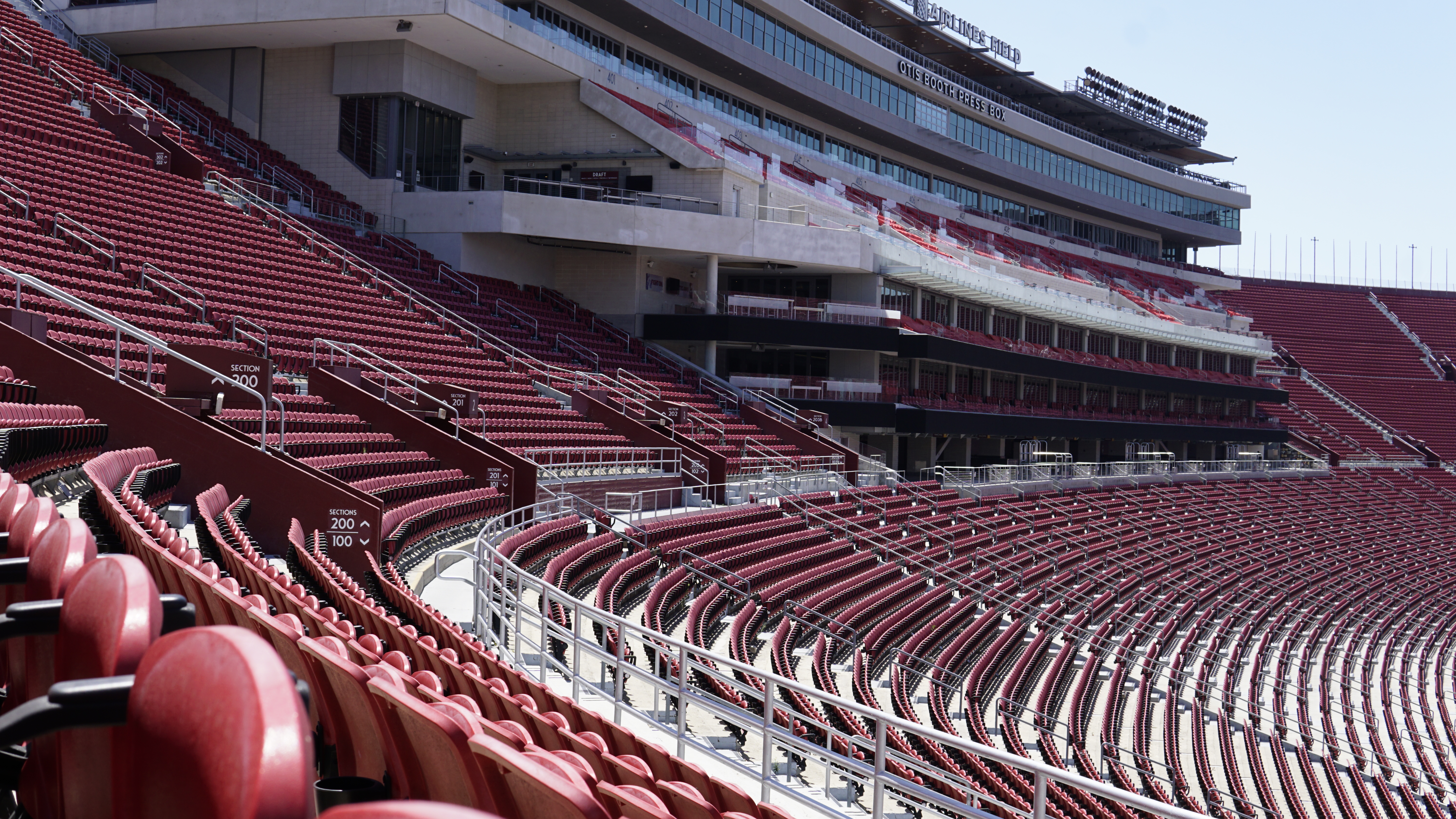
He now hoses down the stadium’s 75,000 seats far more often than the schedule used to require. “Why would I have to do a wash down in January?” he asks. “I had to because we looked like a chimney.”
If he could design the venue today, Buswell would add a system to catch rain. Newer stadiums use closed-loop filtration systems, he says, “but the way our stadium is constructed, there is not really space for it.”
LA’s polluted air also means ventilation filters have to be replaced twice as often as the manufacturers specify. Meanwhile, fans are allowed to bring in disposable water bottles during heatwaves despite the venue’s ban on single-use plastics – leaving the waste more contaminated.
Greener products tend to cost more upfront, but the extra maintenance also strains the budget.
“The right thing to do”
Not all of it is visible from the stands, but sustainability budgets are growing and Southern California has a culture of pushing clean initiatives “because it is the right thing to do,” Buswell says. Being recognised nationally has given the work a rationale inside the building, he adds, and people take pride in it. “I can have all the policies and wishes that I want, but if you don’t have the buy-in from stakeholders, you’re not going to go anywhere.”
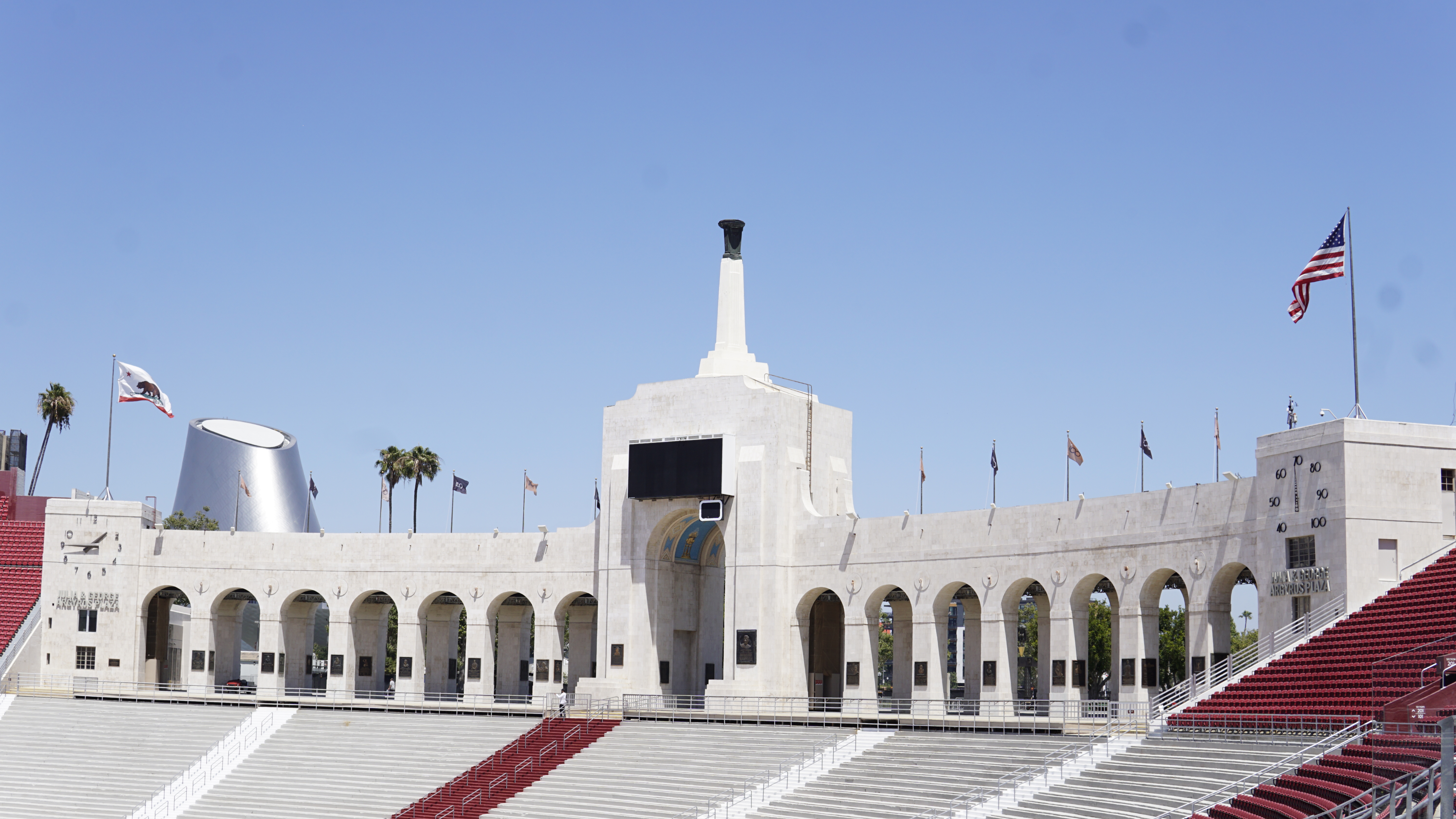
Concessionaries, usually driven by profit, commit to buying greener products such as compostable bin bags and reusable aluminium cups, which carry a higher price tag. Kitchen staff, meanwhile, donate leftovers as quickly as they can so they do not go to waste, recycle cooking oil into soap for the venue’s toilets, and buy unpackaged products where possible.
They have also added vegetarian options at every concession stand, mirroring recommendations by the EAT-Lancet Commission, which point out that a diet centred on plant-based foods and a significant reduction of red meat is central to reducing the climate toll of our food systems. “We are actively trying to find something that is exciting and flavourful and not just checks a box, where you have one concession in the top corner that offers a Beyond Burger.”
The Memorial Coliseum will be the central backdrop to the LA 2028 Olympics, yet whether it will get much more than attention before and after the Games is a question that still needs to be settled. “Something is better than nothing,” Buswell repeats. “That is what moves us forward, trying to incrementally get better, make positive changes and not go backwards.”