
Merz's CDU suffers historic loss in state elections, fuel tax relief fails to move voters
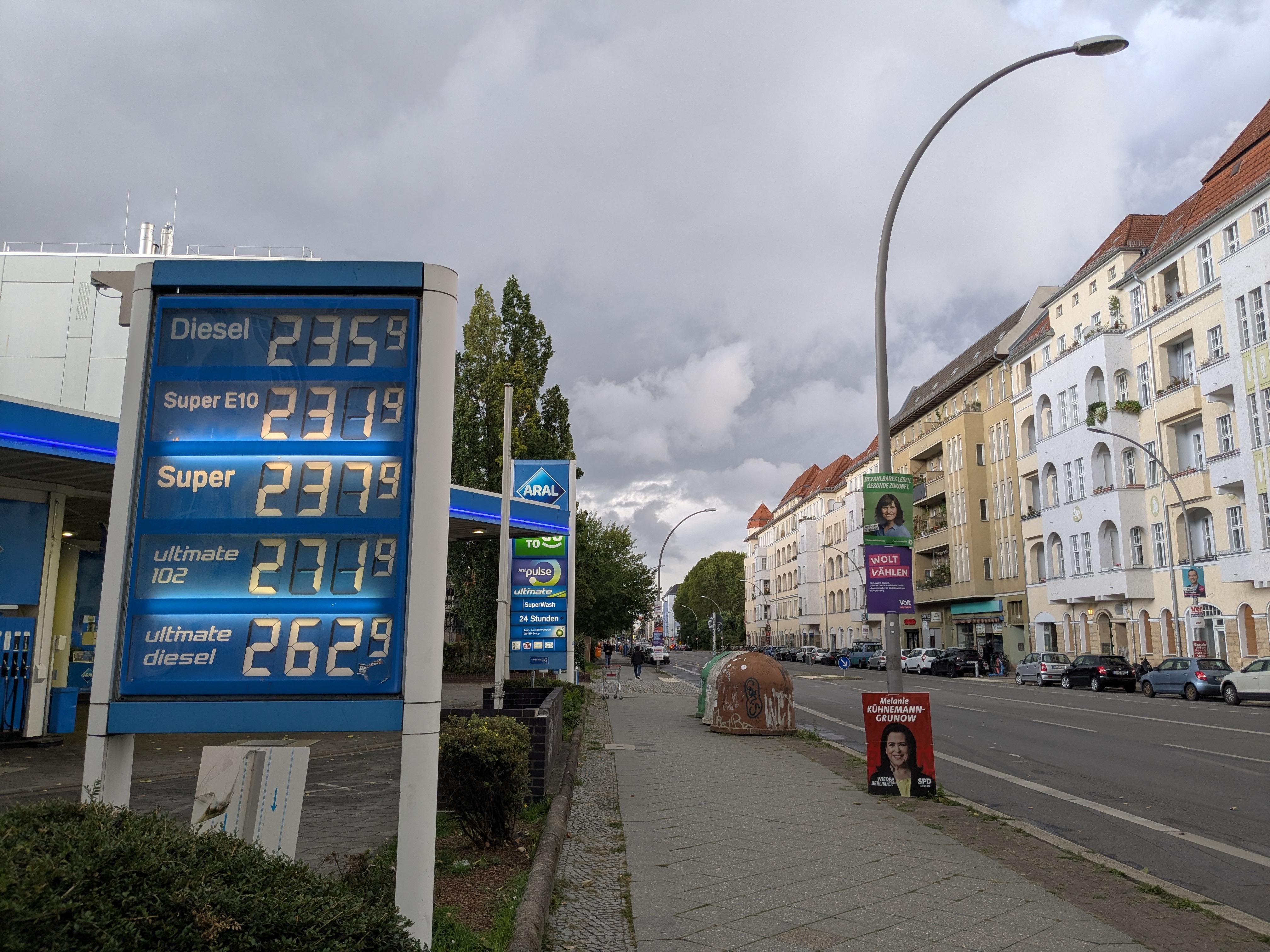
Chancellor Friedrich Merz's Christian Democrats (CDU) were voted out of the Mecklenburg-Western Pomerania state parliament and moved to second place in the city of Berlin, in twin defeats that further destabilise Germany's ruling coalition. The results came just two days after the federal coalition government of conservative CDU/CSU alliance and Social Democrats (SPD) decided to reintroduce a fuel tax cut in an attempt to head off voter anger over high petrol and diesel prices. Rising prices at the pump have become a pressing political issue for Merz, who is faced with record-low approval ratings and attempts to fend off the further rise of the far-right Alternative for Germany (AfD) party.
In the city of Berlin, the CDU and Social Democrats (SPD) both saw heavy losses compared to the previous election, while the Left Party and the far-right AfD made significant gains. Election winner Left Party is set to enter coalition talks with the Greens and the SPD.
The vote in Mecklenburg-Western Pomerania has dealt an even heavier blow to chancellor Merz. His CDU failed the 5-percent threshold and will no longer be represented in parliament. The AfD became the strongest party, but is very unlikely to be part of the next government because all other parties have ruled out a coalition. The Social Democrats could form a coalition with the Left Party and the Greens.
Merz described the result as a "disaster" for his party, reported Reuters. Within minutes of the first results coming in, the chancellor in televised remarks vowed to press on with his reform agenda that he says is vital to revive sluggish growth in Europe's largest economy and keep it globally competitive.
The chancellor did not specify the reforms, but in addition to a recent package including changes in the pension system, taxes, and labour market policies, the government has put a focus on reforming key aspects of energy transition policies.
Surveys show that most voters back ambitious climate action and the energy transition, but fuel and electricity prices and a fair distribution of transition costs remain a sore spot. This creates a difficult situation for the government, which is currently debating a reform of renewables support and grid access rules in an effort to cut costs, while facing record petrol and diesel prices.
Since taking office last year, the coalition government made reducing energy prices for households and businesses a priority for its term. In other European countries – several of which face national elections in 2027, including France, Italy and Poland – high energy prices are already a major political issue. The Iran war and the closing of the Strait of Hormuz, a major shipping route for oil and liquefied natural gas, have pushed up oil and gas prices and plunged Europe into the second major energy crisis since the start of the Russia's war against Ukraine in 2022.
Costs and prices topped the list of most important issues for people in Mecklenburg-Western Pomerania, and the energy prices dominated the state’s political debate in the days leading up to the Sunday vote.
Election winner AfD has blamed the energy transition for higher energy prices, and argues it should not receive any further financial support. Instead, the party wants to resume gas trading with Russia through the damaged controversial Nord Stream pipelines, which make landfall in the eastern German state. Reuters reported that Russia’s government is preparing talks with the AfD about restarting gas supplies, but the party does not govern and has no say in the matter, and such a meeting would be symbolic.
The two state elections mark a “profound upheaval in the political landscape” and voters expected politicians to provide a vision for the future and a sense of direction, said Ursula Heinen-Esser, head of renewables industry association BEE. To make Germany strong amid geopolitical challenges, the government should ensure “a reliable economic policy with a resilient renewable energy system – especially now that we are once again seeing how sharply prices for fossil fuels are rising.”
Fuel tax cuts criticised as short-sighted, poorly targeted
The lobbyist spoke out against decisions that mark a return to fossil fuels. “Yesterday’s answers will not help us with tomorrow’s questions,” she said.
Her criticism comes only days after the government agreement for further fuel price relief. In a decision political commentators described as a last-minute attempt to calm voters and show resolute action two days ahead of the regional elections, the federal and state governments agreed to re-introduce tax breaks on petrol and diesel and as a second step set up a cap on fuel prices.
Economists and environmental groups slammed the decision as short-sighted, harmful to the climate, and said that it fails to protect lower-income households from record-high petrol prices.
Economist Veronika Grimm told newspaper Kölner Stadt-Anzeiger that the government is engaging in opportunistic politics in an attempt not to alienate voters. Focusing on short-term relief measures left the governing parties without energy to tackle “the truly important structural reforms,” Grimm added.
The question of how to support citizens and companies that struggle with rising petrol and diesel prices due to international crises – while ensuring the transition away from the climate-damaging fossil fuels – has occupied the government for years. High fuel prices can encourage lower consumption and falling carbon emissions, and make EVs more attractive to those who can afford them. But many people on lower incomes or small businesses who cannot afford to switch to an electric vehicle struggle to cope.
Mobility expert Marissa Reiserer of NGO Greenpeace said that “a fuel rebate is not targeted, is harmful to the climate, and a large chunk of it ends up as excess profit in the oil companies’ pockets.” Instead of “squandering billions in tax revenue through a blanket approach,” the government should tackle Germany’s dependence on oil, Reiserer added.
The federal and state governments agreed on a relief package worth 2.5 billion euros, introducing tax relief on petrol and diesel to lower fuel prices by 17 cents per litre until the end of the year. In addition, the government is exploring the introduction of a fuel price cap from January 2027, as well as laying the groundwork for direct payments to low-income households.
“For families, commuters, tradespeople and everyone else who needs a car every day, these fuel prices are no longer sustainable,” said finance minister Lars Klingbeil. “We are continuing to work towards ensuring that we can return the profits made by oil companies during the crisis to the public.” EU governments last week discussed imposing a bloc-wide windfall tax on energy companies, as countries are attempting to head off the potential fallout from what analysts have warned could be one of the continent’s biggest energy shocks in decades, The Guardian reported.
Earlier this year, the government already lowered fuel tax rates by 17 cents a litre for two months – a measure that cost the state around 1.6 billion euros. According to researchers, the measure disproportionately benefited high-income households, with the top ten percent expecting savings totalling 21 euros over the two months, while the bottom ten percent saved around six euros.
“Previous fuel discounts, which were implemented through tax cuts, have primarily resulted in high costs,” researcher Ralf Dewenter from the Helmut Schmidt University told the Science Media Centre.
Focus on public transport funding instead – environmental NGOs
The government should stop pouring billions into short-lived fuel discounts and instead make public transport cheaper, environmental transport organisation VCD said. Greenpeace added that a windfall tax on fossil fuel profits could be used to fund a cheaper “Germany ticket”, the nationwide monthly public transport offer for local buses and trains, which has steadily increased in price since its introduction in April 2023. The ticket is credited with reducing emissions in the transport sector and boosting ridership numbers.
According to figures by Germany’s statistical office, local public transport ridership grew by two percent in the first half of 2026.
“The federal government is once again attempting to solve a structural problem with cheap fuel,” said VCD national chair Matthias Kurzeck, adding that fuel rebates and price caps do not address Germany’s oil dependency. “People need relief, but not billions in subsidies for fossil fuel consumption.”