
Climate action fairness a sore spot in German regional votes
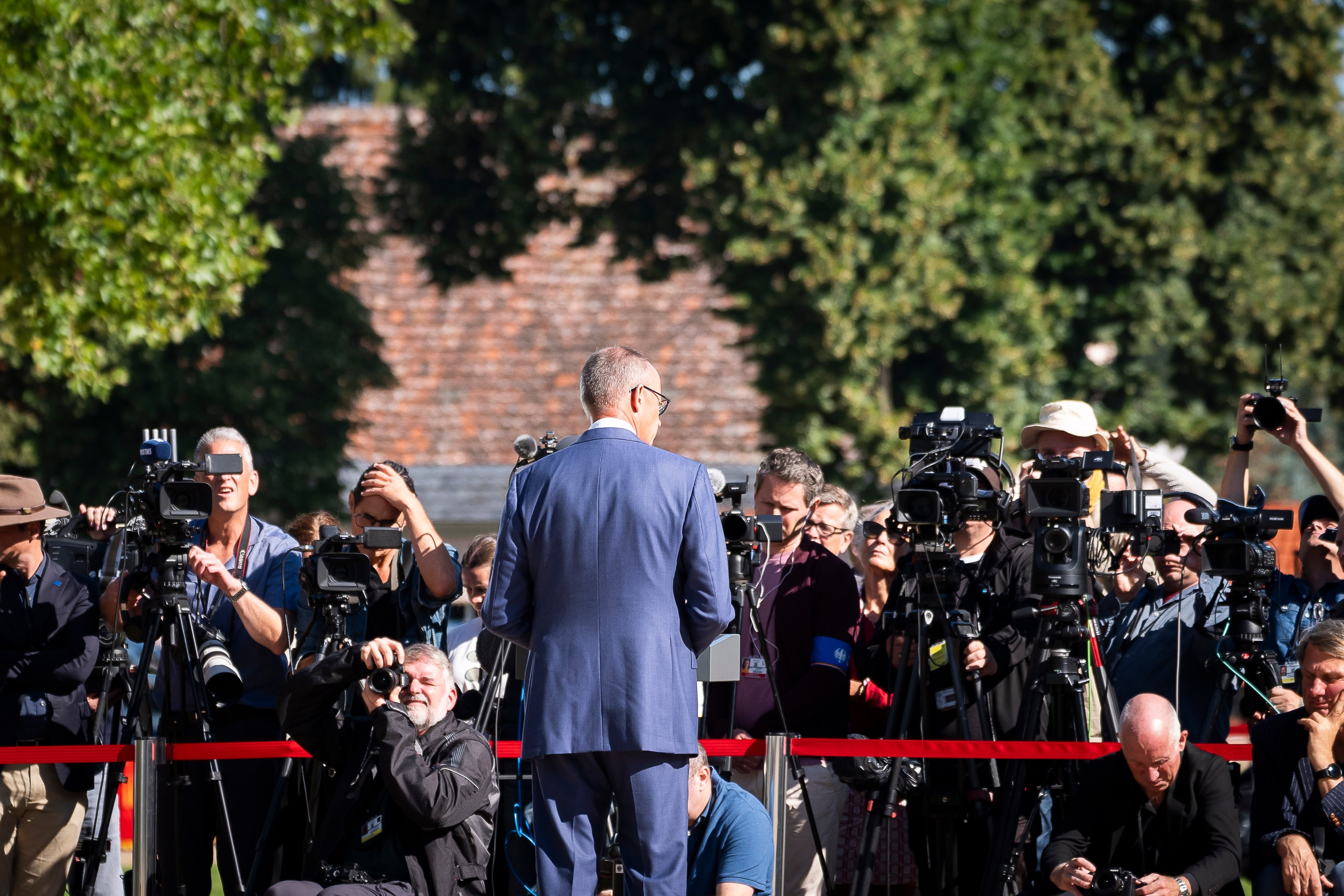
Three upcoming state elections in Saxony-Anhalt, Mecklenburg-Western Pomerania and Berlin look set to become a major setback for Germany’s government. Polls suggest the ruling coalition government parties - chancellor Friedrich Merz’s conservative Christian Democratic Union (CDU) and the Social Democrats (SPD) - face major losses, while the far-right party Alternative for Germany (AfD) can expect big gains.
In the first of the three state votes, in eastern Saxony-Anhalt (6 September), the anti-climate action party could even win an outright majority. Polling at more than 40 percent, the AfD could secure more than half of all seats if two or three other parties fail to clear the five-percent threshold required to enter the state's parliament. A far-right government in the state would be able to put up hurdles for Saxony-Anhalt’s energy transition, implement cuts to environmental projects and research, and raise questions about how other parties deal with the populist party.
Merz's CDU maintains a strict 'firewall' barring cooperation with the AfD, several of whose regional branches are classified as proven right-wing extremist by domestic intelligence services. The CDU has also ruled out cooperation with the Left Party, narrowing its coalition options in several states.
In Mecklenburg-Western Pomerania and Berlin (both 20 September), the AfD looks less likely to govern but could force awkward coalition arrangements to keep it out of power. In Berlin, the CDU hastily swapped its top candidate after trailing both the AfD and the Left Party in polls, and in Mecklenburg-Western Pomerania it could suffer one of its worst-ever results and drop below ten percent.
Energy policy and climate action are both hotly debated topics in the campaign, with the coalition government partners CDU and SPD, as well as most other parties, largely advocating a steady course on renewables expansion, electrification and green technologies. The AfD, by contrast, actively backs protests against renewables. Amid the extreme summer heat of 2026 that claimed thousands of lives, damaged ecosystems and cost the country billions of euros in lost productivity, the party’s federal co-leader, Tino Chrupalla, called climate action a “side issue” that other parties use to “deflect attention from the real problems.”
Yet while the AfD’s vocal rejection of climate action and the scientific consensus on global warming is one of its main tools to fuel opposition to the government, energy policy is unlikely to sway voters in the state elections, said Ursula Heinen-Esser, head of the German Renewable Energy Federation (BEE). The former CDU member of parliament said the government’s style, rather than its policy content, is what is stirring discontent among voters.
"Perceived ineffectiveness is strengthening the AfD"
“The constant disputes in the coalition across many policy areas at once, including energy, health, social security, taxes and other issues, slowly undermine public trust in its ability to act. And this perceived ineffectiveness is what is strengthening parties like the AfD,” Heinen-Esser said. Merz's own approval ratings are similarly weak: in an August poll, 85 percent of respondents disapproved of his performance – the worst rating in pollster Forsa's decades-long history – including 56 percent of CDU supporters.
On energy policy, she added, this means that “the government must ensure that it supports the energy transition instead of throwing sand in its gears. If the coalition manages to implement what it has agreed in the coalition treaty, this would already move things forward quite a lot.”
This applies especially to the promise of reducing Germany’s electricity tax to the European minimum, Heinen-Esser said. “Reducing power prices is a key lever that the government should be pulling.” However, she said the political will to deliver on this promise appears absent at the moment, also due to a tight budget situation.
While by far most citizens continue to support climate action and decarbonisation overall, the costs and benefits of the energy transition are increasingly coming into focus, as the country’s economy struggles for various reasons, including geopolitical and trade tensions, lower international demand for its products, and high domestic energy prices.
In a non-representative survey by public broadcaster MDR of 20,000 people in eastern Germany in late 2025, including in Saxony-Anhalt, nearly 90 percent said they did not regard energy transition costs as distributed fairly – and 85 percent voiced concerns that this erodes social cohesion. Especially older respondents, a core voter group of the coalition government parties, said the costs and benefits of the energy system’s transformation are not distributed fairly. Saxony-Anhalt and Mecklenburg-Western Pomerania are the two states with the oldest population in Germany.
This sense of unfair burden sharing adds to concerns about the sluggish economic development and about job losses in industry, especially in the country’s automotive sector. Merz had made economic recovery the focus of his 2025 election campaign. But despite a record 500-billion-euro debt package meant to boost investments in infrastructure and climate neutrality, Europe’s largest economy continues to trail many of its neighbours in the bid to get back on a more stable growth path.
The debt-funded package irked many conservative voters and has been criticised for failing to ensure that the money is spent effectively. Instead, the government has introduced and proposed a wide range of austerity measures, including in energy and climate policy. The tight budget has also blocked social support schemes designed to distribute energy transition costs more fairly, including a much debated ‘climate bonus’ payment to citizens funded by revenue from Germany’s national carbon pricing system.
In Eastern Germany, where all three state votes take place, the feeling of unfairness in the energy transition on average is even more pronounced than in the western states. Decades of differences in developing local energy systems and different abilities to invest the transformation after reunification left their mark on attitudes towards a wide range of transformation measures.
The feeling of neglect in the energy transition was confirmed in another survey published in early September: 68 percent of respondents in Eastern Germany said they are worried climate action policies will place a financial strain on them, a concern shared by 61 percent of people in the west of the country. According to the E.ON Foundation, which commissioned the survey, it is not the goal of the transition itself that is at the heart of the scepticism, but rather whether its economic benefits will actually reach the people. “Eastern Germany is thus becoming the economic litmus test for the social sustainability of the energy transition as a whole.”
Narrative that reconciles climate with economy is needed
Political analyst Johannes Hillje said the impression among voters that decarbonisation amounts to just another cost factor contributes to the coalition government’s overall poor approval ratings. He argued that the approach taken by the conservatives and the SPD – watering down or postponing difficult decisions in climate policy to appease voters who resented the previous government’s push for decarbonisation – could ultimately undermine public acceptance.
This perhaps is illustrated best by the great difficulties in finding a clear transition path in the heating sector, where promises of slow change that are difficult to keep against the backdrop of climate commitments have led to great uncertainty among citizens and industry regarding the pace and costs of decarbonisation.
“The consensus in the government seems to be that climate action should not be framed as something people individually have to take part in,” Hillje said. Instead, Merz’s coalition relies on the narrative that markets, new technologies and other external factors are sufficient, he said. Despite thousands of excess deaths and billions in damages caused by this summer's record heat and severe drought, which prompted calls for improving climate adaptation, “there is no reason to believe that the government will change this approach,” he added.
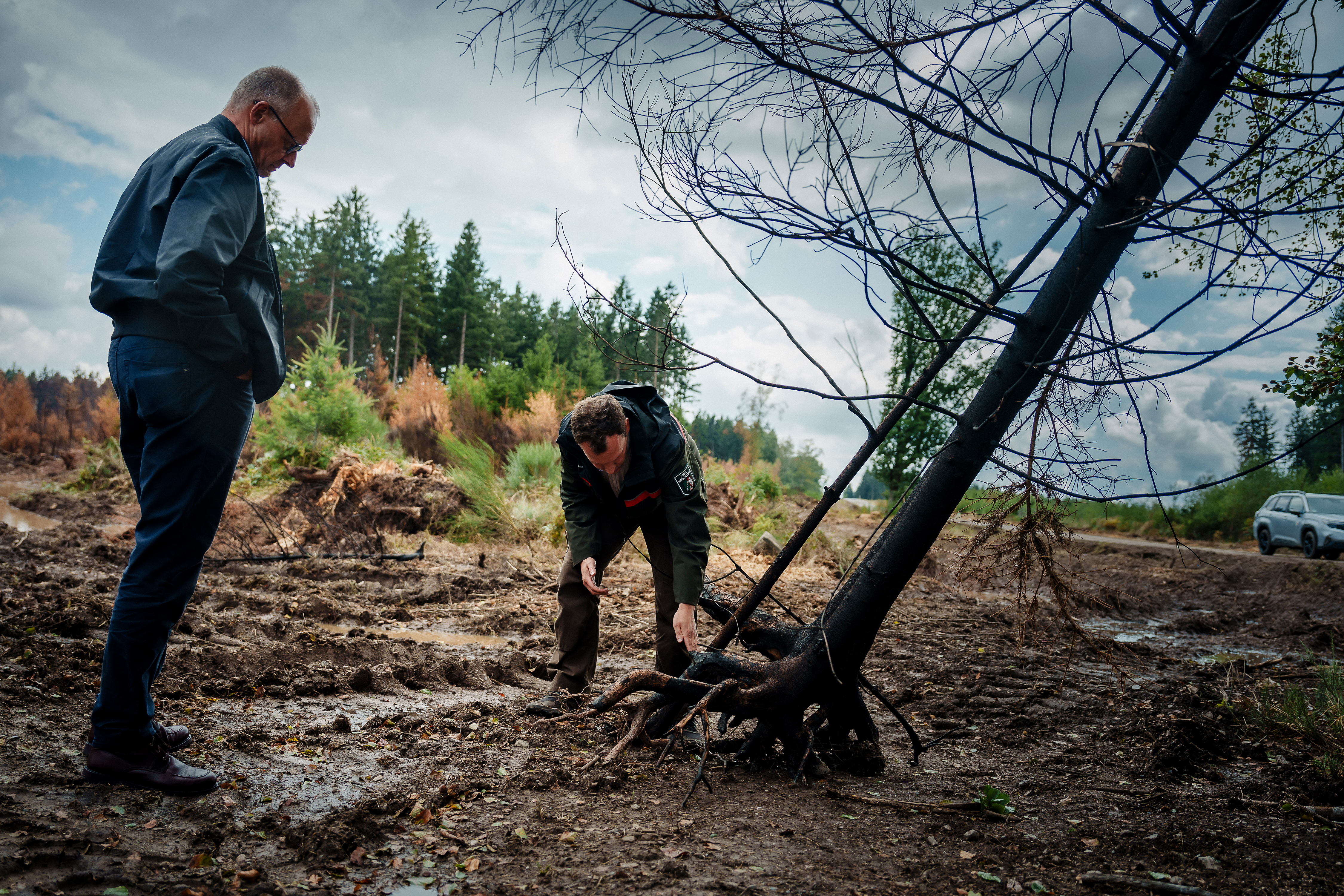
Merz addressed the concerns of many citizens affected by the extreme summer weather at a visit to the western Hürtgenwald region, where a large forest fire had led to major damages and evacuations. “This is climate change,” the chancellor said, acknowledging that “being prepared for this is a responsibility of the federal government, the federal states, and the local authorities.” At a meeting in late August, representatives of the government parties agreed to "examine" federal funding for climate adaptation. But Hillje said he does not expect the general stance on climate action and burden allocation to shift. “The government now might make a little more money available for adaptation projects, but I do not expect a true change of course on climate policy.”
The collective experience of extreme heat left a mark on the public debate, not least among core supporter groups of the CDU and the SPD, including for example industry workers, farmers and pensioners, he added. “It has become clear that climate change is also a major financial burden, which could open up a new avenue for the government in its bid to revive Germany’s struggling economy.”
“Populist parties offer a narrative in which no changes are necessary. Extreme weather events like this summer challenge this narrative,” Hillje said. Even the AfD has recognised that concerns about global warming are widespread – but it responds by admitting that adaptation is needed “while simultaneously claiming that preventive efforts are futile,” Hillje added.
Conveying that low-carbon technologies and more climate resilient infrastructure are investments that offer long-term benefits while also creating new jobs, spurring productivity and improving the quality of life would offer a more forward-looking narrative for the economy – and would also answer calls for responding to climate challenges, he argued.