
Far-right state election landslide would put Saxony-Anhalt’s energy transition to the test
The state of Saxony-Anhalt rarely sits at the centre of political attention in Germany, but extraordinarily high polling numbers for the far-right ahead of elections on 6 September have put the small eastern state in the country's focus this summer. The anti-climate action party Alternative for Germany (AfD) consistently polls above 40 percent, among the highest figures of all states and about twice its result at the previous state election.
The AfD’s current popularity in Saxony-Anhalt raises prospects that a party whose state branch has been classified as “confirmed right-wing extremist” by Germany’s domestic intelligence agency could take over a state government. An absolute majority for the party would remove the hurdle of finding a coalition partner, something almost all other parties have so far ruled out, including chancellor Friedrich Merz’s Christian Democratic Union (CDU).
The party is also currently polling first nationwide, ahead of the CDU, giving the state election symbolic weight for the entire country. It also ranks high in subsequent state elections in Mecklenburg-Western Pomerania and Berlin, but in contrast to Saxony-Anhalt has little chances to enter government there. The state's AfD branch calls for “a 180-degree-turnaround” on the energy transition – with its election manifesto for the state vote featuring a raft of radical policy reversals, including curbs to renewable power expansion and a return to coal – raising the question of how a far-right victory could reshape energy and climate policy in the state and beyond.
Saxony-Anhalt current state government under premier Sven Schulze from the CDU, who governs in a tripartite coalition with the Social Democrats (SPD) and the Liberal Democrats (FDP), looks unlikely to survive the election. Both the SPD and the FDP - as well as the opposition Green Party - are all at risk of falling short of the five-percent-threshold to enter parliament. This scenario would make an absolute majority for the AfD under its lead candidate Ulrich Siegmund possible with well under half of the votes.
It is unlikely that a new far-right state government would be able to directly influence the country’s broader energy and climate policy and push for a nationwide end to renewable energy support and other major policy shifts. The council of states, the Bundesrat, overwhelmingly supports the transition – and many measures and projects are tied to federal and European targets that Germany's Länder cannot opt out of unilaterally. However, it would be able to complicate decarbonisation efforts in Saxony-Anhalt itself – and could set a precedent for a successful reversal of energy transition principles in other parts of the country.
Fears over new obstacles to renewables and research
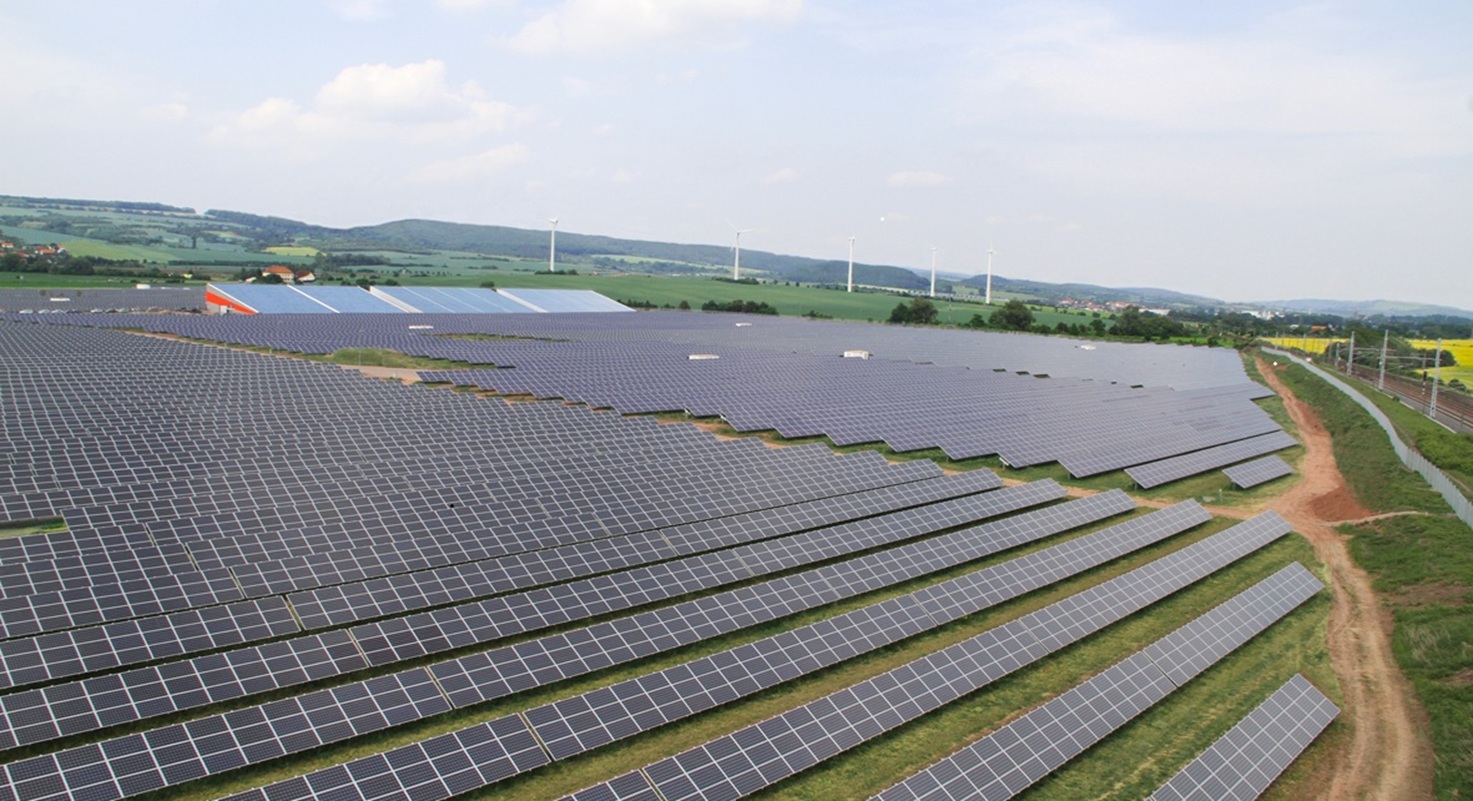
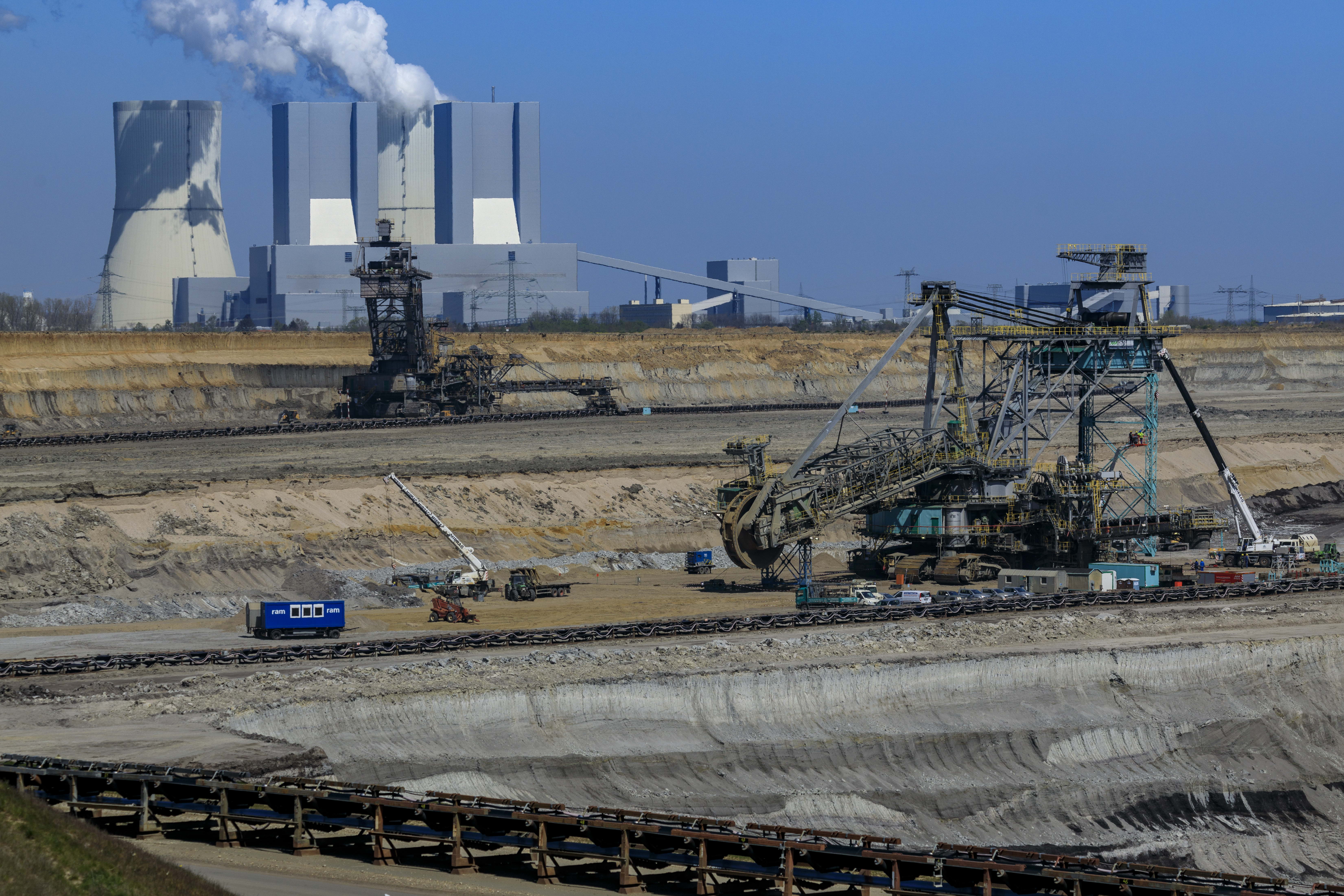
The eastern state has the highest average age in Germany and its energy sector was for decades dominated by coal mining. Saxony-Anhalt is facing significant economic challenges, compounded by the highest relative loss in population of all states since 1990. At the same time, it is a leading location for wind power generation as well as wind turbine manufacturing in Germany and plans to expand capacity further in the coming years.
Many citizens also actively take part in the energy transition: nearly 60 percent of all newly registered solar power installations in 2025 were so-called balcony power plants installed at private homes. The state’s energy ministry estimates about 26,000 jobs currently depend on the renewable energy industry, a significant figure in a region where large industry conglomerates and dynamic growth prospects are rare.
“Saxony-Anhalt has benefitted greatly from the energy transition,” said political scientist Michael Böcher, a researcher for sustainable development from the University of Magdeburg. He said Germany’s coal phase-out agreement had brought the state substantial financial support for its transition away from a fossil fuel-based industry, a measure other researchers have said could help to break a spiral of population decline. Other industries in the state, such as chemicals producers, use this support to adapt their business models. “The challenge is now to master this transition in a way that generates new jobs and earns recognition from the public as a model for the state’s future.”
For Böcher, an AfD victory would do exactly the opposite. “The AfD could do a lot of damage to the energy transition’s progress at the state level,” he said, pointing to election promises such as a moratorium on wind power expansion or regulatory hurdles for large solar farms, which according to the far-right party are damaging "cultural landscapes" and compromise food production. Although federal laws protect the rollout of renewables, making measures like a moratorium unlikely to hold up in court, long legal battles could still put many investors in difficulty and obstruct the growth of renewable energy capacity.
But the risks the party poses for the state’s energy and climate policy go beyond potential disruptions to infrastructure, Böcher added. A government run by a party that denies human-caused global warming and rejects decarbonisation measures outright could also undermine efforts to research, understand and prepare for the consequences of climate change. “Researchers in the state are, of course, worried about how an AfD victory could impact the academic landscape,” he said. “Education and research are among one of the policy areas where German states have the most autonomy. It is likely the party would try to exert its influence as much as possible here.”
The far-right party has said it plans a purge of the state’s administration, replacing civil servants in key positions with ideologically aligned allies. Beyond education and research, this could affect environmental policy if AfD-appointed department heads drag their feet when implementing EU regulations or handling infringement proceedings.
Communities benefit from new rules on sharing renewable energy profits
Does the strong support for the party mean that Saxony-Anhalt’s population has soured on the energy transition? According to researcher Böcher, this conclusion falls short: “I don’t think the AfD’s extreme positions correspond to the public mood, despite the party’s current popularity in polls.” While criticism exists at the local level, plenty of expansion is still happening in the state without rejection, he said. “And most people are well aware that long-term decisions on energy infrastructure cannot be reversed overnight.”
General dissatisfaction with the federal government’s energy transition policy is a bigger driver of AfD support, compounded by current price hikes for fossil fuels, Böcher argued. In the tested playbook of populist parties, the AfD is trying to capture every political issue it can and “link it to obscure global elites deciding over ‘regular’ citizens,” he concluded.
An analysis by the Dutch think tank SharedGround, published in early 2026, supported this assessment: it found that most AfD voters do not deny climate change but are rather driven by mistrust in policymaking more broadly. Climate policies were often perceived as poorly communicated impositions with unclear benefits, the think tank said, adding that the picture reversed when people felt that the gains of transition projects are transparent and fairly distributed.
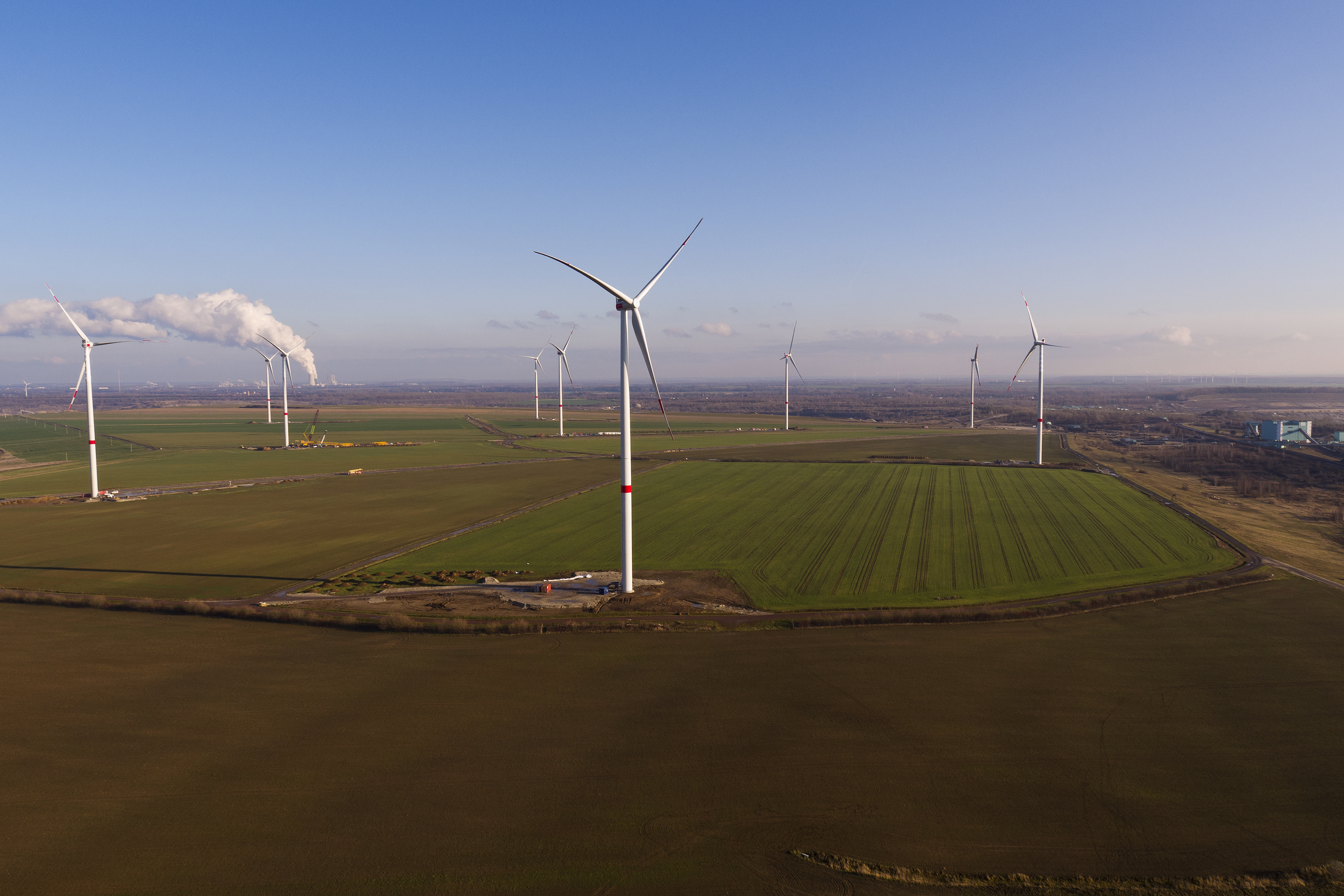
To counter the perception that accepting renewables in their neighbourhoods offers citizens little rewards, Saxony-Anhalt’s parliament already in 2025 adopted a new “acceptance and participation law”. It obliges operators of newly installed renewable energy projects to pay part of their profits to the host municipalities. According to the state’s energy ministry, the fee of 0.3 cents per kilowatt-hour means that a modern wind turbine could bring a municipality an additional income of up to 40,000 euros per year that it is free to spend on infrastructure or community projects.
For Stephan Pham, head of the State Association for Renewable Energies (LEE) Saxony-Anhalt, the policy is a clear indicator that the state and individual citizens benefit from the transition: “This is the first law coming into force in Germany that effectively redistributes profits from renewable energy generation directly to municipalities,” Pham said. The regional industry association leader said that renewables could not only help bolster the coffers of local administration, but increasingly also are a decisive factor for attracting new potential taxpayers. The AfD, meanwhile, slammed the law as akin to “blackmailing” to “break the will” of communities that are against energy transition infrastructure, even though the state and its municipalities have been among the most active wind power adopters since the 1990s.
Pham instead pointed at the location factor of clean energy: “Access to renewable power certainly has become an asset for Saxony-Anhalt when it comes to attracting businesses,” Pham said, pointing at attempts to attract a large investment by US chipmaker Intel in a factory near Magdeburg. “While the project ultimately did not materialise due to other factors, renewable energy played a key role in considering the state in the first place.” This could also be seen in efforts by steelmaker Salzigtter to ramp up its green steel production in a factory on the foothills of the state’s Harz mountains, or the investment in a major green hydrogen production facility near the city of Halle, which is supposed to provide eastern Germany’s chemical industry centre with a climate-friendly alternative to natural gas in the future.
However, Pham stressed that the interest of local businesses in clean energy or the fee to bolster municipal budgets cannot replace dialogue with citizens that feel negatively affected by the energy transition. While protests against new renewable energy in the state often appear to be coordinated by certain interest groups, many also are based on reasonable and comprehensible objection to projects and need to be adequately addressed, Pham said. “For long-term success, there needs to be an open debate about conflicts on site and procedures to ensure everyone’s interests are being heard.”
Promising voters that transformation will be reversed could backfire
A lack of openness in the national debate about the impact of the energy system’s transformation is complicating this process, according to Christian Kunz, executive manager at the state branch of environmental NGO BUND. “Promises like taking back the end to combustion engines are what many people talk about in everyday life when it comes to climate policy measures,” Kunz said.
By avoiding a constructive debate about necessary changes in transport, heating or power generation and how to allocate burdens and support fairly, the federal government would risk irritating voters that are already rattled by the pace of events. “This is especially true in eastern Germany, where people on average are less wealthy and more exposed to the social impact of policies, a fact that the AfD knows to exploit well,” Kunz added.
The state’s energy minister, Armin Willingmann from the SPD, in March warned “with great sorrow” that inconsistencies in energy policy in the federal coalition government also reverberate in Saxony-Anhalt. Allowing the continued installation of oil and gas heating would suggest more freedom of choice but could ultimately backfire, as tenants whose landlords did not decarbonise their heating system face drastically higher costs through rising prices for fuel and CO2 emissions in the next years.
The SPD minister also criticised the federal government’s course on renewable power support, arguing it had created uncertainty among investors. “Pragmatic energy policy must not lead to the impression that we’re about to turn back the energy transition,” Willingmann said.
For environmental activist Kunz, who also is a member of the city council in the town of Jerichow for the Left Party, a greater focus must be put on innovation and new opportunities rather than conservation of existing structures, for example in Saxony-Anhalt’s potential for battery production.
Looking at a possible ballot victory for the far-right in September, Kunz is not optimistic about the impact on the work of BUND and other environmental groups: “If the AfD got into a position of power, there is little doubt that the party would cut public funding of organisations that are critical of them as much as possible.” Like in other parts of Germany, many environmental projects in Saxony-Anhalt are linked to international agreements on natural protection. “This means the state has a duty to implement them, but it can employ external service providers like BUND to do the work on the ground.” These in turn depend on the public contracts for a substantial part of their funding, Kunz said, meaning the anti-climate action party can directly hit the NGOs funding base.
However, the activist says that he so far cannot see that BUND’s work – or environmental protection and the energy transition more broadly – are being obstructed by AfD representatives at the local level. “To some extent, this is because these topics are often very technical and difficult and there is not enough expertise within the party to formulate workable alternatives.”