
Q&A: What does the far-right state election win mean for Germany’s energy transition?
Contents
What is the election result in Saxony-Anhalt, and who will govern the state now?
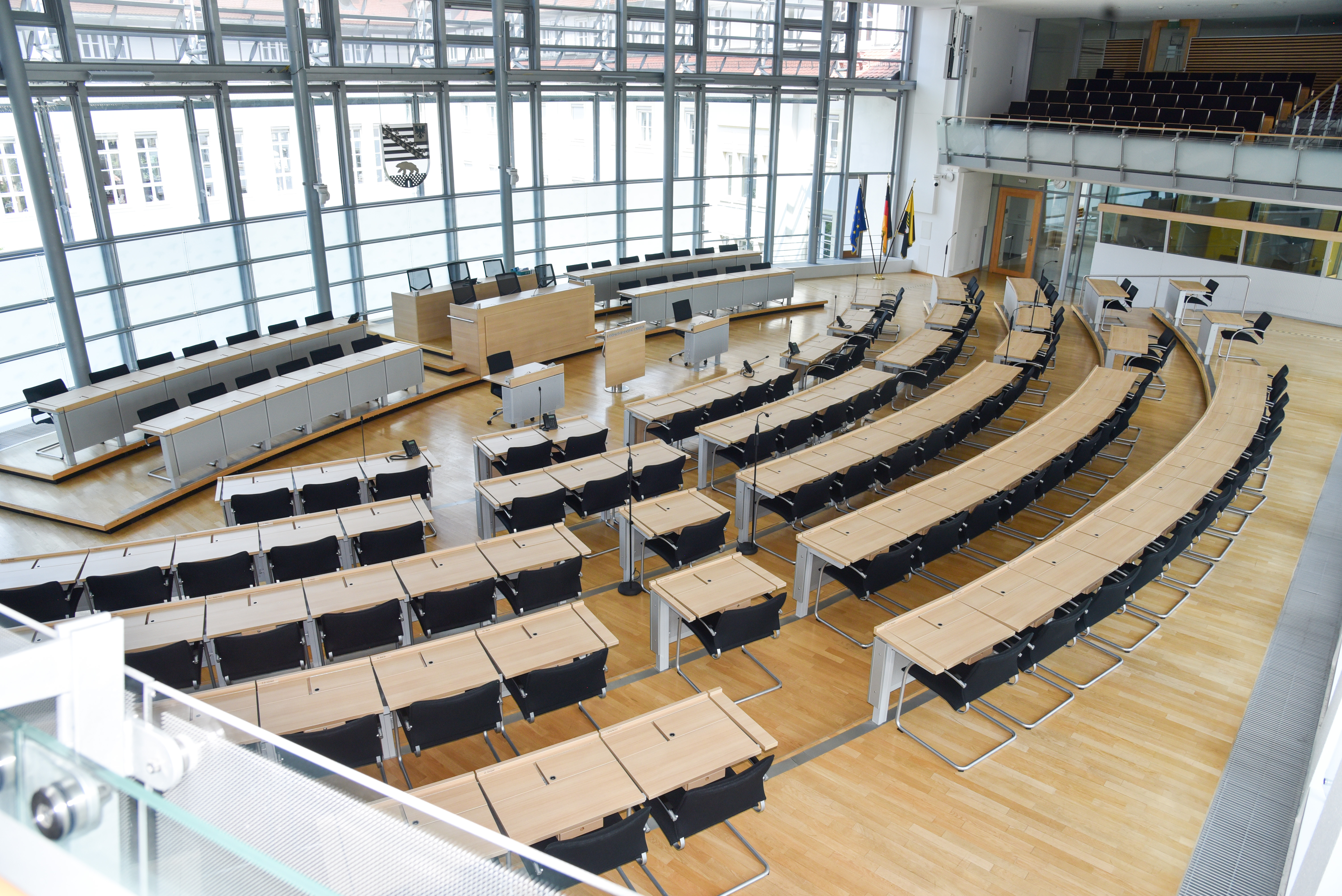
The AfD gained 43.8 percent of the vote, more than double its 2021 result of 20.8 percent, according to preliminary results. Saxony-Anhalt could become the first German state led by a right-wing party since the Nazi era. Despite narrowly failing to secure an absolute majority in the regional parliament, the AfD could still end up running the region, home to 2.1 million people because the much smaller nationalist-left Sahra Wagenknecht Alliance (BSW) has signalled that it might tolerate an AfD government. The other parties that cleared the five-percent threshold to enter parliament have ruled out cooperation with the AfD.
In contrast to the AfD, the ruling conservative Christian Democrats (CDU) of unpopular chancellor Friedrich Merz almost halved its share of the vote to become the second-strongest party, dropping to 17.2 percent from 37.1 percent five years ago. The Social Democrats (SPD) came third with 9.3 percent, followed by the Green Party (8.9%), the Left Party (8.6%), and the BSW (5.3%).
The CDU has ruled out cooperation with the left-wing Left Party, meaning other government coalitions excluding the AfD cannot secure a majority in the regional parliament.
What were the main issues driving people to vote for the AfD?
Even though questions related to the energy transition – especially a fair distribution of costs – were a sore point in the election campaign, other topics dominated voter concerns. People who voted for the AfD told pollsters the topic that played the most important role in their decision was domestic security (24%), followed by immigration and social security (both at 18%). Around 90 percent of AfD voters said they were “very concerned” about the number of foreigners in the country, and about inflation undermining living standards. 85 percent said life in Germany was changing too much, while 80 percent feared a drop in their personal living standards.
Asked about the most important problems facing the region shortly before the election, citizens named the economic situation (21%), followed by education (17%), and immigration issues (16%).
What is the effect on national politics?
The far-right AfD is a Eurosceptical and populist party that rejects energy transition policies and the scientific consensus on human-made climate change. Its win in Saxony-Anhalt marks the culmination of a decade-long trend, and puts significant pressure not only on other parties, but the democratic system as a whole. All other major Democratic parties at the national level have so far ruled out cooperating with the AfD.
Political scientist Petra Dobner called the result “historic”, given that almost half of the electorate could envision a government led by a party officially classified by the domestic intelligence service as "confirmed right-wing extremist."
With only about 2.1 million inhabitants, Saxony-Anhalt is home to roughly 2.5 percent of Germany’s population. The party is particularly strong in the states of former East Germany and is expected to make big gains in the upcoming state elections in Mecklenburg-Western Pomerania and in the City of Berlin (both 20 September), but it currently also polls first nationwide.
Sociologist Linus Westheuser warned that the AfD victory could cause the political centre to move to the right, especially chancellor Friedrich Merz’s conservative CDU/CSU alliance.
The Merz government has had difficulty dealing with an ailing economy and the need for deep reforms, and the German leader himself struggles with record-low approval ratings. Polls show that Merz and his governing performance at the national level harmed the CDU performance in the state election, increasing the pressure on the chancellor to act. The upcoming two state elections in Mecklenburg-Western Pomerania and in the City of Berlin could further increase the pressure. German media reported that behind the scenes, the conservatives have debated the possibility of a premature end to Merz’s chancellorship for weeks.
While leading government politicians backed the chancellor after the state election, Jana Puglierin, head of the Berlin office of think tank European Council on Foreign Relations (ECFR), called the result “a nightmare scenario for the CDU.” The AfD’s success was less of an approval of the far-right’s agenda but rather “a demonstration of the political establishment’s failure to articulate a convincing vision for the state’s economic, political, and social future.”
Should the AfD lead the next government in Saxony-Anhalt, it would also be represented in Germany’s council of federal state government – the Bundesrat – and potentially upset the majorities there. The Bundesrat plays a key role in certain legislative processes.
How does the result influence Germany’s energy transition?
The country’s wider energy transition and decarbonisation efforts are unlikely to be immediately affected by the state election, irrespective of what the next state government will look like. Most laws that shape energy policy, such as the Renewable Energy Act (EEG) or the coal exit law, are decided at the federal level and are tied to international commitments and European law.
In the Bundesrat, the council of Federal States, which has a say in laws that touch upon state finances, the vast majority of Germany’s other state governments remain firmly committed to the energy transition’s wider aims and agree on the basic instruments to achieve them.
Moreover, most people in Germany remain committed to climate action and regard global warming as a major challenge that requires decarbonisation measures across the board. This includes voters in Saxony-Anhalt, who, despite the particular challenges for economic transformation and the energy transition in eastern Germany, mostly back climate action as much as their peers in other states.
Individual decisions on purchasing low-carbon technologies, such as electric cars or heat pumps, are likely to have the greatest effects on decarbonisation in the coming years and generally are gaining ground across the country. “I do not see that even an AfD victory would lead to a general change of perspective on Germany’s energy transition,” Ursula Heinen-Esser, head of the German Renewable Energy Federation (BEE), told Clean Energy Wire ahead of the election.
However, many citizens also reject measures that directly affect them financially or require changes to their everyday behaviour, for example regarding car use. The AfD’s election victory and a possible far-right government could therefore spur a narrative that the high investment costs of introducing clean technologies and an unfair distribution of the energy transition’s costs are harming regular citizens.
A far-right state premier would have much more power than an opposition party to put topics such as slowing renewable power expansion, the continued use of coal plants, or resuming gas trading with Russia on the national agenda.
Before the election, Siemens Energy head Christian Bruch said that energy policy ideas promoted by the AfD would be detrimental to the economy. Debates about a return to nuclear power, for example, are “futile in a Europe that is well-connected on energy policy,” while the party’s nationalist and anti-immigration rhetoric could undermine investments and repel skilled workers from moving to Germany, he warned.
What does it mean for climate and energy policy in Saxony-Anhalt?
Most of the laws that shape the expansion of renewable energy sources, the phase-out of coal plants and emissions reduction in various sectors are decided at the national level and leave state governments little wiggle room regarding implementation. “Especially regarding energy policy, many laws are made exclusively at the federal level. And any state government will have to abide by them whether they like it or not,” said BEE head Heinen-Esser ahead of the election.
Yet, an AfD-led government could still complicate implementation on the ground, she added in a statement after the election. “It’s currently unclear what the next state government will look like. But it is clear that whoever slows down the renewable energy industry makes it more difficult to secure investments and puts jobs and prosperity at risk.” According to the BEE, about 26,000 jobs in the state are directly linked to renewable energy.
In its election manifesto, the far-right party promised to introduce obstacles to the expansion of wind and solar power in Saxony-Anhalt. Although federal laws protect the rollout of renewables, making promises like a wind power moratorium unlikely to hold up in court, drawn-out legal battles would still translate into difficulties for many investors, and obstruct the growth of renewable energy capacity.
Beyond the immediate effects on the ground, a government run by a party that denies human-caused global warming and rejects decarbonisation measures outright could also undermine efforts to research, understand and prepare for the consequences of climate change, said political scientist Michael Böcher, a researcher for sustainable development from the University of Magdeburg. Education and research are among the policy areas where German states have the most autonomy, and it is likely the party would try to exert its influence as much as possible here, Böcher argued. “Researchers in the state are, of course, worried about how an AfD victory could impact the academic landscape.”
The far-right party has said it plans a purge of the state’s administration, replacing civil servants in key positions with ideologically aligned allies. Beyond education and research, this could affect environmental policy if AfD-appointed department heads drag their feet when implementing EU regulations or handling infringement proceedings.
The prospect of a far-right government is also causing concerns among civil society groups, such as environmental NGO BUND. If the AfD got into power, “there is little doubt that the party would cut public funding of organisations that are critical of them as much as possible,” said Christian Kunz, executive manager at BUND’s Saxony-Anhalt state branch. Many environmental NGOs depend on the public contracts for a substantial part of their funding, Kunz said, meaning the anti-climate action party therefore could directly hit their financial foundations.
What are the implications for Europe?
The AfD’s victory in Saxony-Anhalt is part of a wider trend towards far-right politics across Europe. However, given Germany’s fascist past that led to the Second World War, and the country’s key role in maintaining a collaborative and liberal order in Europe, the far-right’s resurgence in the country is receiving particular international attention.
Many of the far-right parties in Europe, including France’s National Rally (RN), which leads the polls ahead of next year’s presidential election, are critical of energy transition policies and have pledged to curb the expansion of renewable energy sources. Electoral dissatisfaction and the AfD’s “anti-EU” and “pro-Russia” stance have shifted public narratives towards nationalist ideas, with questions such as “what's in it for us, the Germans?” trickling into the national discourse.
While the federal government’s attitude at the EU level is unlikely to change overnight, the impact of the election is likely to be felt indirectly: “The German government will increasingly need to be understood through the lens of a fragmenting political centre,” said Almut Möller, director for European and global affairs at the European Policy Centre. “Fundamentally, this will mean a weaker and more divided Germany.”
In turn, a more divided Germany – a country at the heart of the EU, the most populous member state and an economic powerhouse – might make it harder to find national consensus on issues of European importance, such as support for Ukraine, industrial policy, the EU budget or technological independence.
This “risks dragging Europe towards fragmentation and exploitation,” the European Council on Foreign Relations warned.
What’s the situation in state elections in the city of Berlin and Mecklenburg-Western Pomerania?
In two other state elections on 20 September, in northeastern Mecklenburg-Western Pomerania and in the City of Berlin, the AfD also made large gains compared to the previous elections, although not to the same extent as in Saxony-Anhalt.
In the city of Berlin, the CDU and Social Democrats (SPD) both saw heavy losses compared to the previous election, while the Left Party and the far-right AfD made significant gains. Election winner Left Party is set to enter coalition talks with the Greens and the SPD.
The vote in Mecklenburg-Western Pomerania has dealt an even heavier blow to chancellor Merz. His CDU failed the 5-percent threshold and will no longer be represented in parliament. The AfD became the strongest party, but is very unlikely to be part of the next government because all other parties have ruled out a coalition. The Social Democrats could form a coalition with the Left Party and the Greens.