
Germany's fuel tax cut in response to oil price hike slammed as poorly targeted
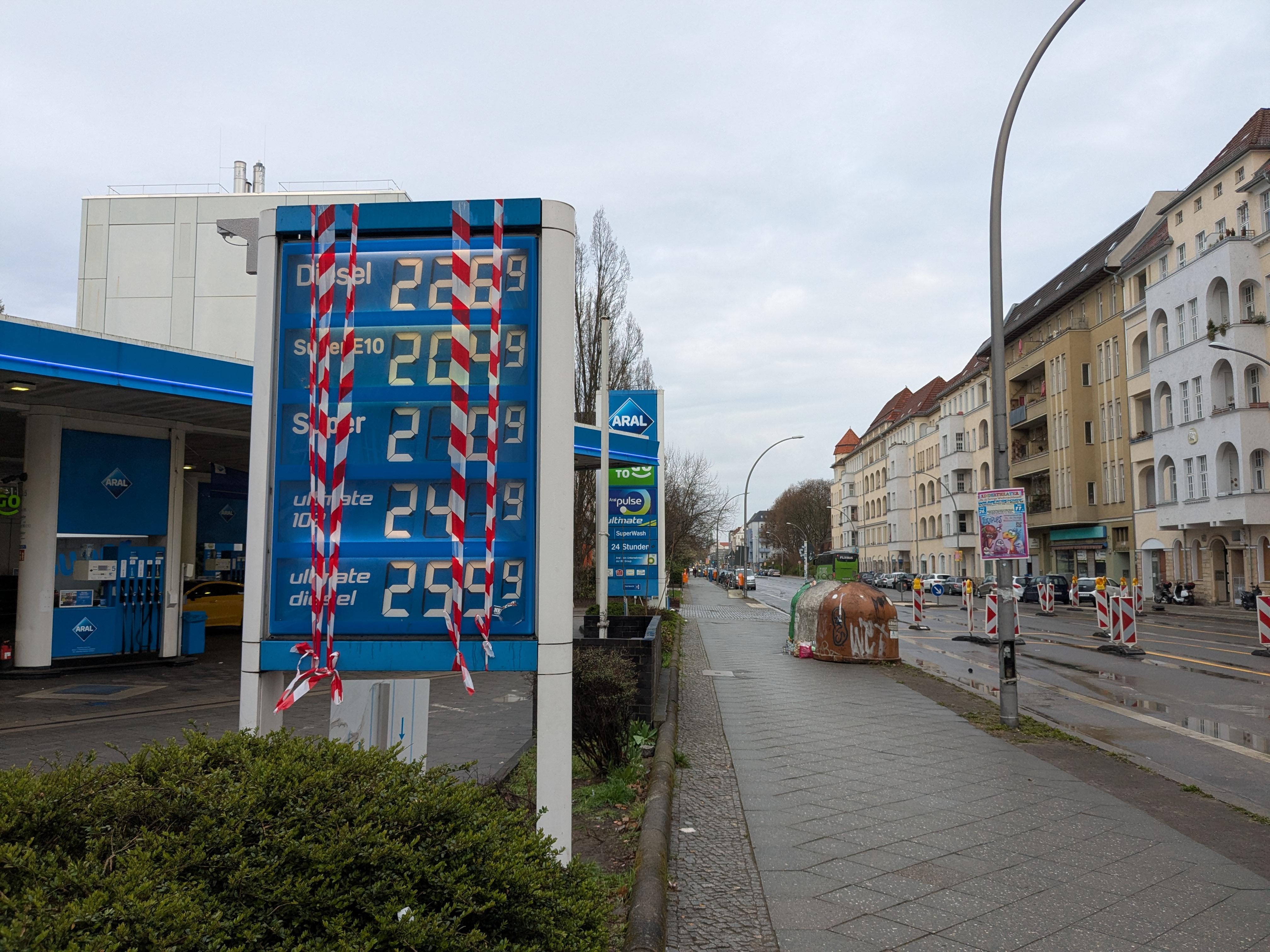
The parties of Germany’s government coalition have agreed on relief measures for combustion engine car users amid the price hike caused by the Iran war. Taxes on both petrol and diesel fuel are to be reduced by 17 cents per litre for two months, chancellor Friedrich Merz said at a press conference following talks over the weekend between his conservative CDU/CSU alliance and the Social Democrats (SPD).
“This will quickly improve the situation of motorists and businesses in the country,” Merz argued, adding that the government expects the fossil fuel industry to pass on the reduction to its customers. According to the government, the tax cut is expected to lead to savings for petrol and diesel users of up to 1.6 billion euros. The chancellor said that the US- and Israeli-led war on Iran was clearly the reason for turmoil on energy markets, which is why working towards a swift end to the conflict would be the most effective measure Germany’s government can take to bring down energy costs.
The agreement on cost relief came after several days of intense negotiations between the coalition parties. A dispute between CDU economy minister Katherina Reiche and SPD finance minister Lars Klingbeil at the end of last week over relief measures had exposed cracks in the coalition. Merz said the parties now had reconciled their differences and would “tackle these topics together” again.
In a document outlining the agreement seen by Clean Energy Wire, the parties said they welcome an announcement by the European Commission to assess “measures regarding the mineral oil industry” similar to the energy crisis in 2022. Measures back then had included a windfall profit tax for fossil fuel companies, which could be used today to balance tax reductions on petrol and diesel fuel in the government’s budget. The government also aims to give its competition watchdog greater authority to detect “abusive behaviour” harming customers, in particular when falling market prices for fuel are not immediately passed on, the coalition parties said.
In the long-run, the country would need to “increase its energy supply” to reduce dependencies on trading partners. Besides the expansion of electricity interconnections to European neighbours and the “ambitious” rollout of renewable energy sources, this would also include the use of domestic natural gas reserves, they added.
Germany is particularly exposed to energy price shocks given its heavy reliance on imported fossil fuels – a vulnerability underscored by the 2022 gas crisis following Russia's invasion of Ukraine. The current energy price shock caused by the US and Israeli war on Iran and attacks on energy infrastructure in the Persian Gulf region has revived debate about the pace of Germany's shift to renewables and the role of gas as a transition fuel.
Tax cuts neither targeted nor reducing fossil fuel use – economists, civil society
Economist Monika Schnitzer, member of the government’s economic advisory council, in a social media post called the path chosen by the government “the worst option” of all measures discussed so far. The tax cuts would cut prices also for people who could easily afford them, while doing nothing to curb fossil fuel use. “This bill needs to be paid by someone,” Schnitzer said. Targeted relief for those in need of support would have been a better option, she added.
Environmental and civil society groups also were critical of the petrol and diesel fuel reduction as the government’s latest attempt to curb price hikes at the pump. “A lump-sum tax reduction particularly helps those who consume a lot,” said Verena Graichen, policy expert at environmental group BUND. A targeted “mobility allowance” and a temporarily enforced speed limit were better suited to provide relief for those in need and reduce the overall consumption of fuel, Graichen said, adding that “only e-mobility can protect people from high fuel prices in the long run.”
Sebastian Bock, head of transport NGO Transport and Environment (T&E) said the government was drawing the wrong lessons from the Iran war by continuing to support fossil fuel use. “What is needed now is an ambitious attempt to finally achieve electric mobility’s breakthrough,” Bock said. “Germany already is the second-largest producer of electric vehicles (EVs) in the world,” the NGO leader said, arguing that the government was choosing to invest in “technologies of the past” instead. “Each cent put into combustion engines today increases China’s advantage,” he argued with respect to the Chinese government’s focus on supporting domestic EV producers.
The head of civil society group KlimaSozial, Brigitte Knopf, said it was uncertain whether customers would benefit from the full effect of tax reductions on fuel, as mineral oil companies during the energy crisis in 2022 had pocketed part of the price reduction following a similar tax cut introduced at the time. The measure would neither be targeted nor encourage fossil fuel savings. The government should use the two months during which the tax cut is in place to instead make good on a promise to allow direct support payments to citizens based on social factors. “This is the only way to ensure targeted relief for those who are really in need,” Knopf argued.
Government doing opposite of supporting renewables, industry says
The head of the German Renewable Energy Federation (BEE), Ursula Heinen-Esser, said the government’s announcement to enforce an ambitious renewables rollout is welcomed, but added that the economy ministry’s current course of action is the opposite of that. The law reform on reducing fossil fuels in heating, a recent reform package on electricity grids and proposals for an upcoming reform of the Renewable Energy Act (EEG) all risk slowing down the expansion and integration of renewables, Heinen-Esser argued. “If the government is serious about today’s announcement, these proposals must be urgently revised,” she said.
Heinen-Esser also rejected the further exploitation of domestic fossil gas resources. "This gas would only be available through fracking and only in small quantities," she said, adding that development would take many years and would be very expensive.
The Federation of German Water and Energy Industries (BDEW) said switching from fossil fuels to electricity in transport and heating would immediately increase the energy system’s efficiency and resilience. For processes that are difficult to elctrifiy, the government should make “a clear commitment to hydrogen,” said BDEW head Kerstin Andreae. Policies that facilitate the rollout of electricity-based technologies, such as heat pumps or electric cars, and a lower electricity tax would be more appropriate as a long-term solution than temporary fixes to fossil fuel prices, she argued.
By contrast, the German Chambers of Industry and Commerce (DIHK) praised the fuel tax cuts for bringing direct and noticeable relief to companies, commuters, and transport companies. “What matters is that this decision takes effect quickly and reliably,” said DIHK head Peter Adrian. The industry association leader suggested to fund the fossil fuel support through Germany’s Climate and Transformation Fund, which originally was intended to finance the so-called climate bonus transfers to cushion price effects of the energy transition. Adrian added that the government should also reduce taxation on natural gas to provide relief to industrial users and reduce electricity taxes for all to curb energy prices further.
Agriculture minister Alois Rainer from the conservative CSU said the fuel tax cuts will directly benefit citizens and companies in the sector. “Lower costs for petrol and diesel ease the pressure on agriculture and have an effect along the entire food production chain up to the supermarket shelve,” he argued.
IEA head encourages motorway speed limit in Germany
Prices at the pump for petrol and diesel fuel had skyrocketed in Germany and many other countries following the attacks on Iran at the end of February, after which Iran retaliated by damaging fossil fuel industry infrastructure in US-allied countries in the Persian Gulf region and by blocking the Strait of Hormuz shipping lane, a strategic bottleneck for global fossil fuel trade.
In a first measure following the price rise, Germany’s government had limited prices increases at petrol stations to once per day. However, the step has so far been deemed rather ineffective in bringing down costs for consumers. A temporary drop in prices triggered by the beginning of peace talks between the US and Iran had been reversed after the talks collapsed over the weekend.
Fatih Birol, head of the International Energy Agency in an interview with news magazine Der Spiegel published at the end of last week said the Iran war’s energy crisis would dwarf preceding crises, such as around Russia’s invasion of Ukraine in 2022 or the oil crises in the 1970s. “We are experiencing the greatest energy crisis in world history thus far,” Birol said, arguing that the loss of available fossil fuel products to global markets is much greater than in the previous supply crises.
With a view to possible policy responses, Birol said tax cuts on petrol and diesel could at most be a first step that must remain temporary. Beyond that, the government should provide more targeted support to citizens in need, such as lump sum payments irrespective of individual energy consumption levels. The IEA head stressed that Germany also has to consider measures such as a speed limit on motorways. The politically sensitive issue could slash the country’s oil use by several percentage points and should be accompanied by more support to public transport systems, he argued.