
Los Angeles is running out of time to deliver on green Olympic promises
*** Please note: this article is part of CLEW’s reporting on climate resilience in the sporting world. You can find the full package here. This project was made possible by a grant from the Checkpoint Charlie Foundation.***
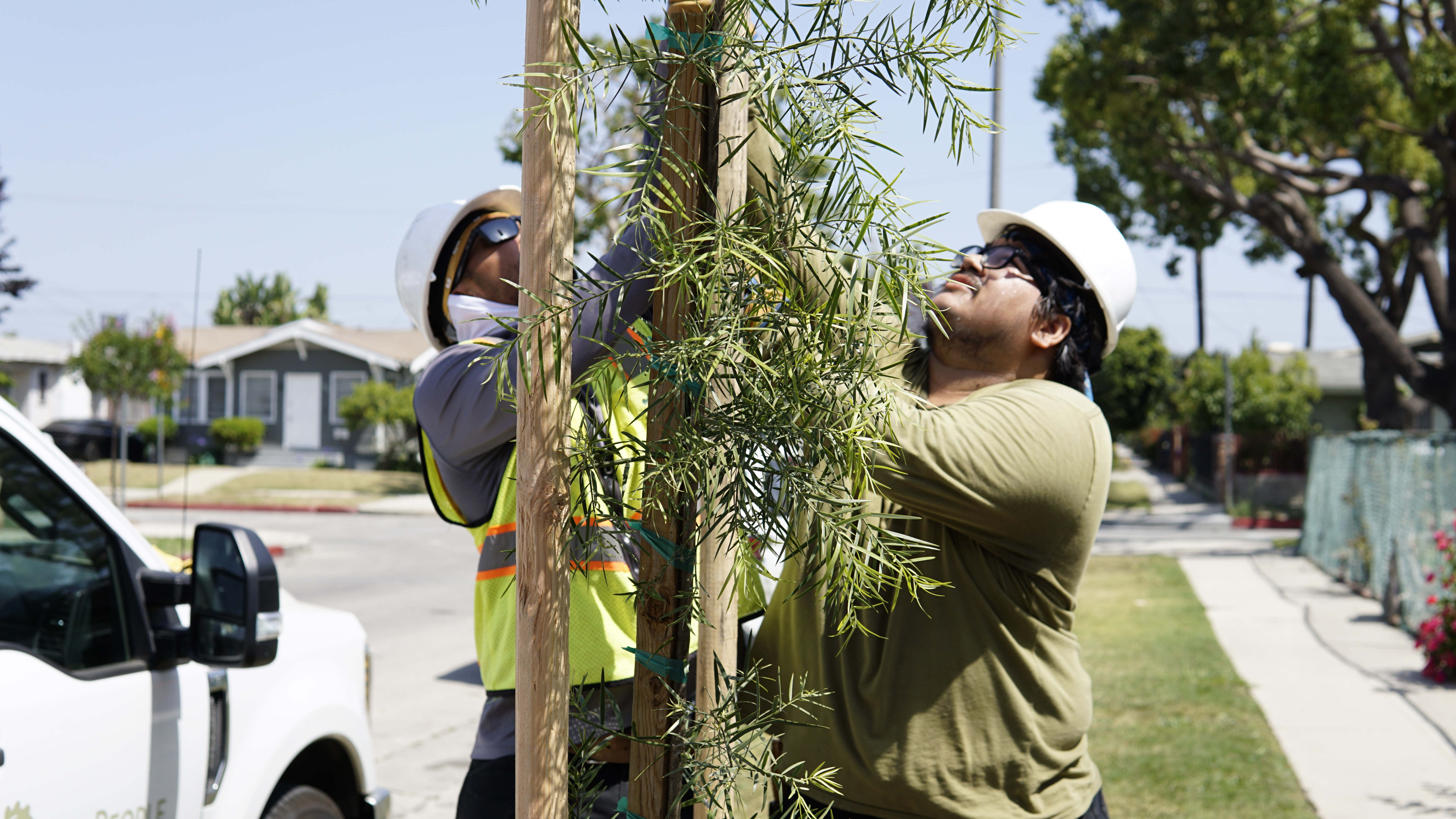
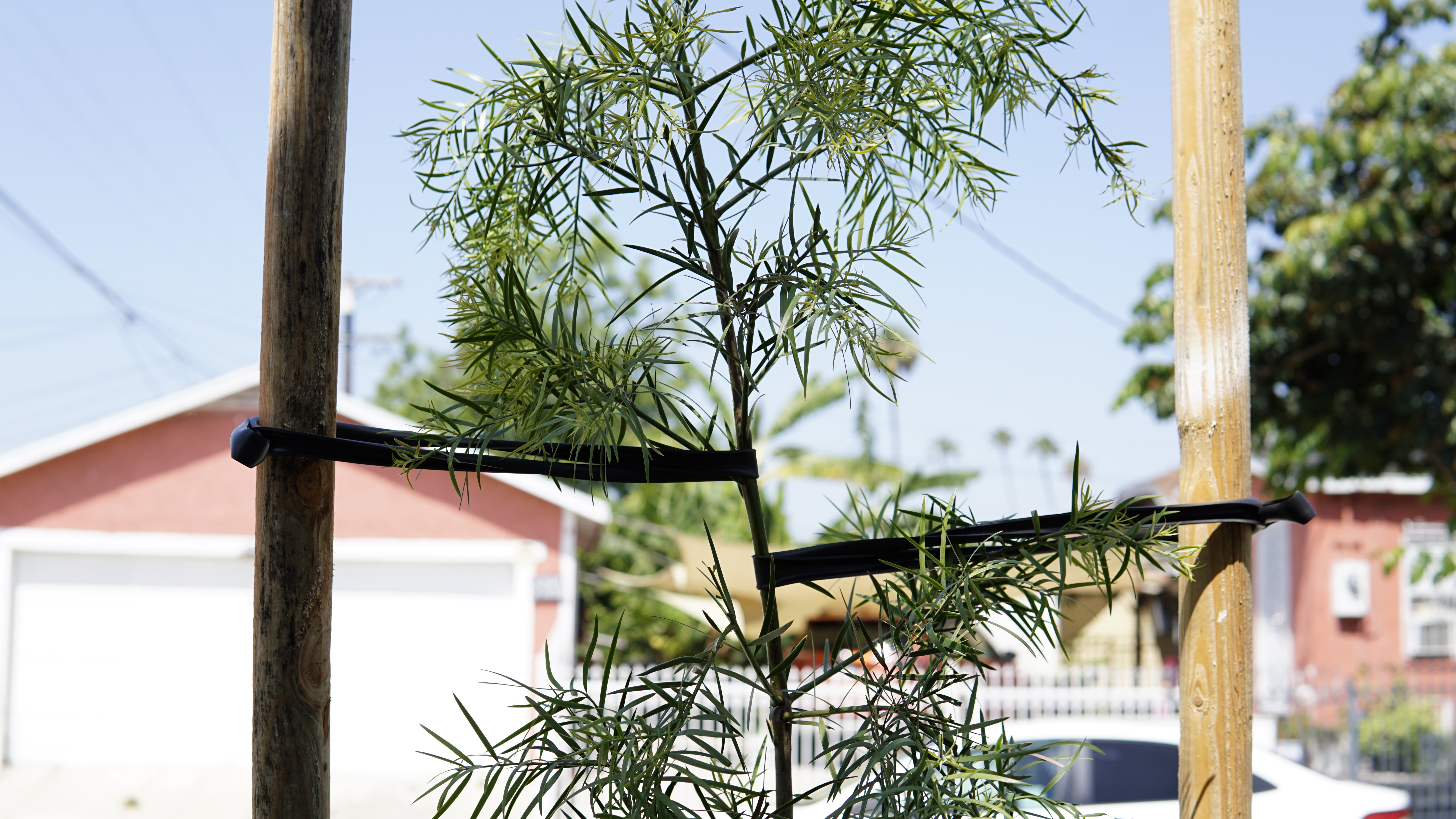
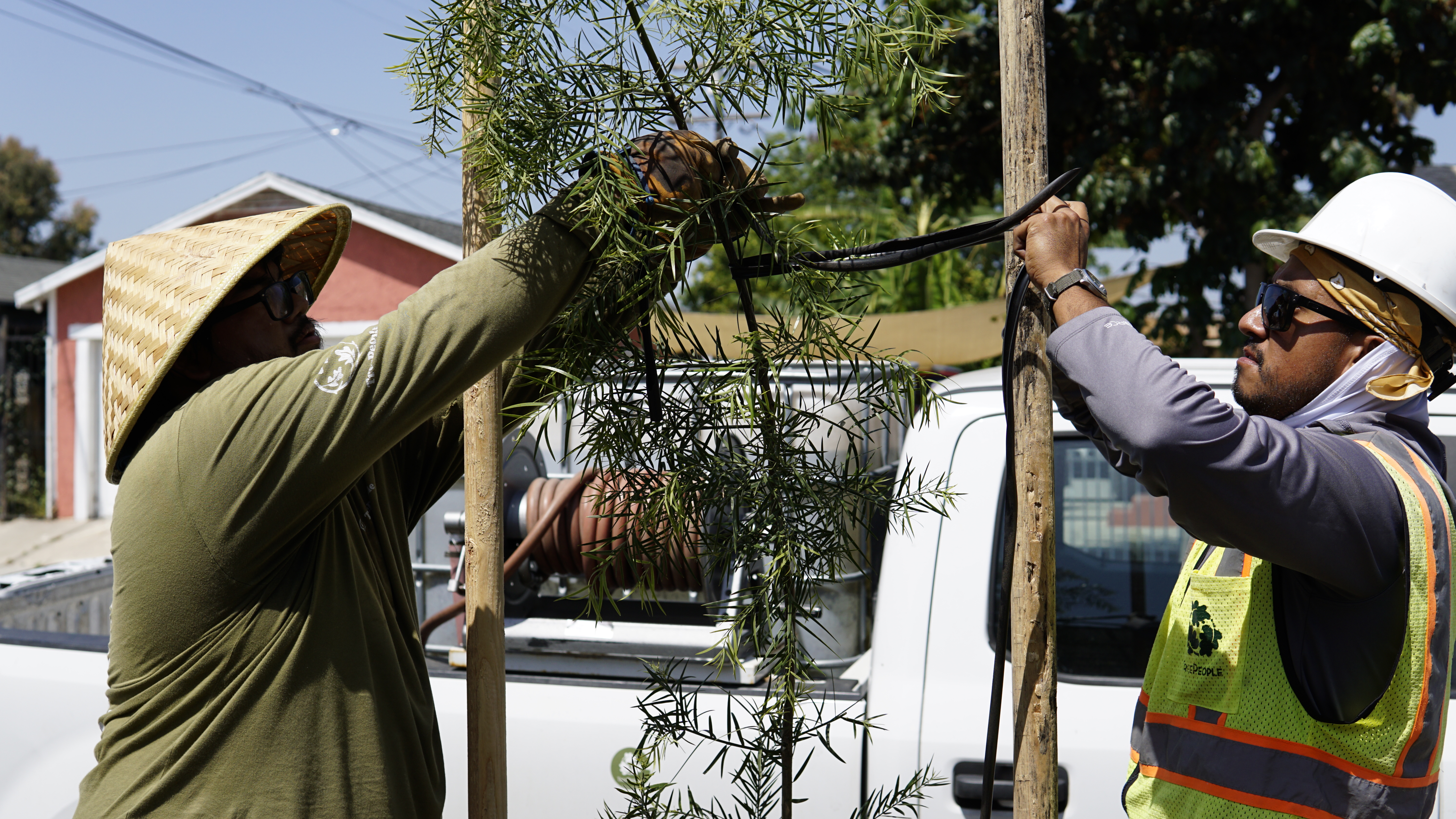
On an exposed street on a sunny morning, a group of gardeners and urban landscape specialists dig a dozen holes in the ground. With care and practised efficiency, they place young trees in every hole, cover the top with mulch, hammer stakes on either side and tie the slender trunks to them.
They work for TreePeople, a non-profit that greens communities across Southern California. The group has pledged to plant – and care for – 28,000 trees by 2028, ahead of the Los Angeles Olympic and Paralympic Games.
“You have to think big,” Cassie Rauser, CEO of TreePeople, says under the shade of a fig tree. “I always shoot for the stars.” The trees will cool neighbourhoods, restore habitat, capture rainwater, green schoolyards, help fire-hit landscapes recover and connect people with nature, she says. A grant from Olympic sponsor Delta Air Lines covers 1,000 of them, the remaining 27,000 need backing from individuals and companies.
It is not TreePeople’s first Olympic planting drive. Ahead of the 1984 Games, the last LA hosted, the group led the Million Tree Campaign, answering a city call to plant trees to help clean LA’s smoggy air. It planted its millionth tree just days before the opening ceremony.
LA’s iconic palm tree-lined boulevards are also, in a way, an Olympic legacy. When the city first hosted the Games in 1932, it planted tens of thousands of fan palms in a bid to beautify its roads and create jobs during the Great Depression.
While TreePeople’s latest tree-planting campaign coincides with the upcoming Olympic Games, scheduled to open on 14 July 2028, Rauser says she had hoped for more from the organising committee, a private group called LA28.
“There is not as much follow-through or funding around making things happen as we had hoped,” Rauser says. “I’m overall disappointed in the progress. What LA28 and the Olympics have invested in the communities is very minimal.”
While reporting this story, Clean Energy Wire found that an unusually large number of potential interviewees would not or could not discuss sustainability-related efforts linked with the 2028 Olympics. At least half a dozen referred questions to LA28’s press team, which in turn did not reply to multiple requests for comment.
In theory, LA is well placed for the Olympics
When Los Angeles began preparing its Olympic bid over a decade ago, a global pandemic, devastating wildfires, and the fallout of a federal administration focused on advancing fossil fuels all lay in the future. In the years following 2017, when the International Olympic Committee (IOC) finally awarded LA the Games and gave the city an unprecedented 11 years to prepare, officials and organisers promised a “car-free” Olympics, a “no-build” Games, and a “zero cost” event for Los Angeles.
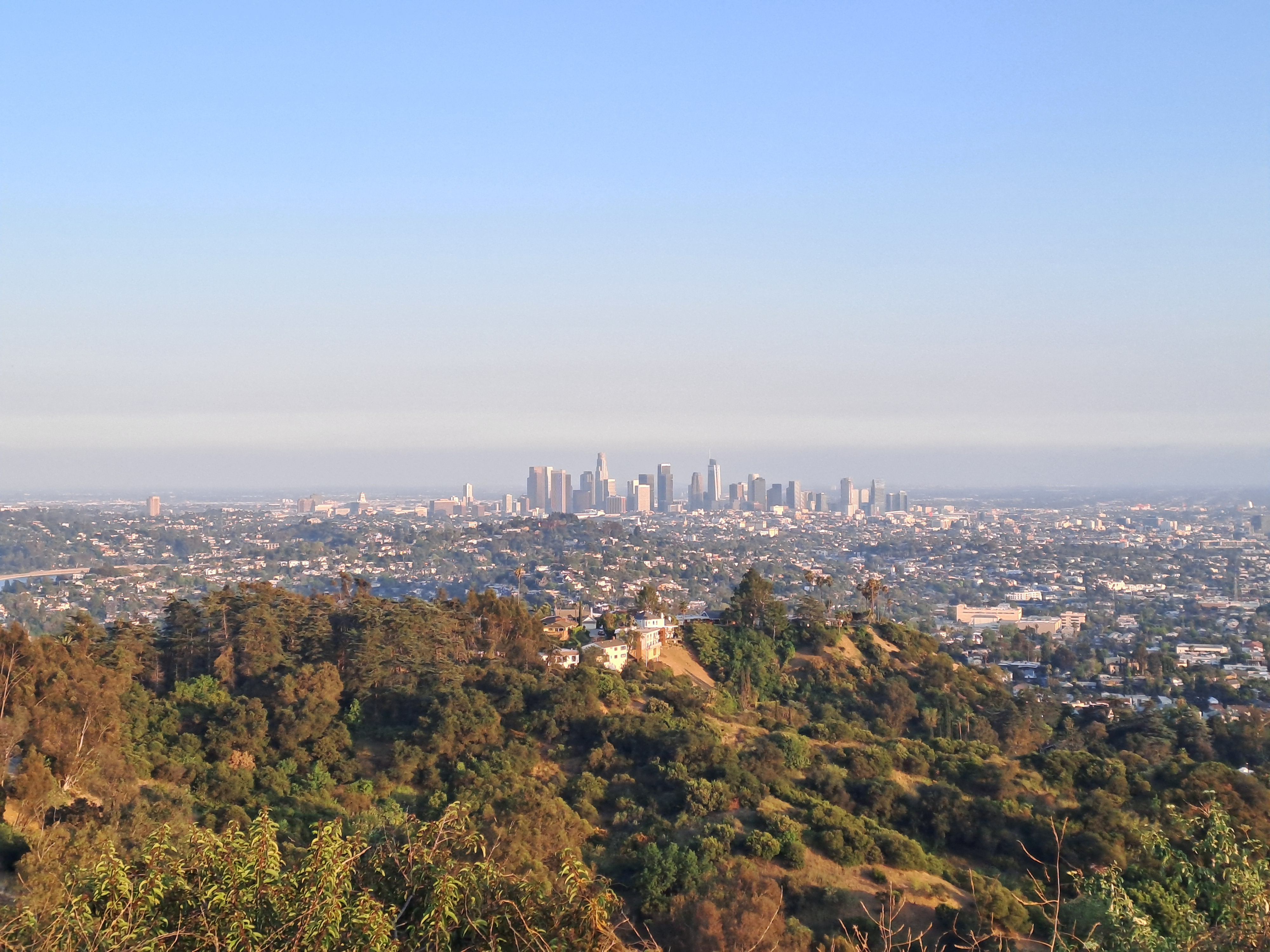
On paper, the Los Angeles region is well placed to deliver Olympics with a lasting legacy. LA has shaped important aspects of the modern Olympic movement, from leveraging private finance and revolutionising television rights to using volunteers as the primary workforce. The region already has plenty of world-class venues, and university dorms can house the athletes. California is at the forefront of climate ambition in the US, and LA’s 2025 fires gave the city first-hand experience of the risks it faces.
The city and organisers are now running out of time to deliver on pledges that the Games will create a “lasting climate legacy” and “serve as a successful model that can be replicated” – for example by implementing projects that would result in long-term emission reductions and climate resilience, such as improving travel alternatives to the car or helping entertainment venues to operate more sustainably for future events. With less than two years to go, LA’s ambitions are weighed down by budget woes, immigration raids, a struggling film industry, a homelessness crisis, and wildfire recovery needs. LA28 has been late and opaque in presenting key documents, and has lost significant trust with city partners.
All of this raises doubts over whether the Games can benefit the people of Los Angeles or change Olympic practices in the long run.
Olympics have trended bigger
The Olympic Games face their own reckoning as global warming increasingly disrupts sporting events around the world: 2026 alone saw bone-dry pitches, rerouted race courses, outright cancellations and collapsing athletes. Celebrations of athletic prowess must change to meet the challenges of a warming world, including through reducing their environmental footprint.
“The Games are too large and they are getting larger, and so their impacts are larger too,” says Sven Daniel Wolfe, a researcher at the University of Neuchâtel who studies how mega-events affect host cities.
As a billion-dollar industry and the largest multi-sporting event in the world, what the International Olympic Committee (IOC) and Olympic organising committees do to address its own climate impact matters not only for their own emissions, but because it also influences markets, shapes cities and moves other actors in the sporting world to act.
| Los Angeles Olympic Games | 1984 | 2028 |
|---|---|---|
| Number of athletes | 7,078 | 11,198 + 4,480 Paralympic athletes |
| Number of medal events | 224 | 353 |
| Number of sports / disciplines | 23 | 36 +23 Paralympic sports |
| Number of participating nations (National Olympic Committees) | 140 | 206 |
| Number of competition venues | 27 | 49 (across Southern California) |
| Number of tickets | 5.72 million sold | 10 to 15 million expected sales, including Paralympics |
| Number of volunteers | Around 33,500 | Up to 60,000 |
| Sources: 1984 Olympic Retrospective, LA28, IOC. | ||
In practice, the city is stretched thin
“Things are so rotten here,” says Jonny Coleman of NOlympics LA, a group that campaigns against the Games. “Even though there is a lot of capital here, systems are very defunded right now,” he says at a roadside café. As rumbling motorcycles whiz by, he explains how the city cut jobs and services in response to a billion-dollar budget shortfall. “Now it takes two years to fix streetlamps.”
The Olympic and Paralympic Games will be expensive to put on. LA28 has a budget of 7.2 billion US dollars, while the city needs to provide additional services such as policing, transport capacity, and waste collection before, during and after the four-week event. LA has already spent around 27 million US dollars on the Games, according to city controller Kenneth Mejia, whose office says this is likely an undercount. The city is also on the hook to cover shortfalls if LA28 goes over budget.
“If the Games were not so expensive to put on, there wouldn’t be this demand for legacy,” says Rich Perelman, editor of The Sports Examiner, who ran press operations at the 1984 Los Angeles Olympics. “The city also essentially has unlimited liability for the Games, which is troubling them enormously right now,” he adds.
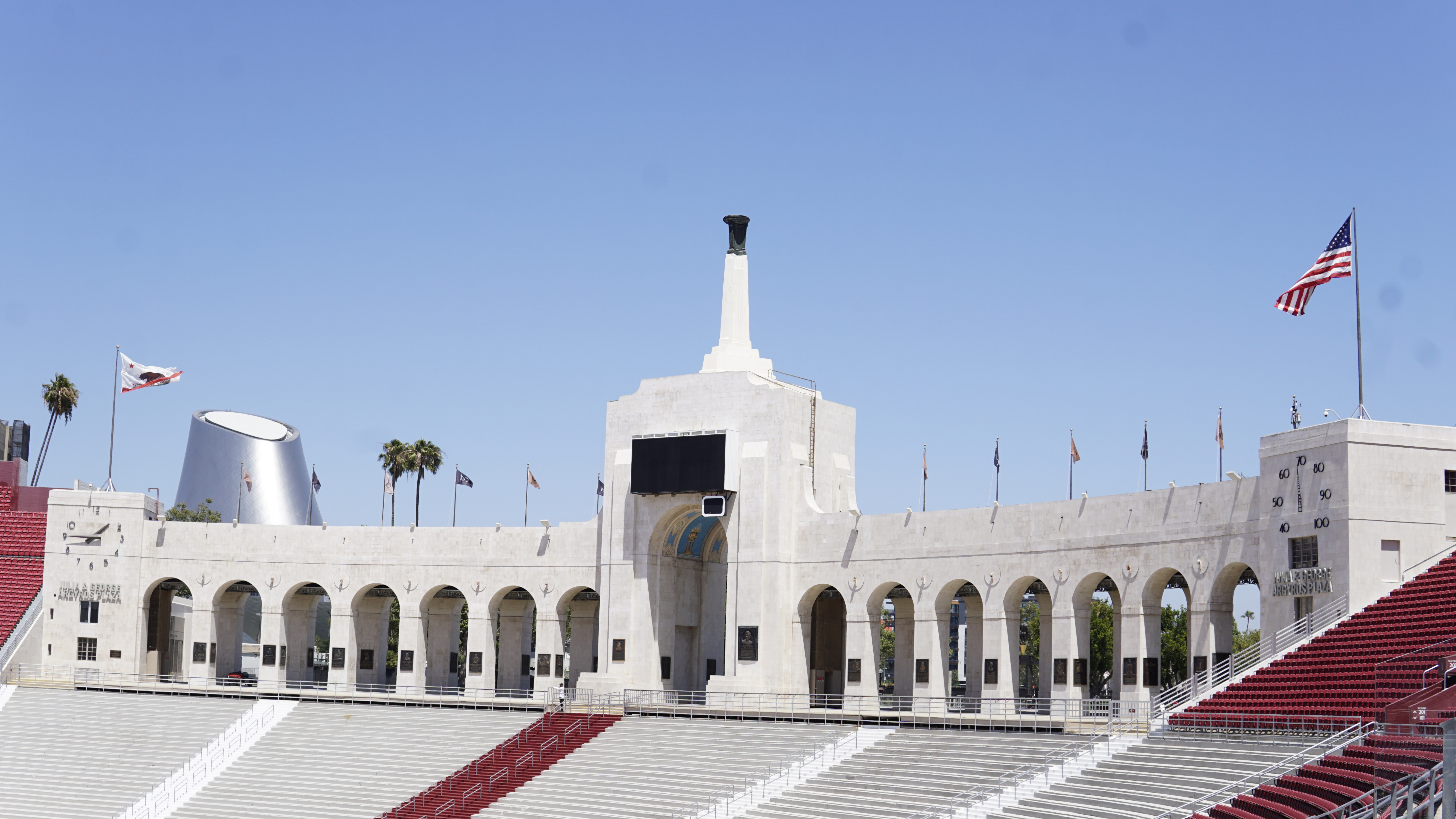
Estimates suggest that the LA 2028 Olympics might be the most expensive to attend to date. Most LA residents will not go to an Olympic competition in person, expects Kathryn Schloessman, head of the Los Angeles Sports and Entertainment Commission, which brings major events to the city. Residents’ experience will be defined by what happens in their neighbourhoods and whether they believe the Games belonged to them, Schloessman told the Los Angeles Daily News. What will they be left with once the Games are over?
Big ambitions watered down
This is a question answered in the run up to the event. Big projects that officials hoped the Games would spur, and that would benefit the city long after – such as the original 28 large public transport infrastructure projects by 2028 – will not materialise in full. Sustainability pledges by LA28, such as the goal to use 100 percent zero or near-zero emission buses to transport fans and volunteers between venues, are also likely to be met only at the low end of ambition.
Efforts to leave behind a legacy of more sustainable sporting venues could be much stronger. Despite stating it would “promote car-free travel, with an aspiration to drive behaviour change beyond 2028,” LA28 would not endorse a “car-free” Games – which in turn would not mean a city free of cars. “Calling it a no-build Olympics is just clever accounting,” says Sven Daniel Wolfe, a researcher at the University of Neuchâtel whose work focuses on the implications and after-effects of hosting mega-events, explaining that while there might not be new white elephants in LA, the event will still spur construction in the city.
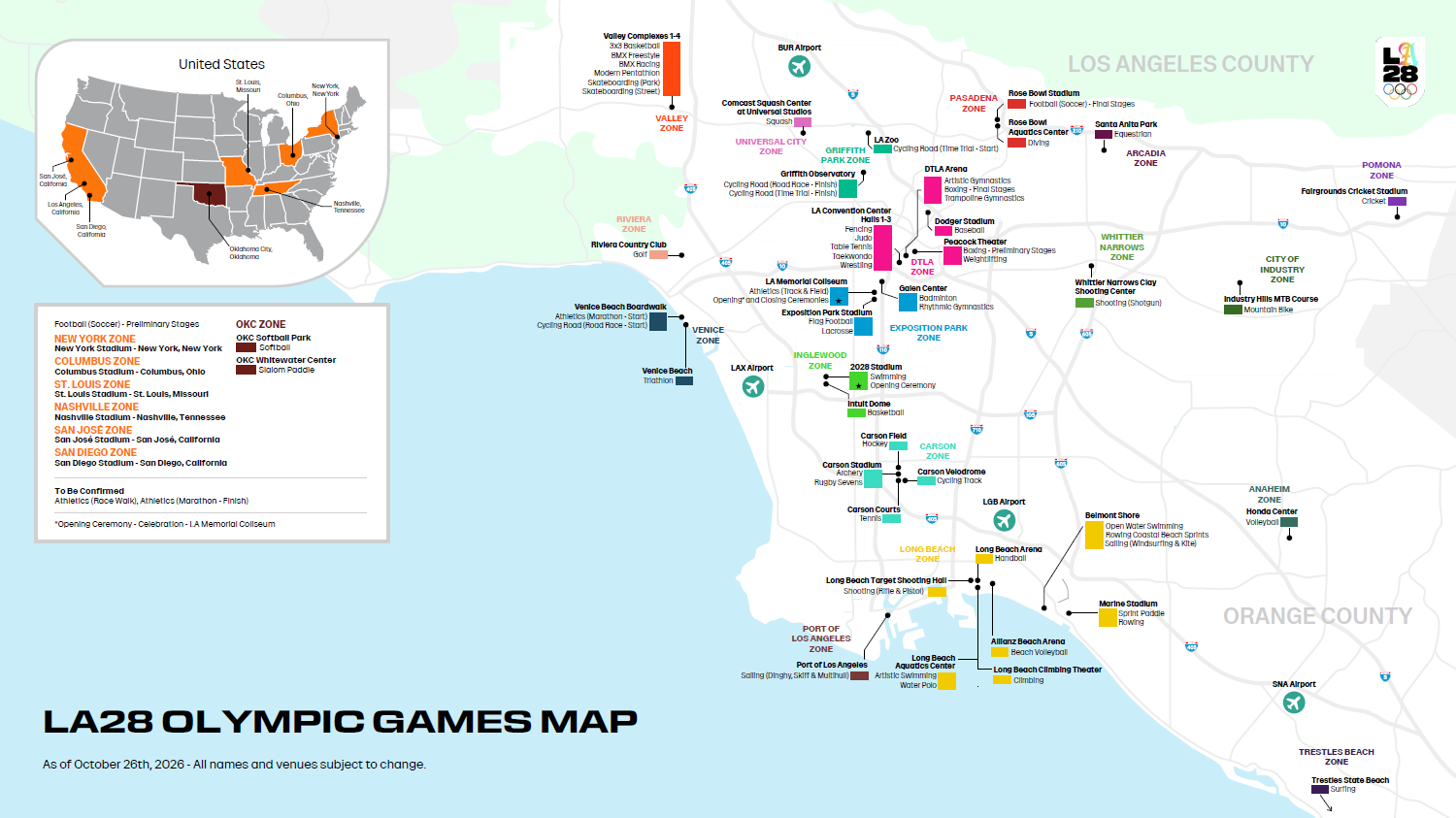
“Just putting on the Olympics is a big commitment in and of itself,” says Ben Stapleton, who heads the US Green Building Council (USGBC) California. His team is working to make rebuilding after the wildfires as sustainable as possible, and is helping train Olympic venue teams in everything from low-carbon retrofits to nature-based ways of cutting heat and water use.
“We had grand visions, and we probably won’t achieve all the goals we wanted to on the sustainability side,” Stapleton says, adding that LA28 welcomes partners who go above and beyond but does not do so itself, as staging the Games is task enough. Smaller wins will still happen, he adds: “We are creating the legacy of a workforce that is educated and ready to take sustainability principles into whatever they do next.”
Olympics come to an overheating Los Angeles
A big climate threat that the 2028 Olympics are set to face is heat, which could severely affect athletes, staff and spectators.
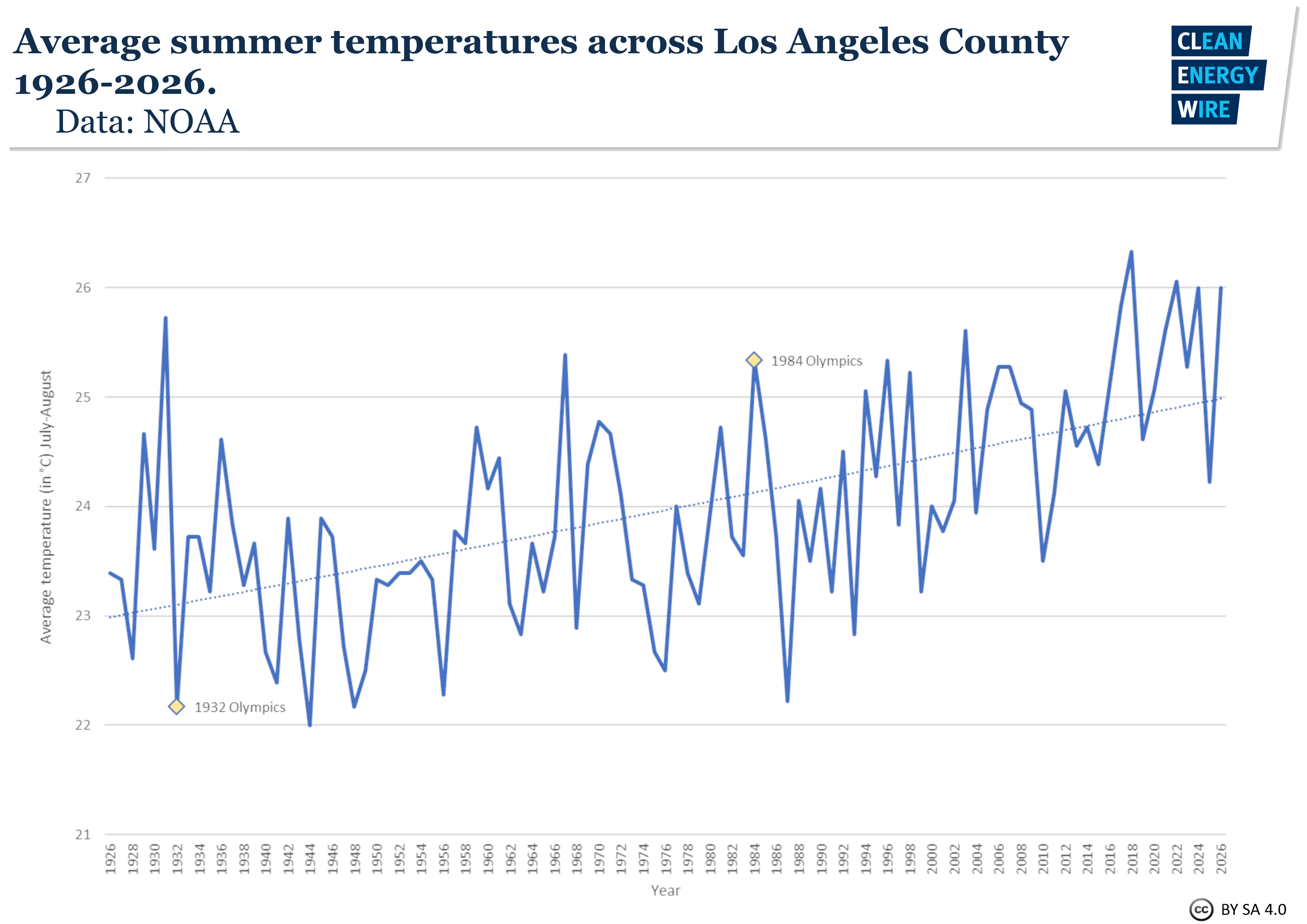
Average summer temperatures across the Los Angeles County have increased by around 2.4°C since the original Olympics of 1932.
Note that the geographically diverse Los Angeles County encompasses desert, high mountains and beaches – all of which have different climates. Average temperatures therefore do not necessarily represent conditions at venues, which for 2028 are located across the coast, mountains and deep urban basins.
Infrastructure that will increase in value
Civil society groups are pushing climate measures across LA ahead of 2028: TreePeople, ShadeLA and Climate Resolve are leading work to adapt exposed areas to extreme heat. The Los Angeles Cleanteach Incubator (LACI) is using the Olympic deadline to attract investment in clean technologies. CALPIRG is campaigning to drastically reduce plastic waste at cultural events.
“Times have changed and heat has gotten increasingly worse in our city,” says Marianna Babboni, who manages ShadeLA projects for the University of Southern California (USC). Groups working to address this by planting more trees, however, sometimes find themselves unable to do so despite having funds.

We are really committed to the legacy and infrastructure that will increase in value over time.
LA’s budget woes led to staffing and resource cuts in departments needed to approve projects. “Delays on permitting due to restrictions in capacity in the city mean that hundreds of thousands of dollars are being unspent,” Babboni says. “One of our legacy goals is to streamline permitting and capitalise on available funding to bring as much shade ahead of the Games as possible.”
Her team has put together a map identifying “double impact” areas: economically disadvantaged communities with little tree cover that face higher temperatures and are set to be impacted by the Olympics because of their proximity to venues or public transport hubs.
It is in one of those streets that the TreePeople crew works the morning we meet. They are alone, though many of its plantings are carried out with local residents, who learn through simple mantras how to care for their new, green neighbours. “The tree is more likely to live if the people feel an attachment to it,” says Rauser, adding that 96 percent of the trees the group plants grow to maturity.
“I want to show people when they come here just how beautiful the natural world in Los Angeles can be,” Rauser adds. “We are really committed to the legacy and infrastructure that will increase in value over time and be here for the communities long after the Games.”
Moving in the right direction?
LA kicked off its run of mega sporting events with eight football World Cup matches this summer, hoping that these, the 2027 Super Bowl and the Olympics would leave a legacy of cleaner air, greener infrastructure and a city more resilient to the worsening consequences of climate change.
“The problem is that we all have different definitions,” says researcher Wolfe. “If you are talking about ‘sustainability’, authorities mean one thing, the Olympic Committee means another, and host city residents have a different understanding as well.”
To him, the Olympics should be framed as a celebration, not as a political, urban, economic or ecological solution. “You are never going to succeed in bringing the Olympics to a place in order to fix problems – you have to be fixing problems already,” says Wolfe. “Then the question is: why are you bringing the Olympics?”
Wolfe says that the Games, in theory, offer a way to come together peacefully at times of global division and destruction. “I believe fundamentally in the necessity of having a good time; parties are part of human culture and international sports parties are fun.” However, he says the Games still need to find a way to become smaller and minimise international travel. “The alternative is that we continue destroying the biosphere, and then we have to stop the Games anyway.”