Reporting
We cover the big issues for Europe’s move to climate neutrality, with a focus on Germany. Our news, agenda-setting dossiers, factsheets and country guides provide in-depth information, key background and figures on the energy transition's most important stories.
Championing journalism that matters for tackling climate change
Newsroom
We cover what matters for Europe’s move to climate neutrality, with a focus on Germany. Concise, but with context.
Guides
Our dispatches keep you in the loop about energy and climate policy trends in key European countries and the EU itself. For a deeper understanding, the respective CLEW Guides offer concise background, an outline of major transition stories, and evaluate the progress of major economic sectors.
Events
Our research tours and web events offer journalists direct access to the most important stories on the energy transition.
Grant
· Deadline to apply: 17 March, 23.59 CET
Network and opportunities
The CLEW Journalism Network brings together international reporters covering the energy transition. Our grants frequently support cross-border reporting on key climate and energy topics.
Latest from the network ·
Country guides and Dispatches
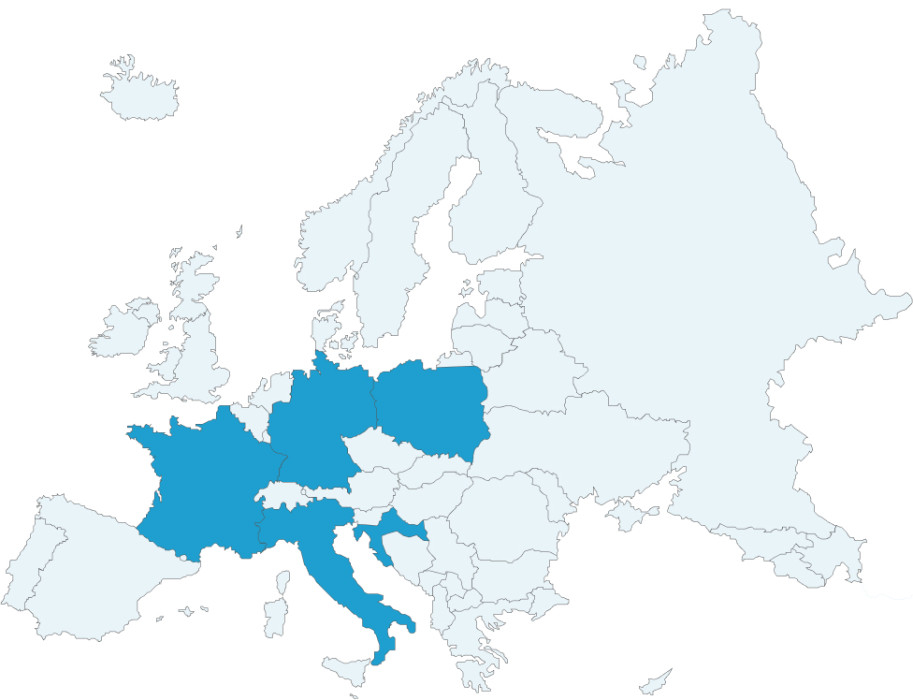
Our Dispatches keep you in the loop about energy and climate policy trends in key European countries and the EU itself. With a tight selection of the most relevant recent and upcoming developments, they provide a regular snapshot of what matters for the shift to climate neutrality in policy, diplomacy, society, and industry, and help readers look beyond national borders.
For a deeper understanding of where those key countries and the EU stand in the transition, the respective CLEW Guides offer concise background, an outline of major transition stories, as well as a progress assessment of major economic sectors. Written by local journalists with extensive experience.
| Explore our Guides and Dispatches | |
|---|---|
| European Union | Germany |
| France | Italy |
| Poland | Croatia |
| Hungary | |
European Union
EU
How the European Union is trying to legislate a path to net-zero
The European Union positioned itself as a potential early climate champion in 2018 by pledging to reach climate-neutrality by 2050. Since, it has enshrined that goal into law, alongside an interim target to cut net emissions by 55 percent by 2030, and agreed a broad range of new and revised legislation to shift to a more sustainable economy. However, the rise of security, competitiveness and cost-of-living concerns has taken some of the focus away from the transition, and green policies have seen a backlash from companies, member states and politicians.
Germany
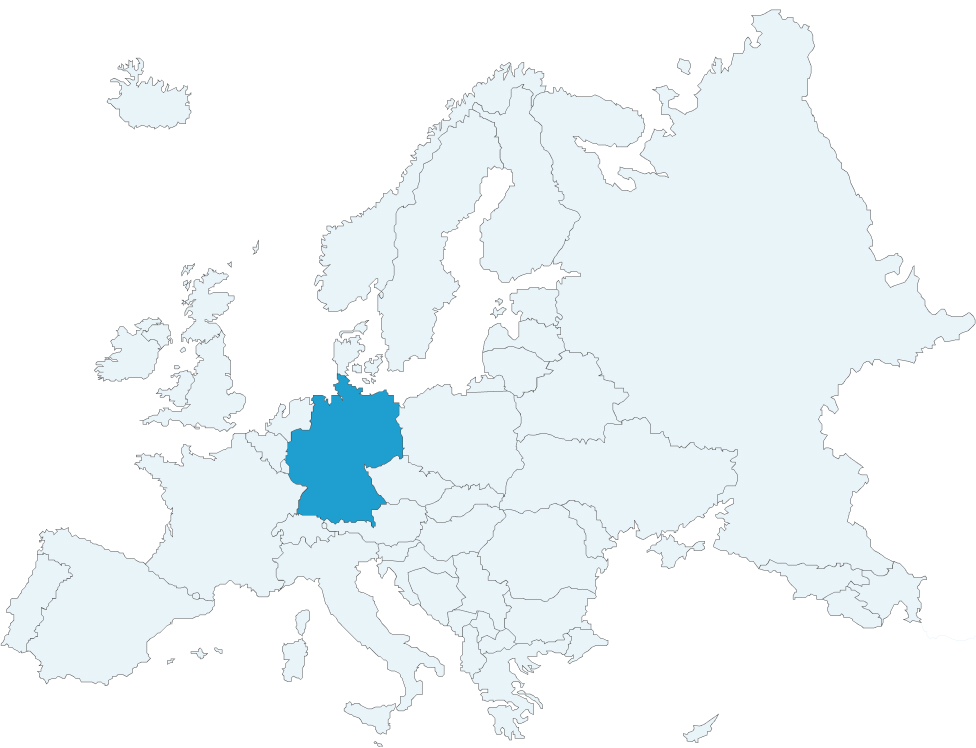
Germany
Germany nears 2030 climate targets, transport and heating remain laggards
Germany is nearly on track to meet its 2030 emissions reduction target, with rapid progress in the expansion of renewables making up for the lagging transport and heating sectors. The country's electricity system has never been so clean, partly due to a weak economy resulting in drops in manufacturing. Amidst stiff international competition, Germany must find ways to support its industry in the transition to climate neutrality.
France
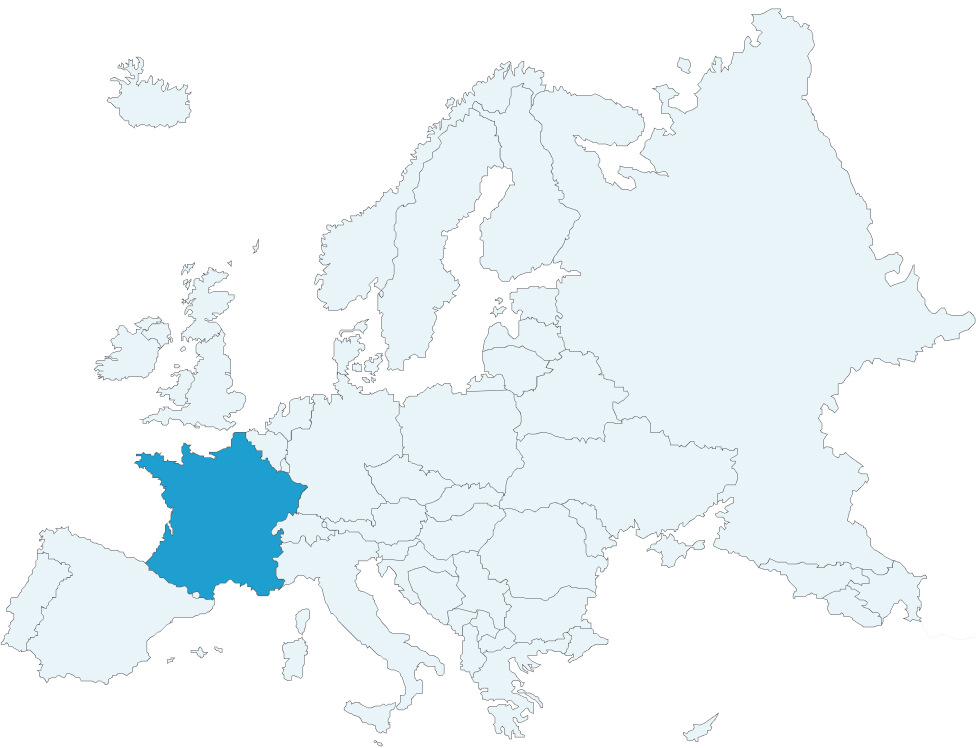
France
France caught between national and European energy ambitions
France aims to become climate neutral by 2050, yet emission reductions lag behind targets. The country faces budget troubles and dramatic twists and turns stemming from the political crisis that began in July 2024. Renewables expansion has slowed, and state-owned electricity utility EDF faces uncertain long-term financing capacity. After years of delays, France published a plan defining its energy strategy up to 2035, which drew criticism for slashing renewables targets in favour of nuclear power.
Italy
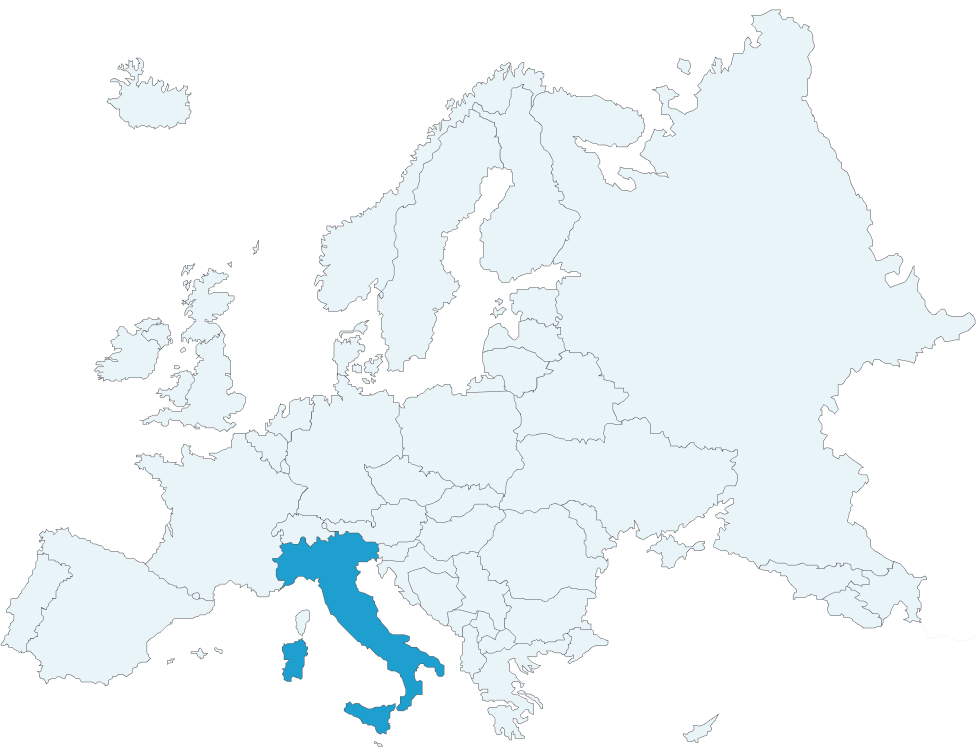
Italy moves on green transition, but fossil ties remain tight
Italy has taken significant steps in its green transition over the past decade, but the current government under prime minister Giorgia Meloni is also determined to make the country a "gas hub" in the Mediterranean Sea, illustrating ongoing deep ties to fossil fuels. Researchers and NGOs have criticised the country's draft plan to reach EU 2030 climate targets for being vague about key topics such as phasing out oil, coal and gas, and expanding alternative energy sources like wind or solar power.
Poland
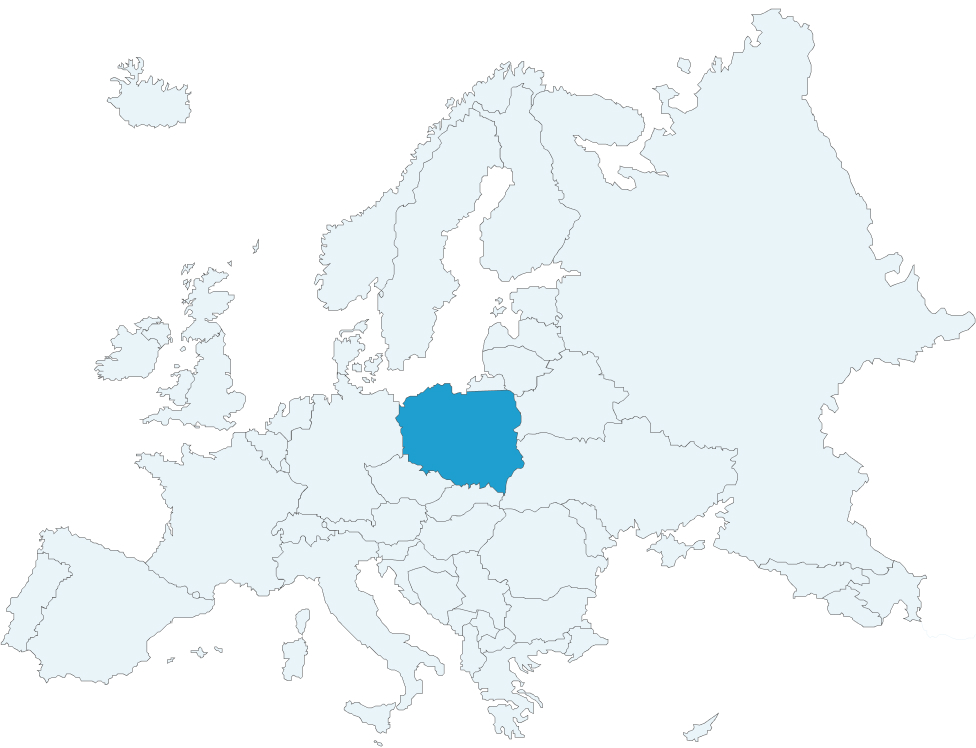
Poland stumbles through energy transition with uneven progress and political headwind
Poland, one of the major economies of the European Union, is also the only country in the bloc that still produces over half of its electricity from coal. The fuel's share in the energy mix has dropped significantly in recent years, but the transition is happening without up-to-date strategies, creating social and economic risks. Topics like the Green Deal and coal mining have become heavily politicised and, with exceptions, lack consensus among the ruling class.
Croatia
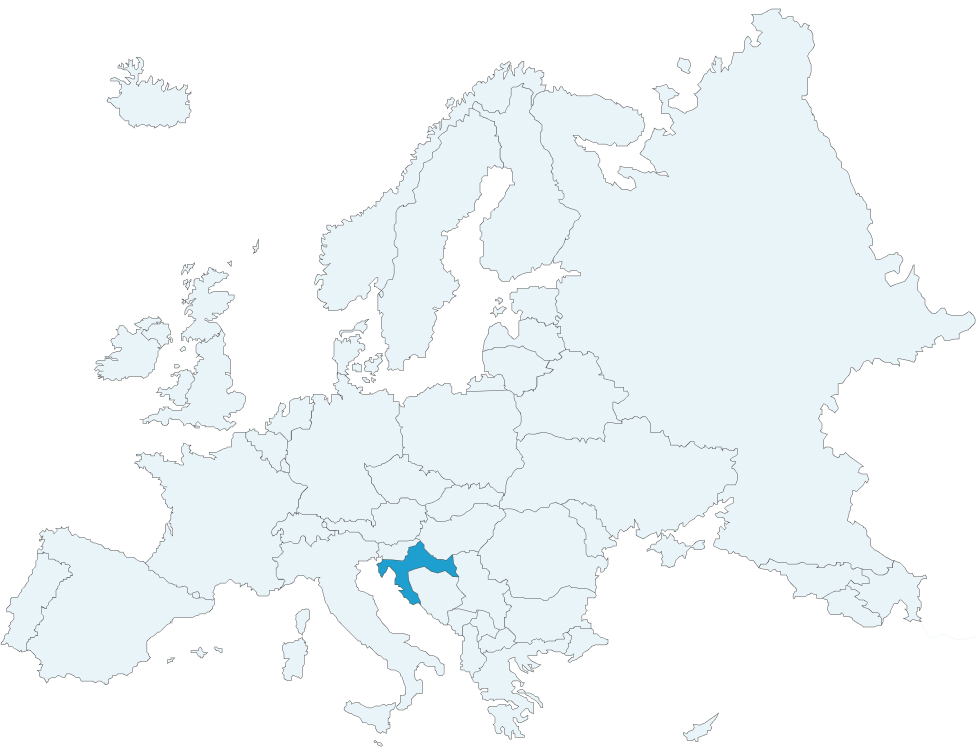
Croatia caught between LNG ambitions and abundant untapped renewable energy potential
The coalition of the centre-right HDZ and the right-wing Homeland Movement (Domovinski pokret), which formed the government after the early election in 2024, continues with plans to expand gas infrastructure related to the LNG terminal that receives gas from the US on the island of Krk. New nuclear ideas have also emerged, with a working group on nuclear energy established whose main goal will be to enable the construction of small modular reactors (SMRs). Gas and nuclear are much more the topic of conversation within the ministry of economy than the development of the renewable sources of energy.
Hungary
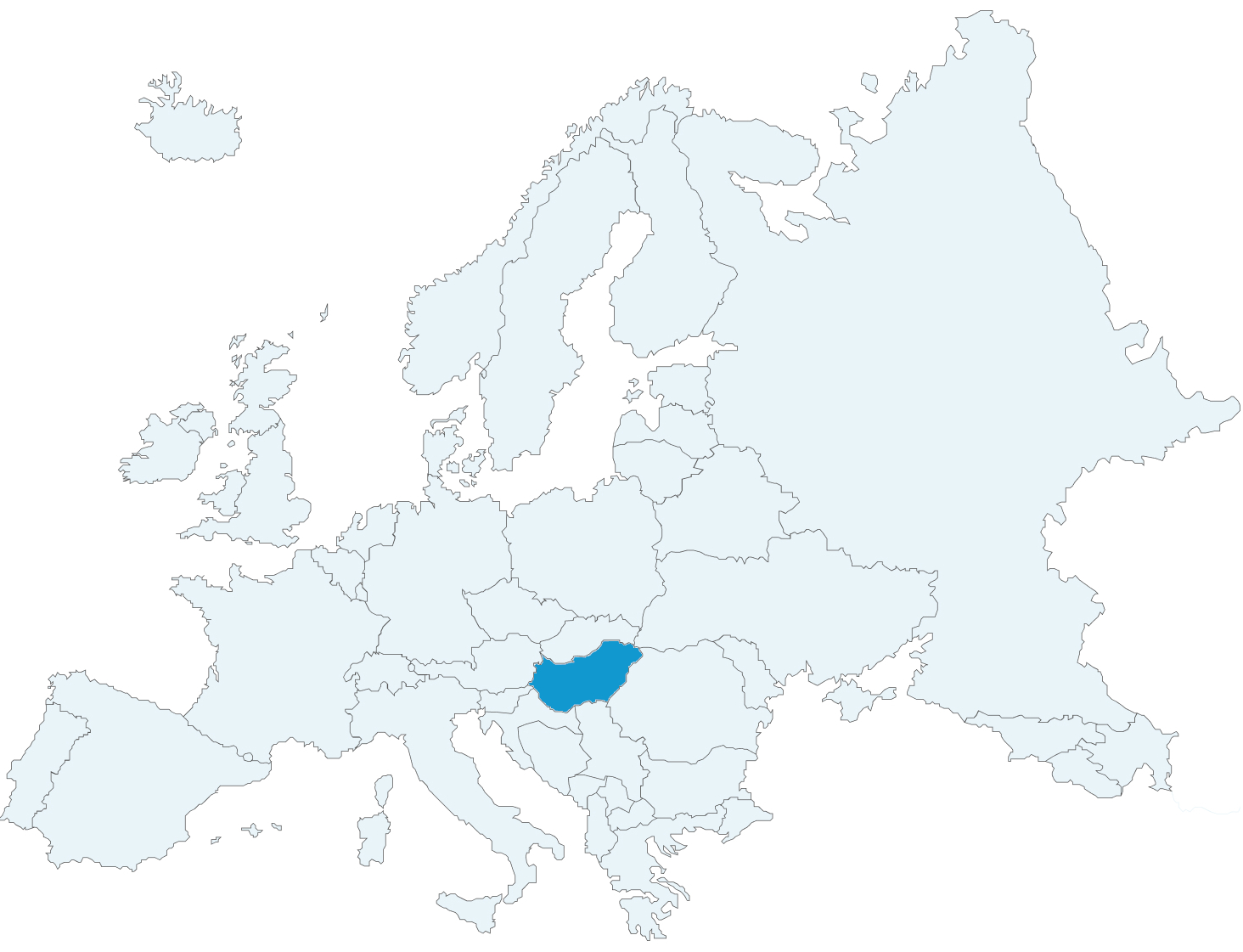
Hungary sees solar boom but remains dependent on Russian energy, fossil fuels
Hungary has almost halved its greenhouse gas emissions since 1990, and in recent years greatly increased its solar power capacity. Still, the country to a large extent relies on conventional energy sources, and depends on other countries – mostly Russia – when it comes to oil, natural gas or nuclear fuel supplies. Hungary traditionally has had close political ties with Russia after the collapse of the Soviet Union, and strong co-operation continued under right-wing conservative Viktor Orbán.
Get support
Are you researching an energy or climate topic in Germany or Europe? We help fellow journalists and other professionals by sharing our expertise. Just get in touch to get concise answers to specific questions, suggestions on which experts to talk to, or even a fully-fledged research plan.
We have directly supported the research of hundreds of journalists from across the world and from a wide variety of publications, from specialist magazines to international media. Academics from some of the world’s leading universities and business analysts have also drawn on our expertise.
Please provide as much information about your project as possible, and let us know if you have a deadline. For any pressing request, give us a call under +49 30 62858 497.
All requests are handled confidentially.
Newsletter subscription
Receive our Daily Briefing for a digest of the past 24 hours of energy and climate media coverage and the latest on CLEW, or our Weekly Briefing for a round-up from the past seven days and news from the CLEW Journalism Network.
| Sign up to our newsletters | |
| Daily Briefing | Weekly Briefing |
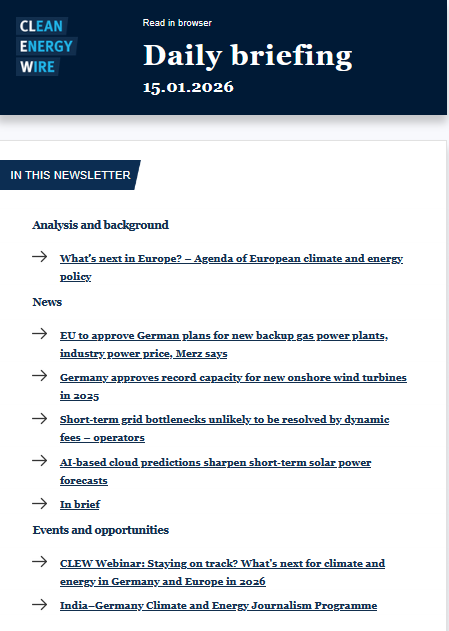
Daily Briefing
Our daily news digest is the one-stop shop for anyone looking to stay on top of the most relevant topics and developments in Germany’s move to climate neutrality.
Every weekday you will receive:
- Curated, well-contextualised and concise articles on the climate and energy topics that matter most in politics, business and society. Written by the CLEW newsroom, following careful analysis of the day’s news.
- An overview of reports and articles from other news outlets that are relevant to climate and energy policy in Europe.
- A summary of CLEW's widely referenced in-depth output, including analyses on agenda-setting topics and accessible factsheets.
- Alerts on all trainings and other opportunities organised by CLEW.
The Daily Briefing keeps you at the forefront of Germany’s move to climate neutrality – from policy to industry and society.
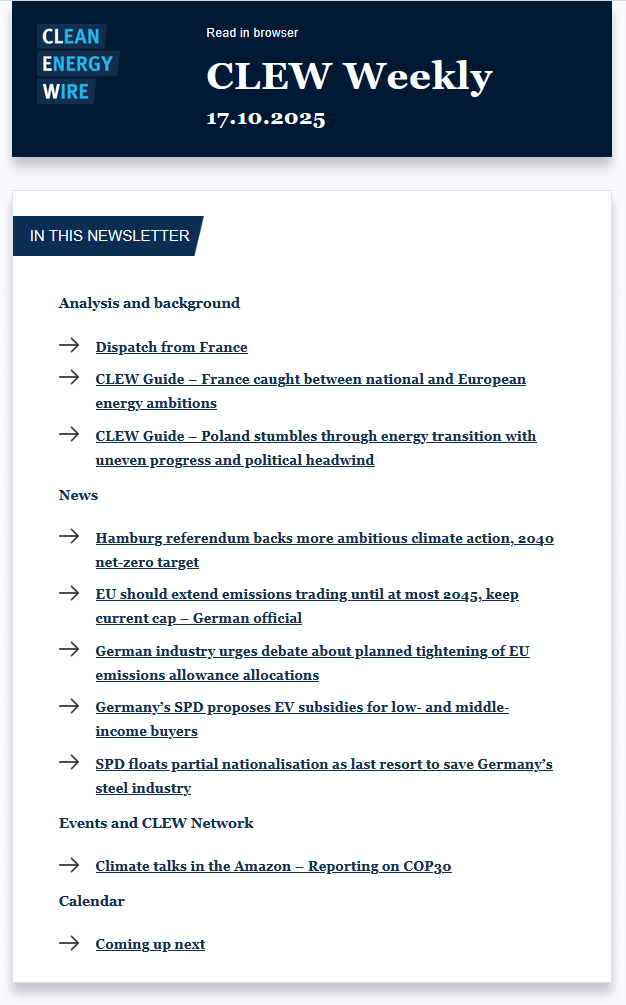
Weekly Briefing
Our weekly newsletter is tailor-made for those seeking a round-up on energy and climate topics in Europe and its largest economy.
Every Friday you will receive:
- The week's most relevant energy and climate news from Germany.
- CLEW's Dispatches, a quick and concise overview of recent and upcoming developments in selected European countries and the EU in the move to climate neutrality. Written by local reporters for international readers.
- A summary of CLEW's widely referenced in-depth output, including analyses on agenda-setting topics and accessible factsheets.
- Alerts to all trainings and other opportunities organised by CLEW.
- The latest from the CLEW Journalism Network.
- A calendar highlighting the most relevant upcoming events.
Our Weekly digest offers a highly focused overview of Germany and the EU's path to climate neutrality, as well as alerts to CLEW's latest offers.
Support us
Promoting journalism that matters for tackling climate change.
Our supporters donate to CLEW because they value our work, and share our conviction that it makes a real difference in the fight against climate change. By contributing, you directly support our publications, newsletters, research tours, webinars, and journalism network – now and in the future.
By clicking 'Donate' in the form above, you confirm that you consent to the processing of your data and that you have read our privacy policy. We use the service provider Twingle to process data.
All questions about your donation answered
Why donate?
By donating, you directly contribute to our work. This means we can focus our small team's efforts on delivering CLEW's valued reporting, leading more of our popular research tours and training opportunities, and growing and strengthening our unique global journalism network.
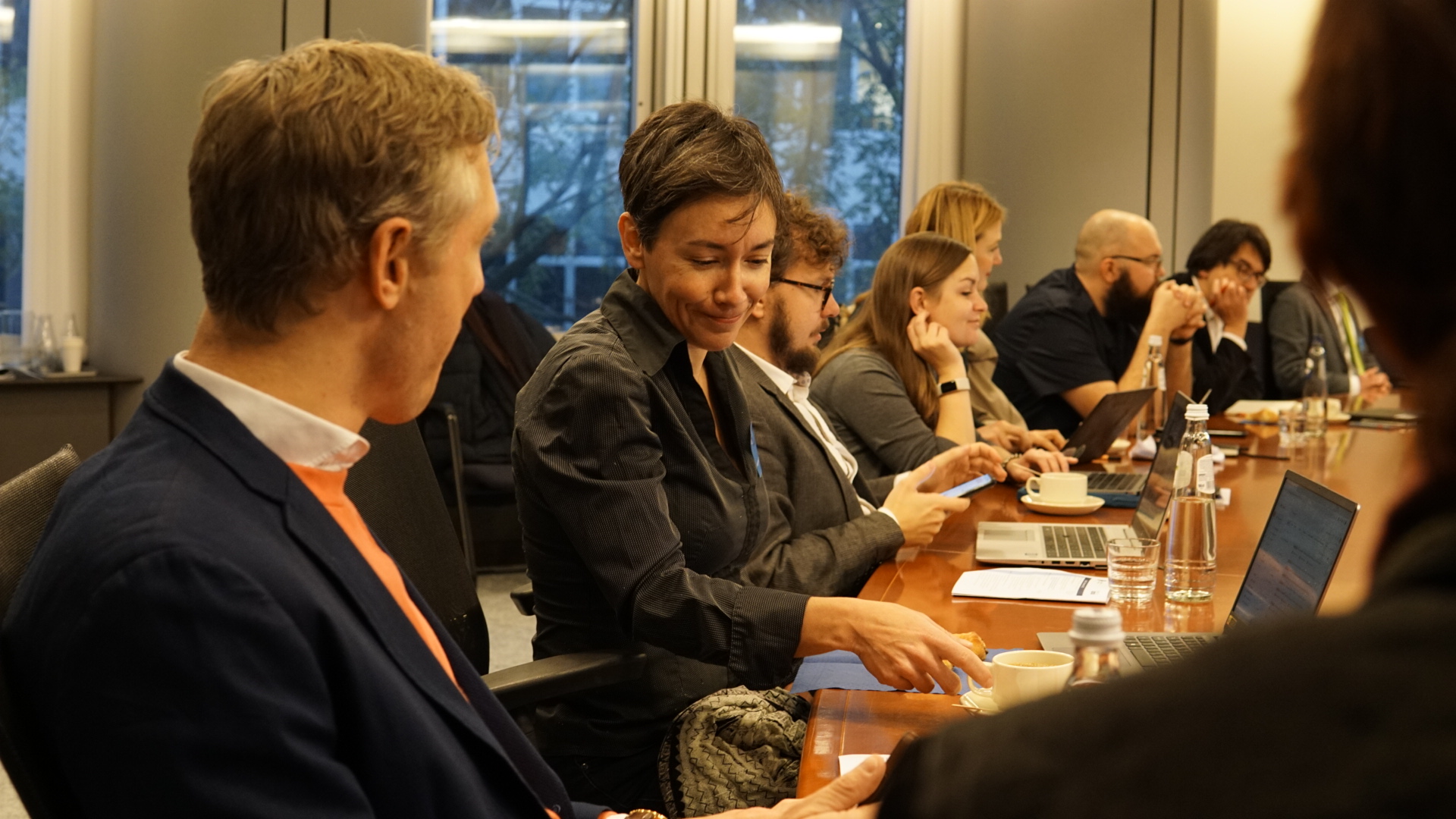
Your support means our reporters can work on stories like our deep dive into 'Frontier climate technologies', and helps our media programmes team, which brings journalists from diverse countries and backgrounds to locations key to the stories that shape the energy transition – as we did during this trip to Frankfurt, where 20 international journalists explored the role of finance on the road to climate neutrality.
Support us now to secure independent, thorough reporting that makes a difference in the fight against climate change.
How much should I donate?
Recurring donations give us the most financial certainty. We therefore encourage monthly donations of at least 20 euros. We understand that not everyone is in a position to do this, and appreciate any support you can provide.
You can also make a one-time donation.
Donations between 50 and 150 euros could, for example, ensure we can:
- Keep our EU Agenda or expert database up-to-date
- Create more of CLEW's popular infographics
- Continue to provide our direct support service
Donations between 500 and 1,000 euros would allow us to:
- Send our newsletters for a month
- Deliver a training course for professionals
- Produce one of our flagship Factsheets
Donations over 1,000 euros could go towards:
- Hiring local journalists to add a new country to our national Dispatch series
- Supporting a training week for international journalists
- Running one of our popular research tours
Why do we ask for donations?
Since our inception, the bulk of our funding has come from foundations, with some projects being individually funded. While the Mercator Foundation continues to support our work, CLEW aims to diversify its funding sources.
Our budget covers expenses such as reporting trips, running of programmes such as research tours, or our academy and grants, as well as running costs such as hosting our website or sending our newsletters.
Between 2021-2026, it took about 1.25 million euros per year to run both CLEW and our sister project Klimafakten, under the roof of the 2050 Media Projekt gGmbH.
Additionally, we have many new ideas which we are convinced will augment our journalism, events and network. Implementing them will only be possible with additional support, and reader donations are a key part of our strategy.
Who donates?
Whether you are an engaged individual or follow our work in a professional capacity, if you value CLEW's work, you can donate. You can also encourage your employer to make a contribution if your company benefits from our reporting.
To highlight donations above 5,000 euros by a single entity, we update our funding page at the turn of the year.
I want to change or cancel my donation; how do I do that?
We use the external service Twingle to manage donations. To change or cancel your donation, please log in onto the Twingle Self-service page here. You will need your email and the payment ID, which you will find on your bank statement or in the confirmation email you received after making your donation. If you still have questions, you can get in touch with us here.
Our content remains free and accessible to all
We think of journalism as a public service, and do our work with this ethos at the forefront. As such, our journalistic output will continue to be free and accessible to all. As a non-profit, every contribution you make feeds directly into our work.
If you are in a position to contribute, you can ensure that everyone can continue to benefit from CLEW's output and offers in years to come.
What our users say about CLEW
"I'm aware of no other group consistently producing comparable work in English. I have and will continue to recommend CLEW to colleagues interested in this area."
Tom Nuttall, Chief Germany correspondent at The Economist
"I'm always on the hunt for the next interesting story or analysis of energy transition issues. CLEW has been a great source of inspiration for that."
Jan Rosenow, Professor of Energy and Climate Policy at Oxford University
"Beyond the outputs that CLEW produces, it strikes me that there is another vital service they provide: community. That is invaluable."
Rowan Emslie, Chief Communications Officer at the Centre for Future Generations (CFG)
"CLEW provides a space for journalists to gain the expertise and support they need to cover the climate crisis accurately."
Tina Lee, Editor-in-Chief of Unbias the News
"CLEW has a unique vantage point on the challenges and solutions on clean energy issues. This perspective and experience adds value to partnerships and collaborations, making them more strategic, creative and impactful."
Devon Terrill, Senior program officer for journalism and media at the Stanley Center for Peace and Security
"CLEW has the most accurate, updated and neutral analyses on the development of energy and climate policy in Germany and Europe."
Kwangyin Liu, Editor at Commonwealth Magazine
Masterclasses
Our online masterclasses equip journalists through peer-to-peer knowledge sharing from our own work, facilitating cutting-edge reporting on the move to climate neutrality.
Research Tours
Drawing on over a decade of experience, we regularly take reporters to the heart of key energy transition stories in our carefully curated research tours. Journalists get direct access to decision-makers, analysts, NGOs, researchers, local businesses during on-site visits to exemplary locations.
Clew Blog
The CLEW Blog offers a space for CLEW Journalism Network members to share experiences, tips and lessons on energy transition journalism as well as reports from journalism events.
Ask CLEW
Researching a story? Drop CLEW a line for background material and contacts.
Journalism for the energy transition